
How To
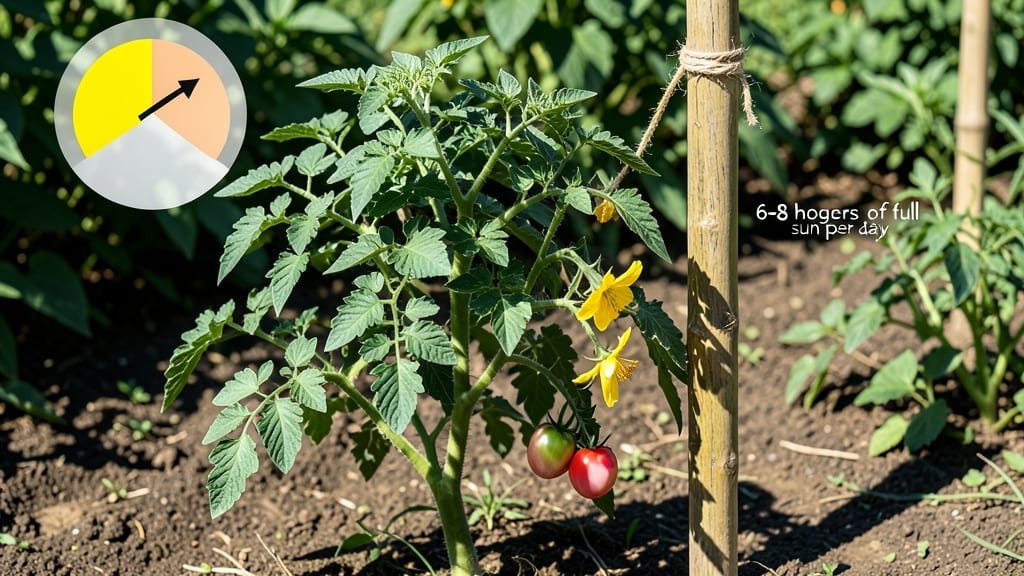
Tomato plants need at least 6 to 8 hours of full sun daily for peak flavor and growth, but many gardeners still end up with underperforming vines and bland fruit.
Here’s the truth: Too little sun means weak stems and stunted fruit, while too much can scorch leaves and stress your plants—especially in hot climates like USDA Zone 6a. The key isn’t just hours, but timing and variety, too.
In this guide, I’ll break down the exact sunlight needs for heirloom, cherry, and beefsteak tomatoes, how to spot sun-related problems, and how to tweak placement or use shade cloth without sacrificing yield.
You’ll leave here knowing not just how much sun your tomatoes need, but when to adjust for your local climate and how to fix common mistakes before they ruin your harvest.

Optimal sunlight hours for tomato plants by variety (indeterminate vs determinate)
Tomatoes are sun-worshippers, but not all varieties crave the same amount of light. Indeterminate types (like heirloom and beefsteak tomatoes) grow continuously, while determinate varieties (such as cherry tomatoes) produce fruit in one flush.
These differences mean their sunlight needs aren't identical—getting this right means the difference between plump, flavorful tomatoes and small, bland ones. Let’s break down the exact sunlight requirements for each type.
Most tomato varieties thrive with 6–8 hours of direct sunlight daily, but indeterminate tomatoes (which keep growing and producing all season) often need 8–10 hours to maximize yield. Determinate varieties, which grow to a fixed size and fruit all at once, can sometimes tolerate 6–7 hours, though they’ll produce more if given extra light.
The key is understanding how each type uses sunlight differently to fuel growth and fruit production.
Here’s the breakdown: Heirloom and beefsteak tomatoes (often indeterminate) need the most sun, while cherry tomatoes (which can be determinate or indeterminate) have slightly more flexibility. Hybrid varieties are bred for efficiency, so they often perform well in 6–8 hours, but pushing them to 8–10 hours can still boost yields.
The table below compares their exact needs, so you can tailor your garden setup for success.
If you’re growing indeterminate tomatoes like heirlooms or beefsteaks, aim for 8–10 hours of sunlight to support their continuous growth and heavy fruit loads. These varieties are sun-hungry because they keep producing new leaves, stems, and fruit all season long.
Without enough light, they’ll focus energy on foliage instead of fruit, leaving you with leafy but barren plants. Think of them like marathon runners—they need steady, intense energy to keep going.
For determinate varieties (like bush cherry tomatoes), 6–7 hours is the minimum, but they’ll reward you with bigger yields if you can provide 7–8 hours. These plants grow to a fixed size and produce fruit all at once, so their sunlight needs are slightly less demanding.
However, even determinate types will struggle in less than 6 hours, producing small, underripe fruit or none at all. They’re more forgiving but still need plenty of light to set fruit properly.
What if your garden only gets 4–6 hours of sun? Don’t give up—you can still grow tomatoes with a few adjustments. Start by choosing determinate varieties like Patio or Tiny Tim cherry tomatoes, which are bred to tolerate partial shade.
Place them in the sunniest spot available, even if it’s near a fence or under a tree. You can also use reflective surfaces like white mulch or mirrors to bounce extra light onto the plants, or grow them in containers and move them to follow the sun throughout the day.
Another trick is to prune lower leaves to improve airflow and let more light reach the fruit-bearing zones. This is especially helpful for indeterminate varieties, where shading from dense foliage can reduce yields. Just avoid over-pruning, as you still need enough leaves to feed the plant.
If you’re in a cloudy or northern climate, consider using a grow light for a few hours a day during the fruiting stage to supplement natural light. Even an extra <
How to tell if your tomato plants aren’t getting enough sun (and how to fix it)
Tomatoes are sun-worshippers, and when they don’t get their daily dose, they’ll scream for help in ways that go beyond just droopy leaves. I’ve seen plants struggling in partial shade produce tiny, pale fruits—or worse, no fruit at all.
The good news? These visual cues will help you diagnose the problem before it’s too late.
Start by checking your plants’ leaf color. Healthy tomato leaves should be a vibrant deep green. If you notice yellowing between veins (chlorosis) or leaves that look pale and washed-out, your plants are begging for more sunlight.
This is your plant’s way of saying, “I’m starving for light!”
⚠️ Sunlight Warning Signs for Tomatoes
Minimum Viable Sun: 6 hours daily (but 8+ hours for peak flavor).
🔹 Less than 6 hours? Expect stunted growth, poor fruit set, and weak stems.
🔹 Between 6-8 hours? Plants survive but yield smaller, less flavorful tomatoes.
🔹 8+ hours? Ideal for maximum growth, sweetness, and disease resistance.
Next, inspect the fruit development. Tomatoes need sunlight to convert sugars into flavor. If your fruits are small, green, and hard—even when other plants in your garden are ripening—your tomatoes are light-deprived.
Worse yet, they might never ripen at all. I’ve had cherry tomatoes stay green for weeks in shady spots, while beefsteak varieties simply refuse to set fruit.
Don’t overlook plant height and structure. Sun-starved tomatoes grow tall and leggy, stretching toward any available light. Their stems become weak and spindly, making them prone to snapping under the weight of even a few fruits.
If your plants look like overgrown weeds instead of sturdy vines, it’s time to move them—or give them a sunlight boost.
Here’s how to fix it: Start with pruning for airflow. Remove lower leaves to improve circulation and let sunlight reach the fruit clusters. Add reflective surfaces like white gravel or mirrors near your plants to bounce extra light onto their leaves.
For cloudy climates, consider companion planting with taller, sun-loving plants like corn or sunflowers to create a microclimate.
If you’re in a rental or shaded space, try seasonal adjustments. Move containers to sunnier spots as the sun shifts, or invest in a small greenhouse or grow light for late-season support.
Remember: Tomatoes are worth the effort. A little extra sunlight can turn blah fruits into bursting-with-flavor masterpieces—just like my heirloom Brandywines do every summer. ☀️