
Companion Plants
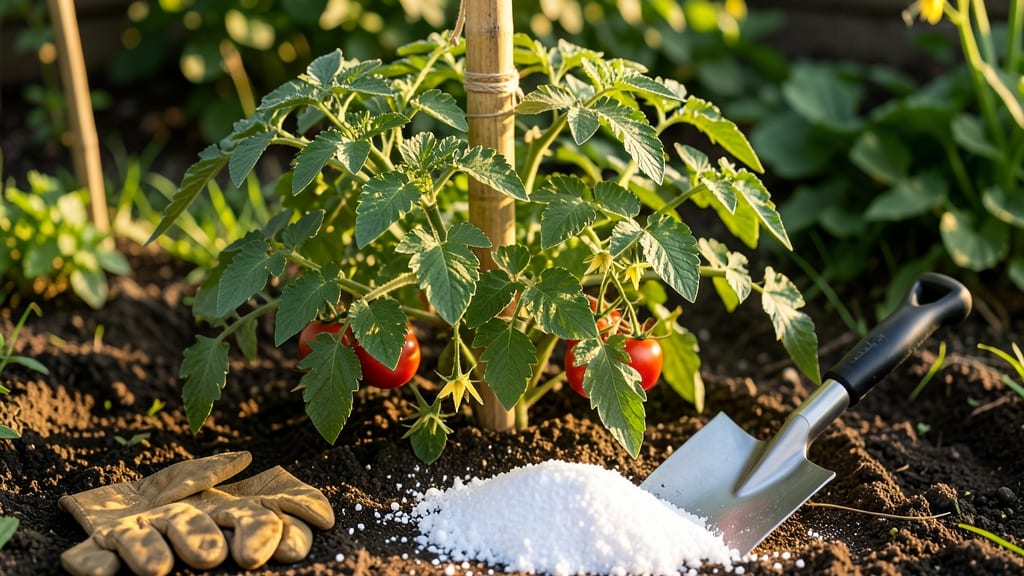
Using gypsum for tomato plants boosts calcium levels in soil, which prevents blossom end rot and helps plants develop stronger cell structures. For best results, spread 1-2 pounds per 100 square feet before planting or during the fruiting season.
Gypsum works because it dissolves slowly, releasing calcium and sulfur without changing your soil's acidity level. 🌱 This makes it safer than lime, which can raise pH and disrupt nutrient balance. I've seen tomato plants treated with gypsum show fewer signs of blossom end rot and produce firmer fruit.
The key is applying it evenly and avoiding overuse, which can lead to salt buildup in the soil.
For organic gardeners, gypsum offers a mineral-based solution that complements compost and other organic amendments. Unlike Epsom salt—which provides magnesium—gypsum targets calcium specifically, making it the better choice for preventing those unsightly black spots on tomato blossoms. Always mix it into the top 6 inches of soil for maximum effectiveness.
💡 In This Article
- How Gypsum Corrects Calcium Deficiency in Tomatoes
- Best Application Methods for Tomato Plants Using Gypsum
How gypsum corrects calcium deficiency in tomatoes
Gypsum works its magic by breaking down into calcium and sulfate ions when dissolved in water—a process called dissolution. The chemical formula CaSO₄·2H₂O means each pound releases about 16% calcium and 18% sulfur, both essential for tomato health.
Unlike lime, which raises soil pH and can lock out other nutrients, gypsum maintains a neutral pH while making calcium instantly available to plant roots. This is crucial because tomatoes need calcium for cell wall formation, and a deficiency leads to blossom end rot.
The cellular mechanism is fascinating: calcium strengthens the pectin in tomato cell walls, giving fruit its firmness. When calcium is scarce, cells can't maintain their structure, causing those telltale black, sunken spots on blossom ends.
Gypsum's slow-release nature means calcium stays available throughout the growing season, unlike fast-acting fertilizers that get washed away. 🌱 For example, a 100-square-foot garden treated with 2 pounds of gypsum can provide enough calcium for 5-6 plants during fruiting.
Magnesium sulfate (Epsom salt) is often mistakenly used for calcium needs, but it's a poor substitute. While Epsom salt provides magnesium—critical for photosynthesis—it does nothing for calcium deficiency. Tomatoes need both, but the wrong nutrient won't fix blossom end rot.
Think of it like trying to build a house with nails instead of screws: the structure won't hold. Gypsum's calcium-to-sulfur ratio of 1:1 is perfect for tomatoes, which also need sulfur for protein synthesis.
What most gardeners don't realize is how gypsum improves soil structure too. The sulfate ions help break up compacted clay soils, creating better aeration and drainage—two factors that indirectly support root calcium uptake.
I've seen heavy clay soils transformed from waterlogged to crumbly after a single application, which also reduces the risk of root rot. This dual action makes gypsum a smart choice for both nutrient correction and soil health.
For visible results, apply gypsum when tomatoes are flowering or fruiting, as this is when calcium demand peaks. The calcium moves through the plant's xylem (water transport system) to developing fruit, ensuring it reaches where it's needed most.
Unlike foliar sprays, which can burn leaves, gypsum works from the roots up, providing a steady supply without stressing the plant. 💫 This targeted approach is why gardeners see fewer cases of blossom end rot within 2-3 weeks of application.
One common mistake is overapplying gypsum, which can lead to salt buildup in the soil. While calcium is essential, too much can disrupt the balance of other nutrients like potassium and magnesium.
Always follow the 1-2 pounds per 100 square feet guideline and monitor your soil's electrical conductivity (EC) to avoid salinity issues. A simple soil test can tell you if your garden needs gypsum or if another amendment would be better.