
Companion Plants
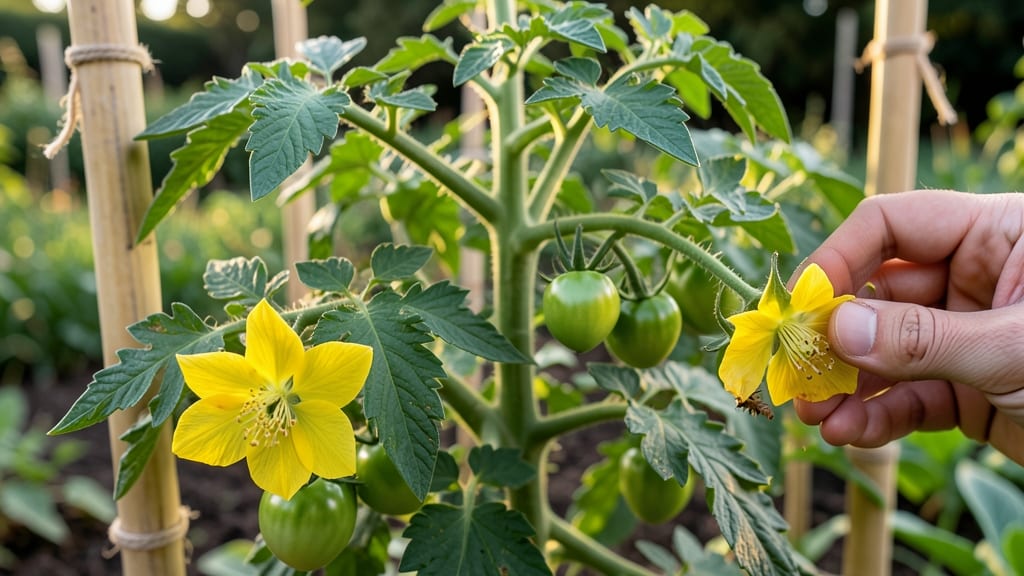
Tomato plants need pollination to produce fruit, though some self-pollinating varieties thrive without assistance. Wind, bees, or manual methods like shaking plants can transfer pollen for better yields, especially in greenhouses or low-bee environments.
Most tomato varieties rely on pollen transfer to develop fruit, whether from bees buzzing between flowers or gentle breezes carrying grains. 🌱 The process starts when pollen lands on the stigma, triggering fertilization that leads to those juicy tomatoes.
While some modern hybrids handle self-pollination well, heirloom types often need a helping hand—especially indoors where pollinators are scarce. I've seen firsthand how a simple shake of the plant can double fruit production in containers or greenhouses.
What's fascinating is how environmental factors play into this. High humidity can actually hinder pollen transfer, while dry conditions create perfect conditions for wind or manual methods to work effectively.
This is why greenhouse growers often need to take matters into their own hands—using paintbrushes or even gently tapping the flowers to encourage pollen movement. The key is timing: morning pollination gives flowers the whole day to set fruit before nightfall.
💡 In This Article
- How Pollination Works in Tomato Plants
- Manual Pollination Techniques for Better Tomato Harvests
How pollination works in tomato plants
Tomato flowers have a fascinating two-part reproductive system. The male parts (anthers) produce pollen grains containing sperm cells, while the female stigma sits at the center like a tiny landing pad.
When pollen lands on the stigma, it triggers a biochemical reaction that forms a pollen tube—essentially a microscopic bridge—down through the style to the ovary. This process, called fertilization, takes about 24-48 hours to complete before the ovary begins swelling into a fruit.
The challenge lies in how pollen transfers. Most tomato varieties are self-pollinating, meaning their flowers can fertilize themselves, but they often need help moving pollen between anthers and stigma.
Bees are the superstars here—their fuzzy bodies pick up pollen while collecting nectar, then deposit it on the next flower's stigma. Wind also plays a role, especially in outdoor gardens where gentle breezes can carry pollen up to 3 feet between plants.
However, humidity over 70% can create a sticky barrier that prevents pollen from releasing or sticking properly, which is why greenhouse tomatoes often struggle without intervention.
Here's where things get interesting: heirloom varieties often require cross-pollination between different plants to produce the best fruit. This is why you might see blossoms drop off without setting fruit—it's the plant's way of signaling poor pollination.
Modern hybrids like 'Celebrity' or 'Better Boy' have adapted to self-pollinate more reliably, but their ancestors needed bees or wind to thrive. The flower's structure actually works against self-pollination—the stigma sits above the anthers, forcing pollen to fall or be carried to another flower.
Temperature matters too. Pollen production peaks at 75-85°F, while fertilization works best between 60-90°F. Below 55°F, pollen may not germinate properly, and above 95°F, flowers can drop without setting fruit.
This is why early spring or late summer tomatoes often need extra attention—cool mornings or heatwaves can disrupt the delicate pollination process. The good news? You can often compensate by hand-pollinating during these temperature extremes.
What most gardeners don't realize is how flower age affects pollination success. Young flowers (3 days old) produce pollen that's less viable, while mature flowers (about 5-7 days old) have optimal pollen quality.
The stigma is also most receptive during the first 24 hours after the flower opens—after that, its ability to accept pollen declines rapidly. This timing explains why morning pollination (whether by bees or humans) gives flowers the best chance at successful fruit set.
The whole process relies on a delicate balance of physics and biology. Pollen grains are actually quite heavy—each one weighs about 0.000000001 grams—so they don't travel far on their own.
That's why bees' leg hairs can carry up to 10,000 pollen grains at once, making them far more efficient pollinators than wind. In greenhouse settings where bees can't access plants, growers often mimic this by using small paintbrushes to physically transfer pollen between flowers, achieving similar success rates.