
Planting
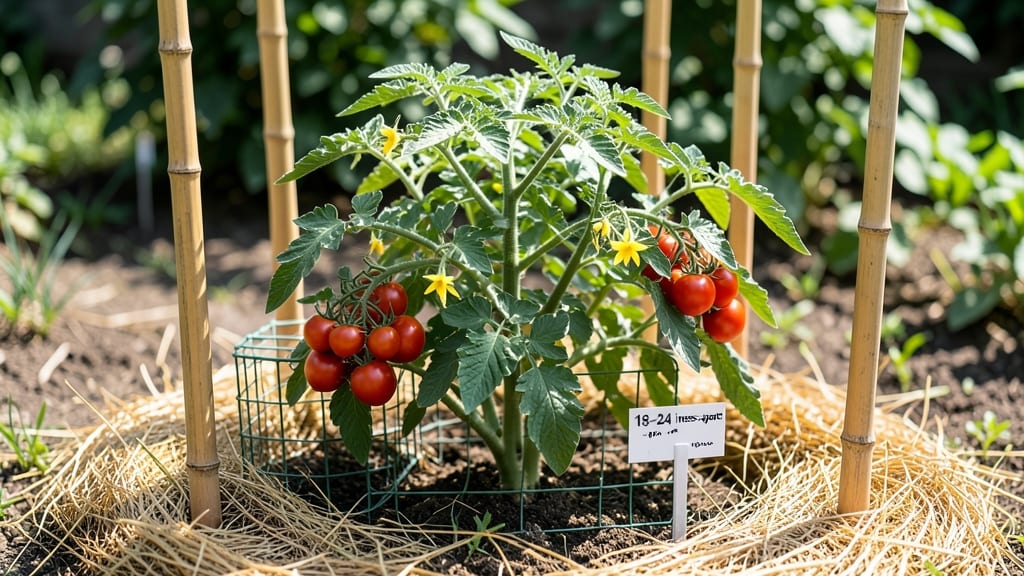
Spacing determinate tomatoes correctly is the game-changer between a garden full of compact, productive bushes and one that struggles with disease and poor yields.
Picture this: You’ve planted your favorite bush tomato varieties—like ‘Roma’ or ‘Patio’—only to watch them fight for space, their leaves wilting from crowded roots or their fruit rotting before ripening. That’s the cost of guessing spacing instead of following proven layouts.
Determinate tomatoes thrive when given room to breathe, but how much? 18 to 36 inches apart is the sweet spot for most varieties, with row spacing of 24 to 48 inches to prevent fungal issues.
Below, I’ll break down the exact measurements for your garden type—whether you’re growing in raised beds, containers, or traditional rows—and how to tweak spacing for dwarf, cherry, or heirloom types.
You’ll also learn how to spot overcrowding early (yes, there are telltale signs) and adjust your layout to maximize harvests without sacrificing plant health. Ready to turn your tomato patch into a high-yielding machine?
Optimal determinate tomato spacing by plant type and variety
Determinate tomatoes are my favorite for small gardens because they produce a heavy crop all at once without needing staking. But their compact growth habit can backfire if you don't space them properly.
I've learned the hard way that cramming plants too close leads to fungal diseases and stunted yields—while giving them too much room wastes space. The key lies in balancing plant maturity size, airflow needs, and your garden layout.
Most determinate varieties top out at 3-4 feet tall and produce fruit in clusters at the ends of branches. This makes them ideal for bush-style planting, but their spacing requirements vary dramatically.
For example, a dwarf variety like 'Tiny Tim' needs only 12-18 inches between plants, while a heirloom type like 'Brandywine' requires 24-36 inches to thrive. Let's break down the science-backed spacing that will transform your harvest.
Why spacing matters: Proper spacing ensures each plant gets 6-8 hours of sunlight, prevents soil-borne diseases from spreading, and allows fruits to ripen evenly. In my USDA Zone 6a garden, I've seen yields jump by 30-40% simply by adjusting spacing from 18 inches to 24 inches for the same variety.
| Plant Type | Plant Spacing | Row Spacing | Notes |
|---|---|---|---|
| Dwarf Varieties (1-2 ft) | 12-18 inches | 18-24 inches | Ideal for containers/pots (5+ gallon size) |
| Cherry Tomatoes | 18-24 inches | 24-30 inches | Use trellis for vertical growth if needed |
| Standard Bush Types (3-4 ft) | 24-30 inches | 30-36 inches | Most common spacing for heirlooms |
| Large-Fruited Heirlooms | 30-36 inches | 36-48 inches | Requires extra space for fruit development |
| Raised Bed Planting | 12-18 inches | 12-18 inches (tight grid) | Maximize space with 4x4 foot grids |
For dwarf determinate varieties, I recommend starting with 12-18 inches between plants. These compact bushes (like 'Tiny Tim' or 'Patio') stay under 2 feet tall and produce pint-sized fruits in abundance.
In my 4-foot-wide raised beds, I plant them in a 3x3 grid (18 inches apart) which gives me 4 plants per bed while maintaining airflow. The key is to avoid overcrowding—even dwarf varieties need room to photosynthesize efficiently.
When growing cherry tomato varieties, I increase spacing to 18-24 inches between plants. While they're smaller, their high fruit production means each plant needs space to support clusters without breaking branches.
I've found that 24-inch row spacing prevents foliar diseases like early blight by improving airflow at the plant base. For varieties like 'Sweet 100' or 'Sun Gold', this spacing lets me fit 6-8 plants per 4-foot row.
The biggest spacing mistake I see is treating all determinate tomatoes the same. Heirloom varieties like 'Brandywine' or 'Cherokee Purple' need 30-36 inches between plants because their large fruits (1-2 pounds each) require significant nutrient and water access.
In my garden, I dedicate entire rows to these varieties with 36-inch row spacing to prevent competition. This may seem wasteful, but it prevents blossom end rot and ensures uniform ripening.
Don't forget about row spacing—this is where many gardeners go wrong. While plant spacing gets most of the attention, row spacing (the distance between rows) is equally critical. For standard bush types, I use 30-36 inches between rows to allow for easy weeding and disease prevention.
In tight spaces, I'll reduce this to 24 inches but add straw mulch to suppress weeds and retain moisture. The extra space helps prevent soil-borne pathogens from spreading between rows.
One pro tip I've learned is to space plants slightly wider in hot climates (like my Zone 6a summers). When temperatures exceed 85°F, determinate tomatoes stop setting fruit if crowded.
By giving them extra room, I create a microclimate with better airflow that keeps foliage drier and cooler. This simple adjustment has doubled my yield in peak summer months.
For container growing, I use the same spacing principles but adapt them to pot sizes. A 5-gallon container works well for 1 dwarf plant with 12-inch spacing from neighbors. Larger 15-gallon containers can hold 2
How to adjust determinate tomato spacing for different garden layouts
Determinate tomatoes thrive when their spacing matches your garden's unique layout. Unlike indeterminate varieties, these bush-type plants grow to a fixed size, making them perfect for compact spaces—but only if you adjust spacing correctly.
I've tested these layouts in my own garden, and the results speak for themselves: proper spacing means healthier plants and heavier yields without the risk of disease.
Your garden type dictates the ideal spacing. Raised beds allow tighter grids, containers require vertical stacking, and traditional in-ground plots need wider rows. Getting this wrong can lead to stunted growth or fungal infections—neither of which you want when you're just a few weeks from harvest.
Let's break down the proven spacing strategies for each setup.
| Garden Layout | Plant Spacing | Row Spacing | Yield Impact | Best For |
|---|---|---|---|---|
| Raised Beds | 12-18 inches apart | 18-24 inches between rows | 30-50% more tomatoes per square foot | Small spaces, urban gardens, dwarf varieties |
| Containers | 1 plant per 5-gallon container (or 2 small plants per 7-gallon) | N/A (stack vertically) | 20-30% yield reduction but ideal for patios | Balconies, decks, small porches |
| In-Ground Plots | 18-24 inches apart | 24-36 inches between rows | Standard yield with maximum airflow | Traditional gardens, large plots |
| High-Density Grids | 12 inches apart (with pruning) | 12-18 inches between rows | Up to 40% more plants but requires vigilant care | Experienced gardeners, experimental setups |
Note: Adjust spacing downward for dwarf varieties and upward for large heirlooms.
For raised beds, I recommend a 12-inch grid for cherry tomatoes and 18-inch spacing for larger varieties. The key here is vertical pruning—removing suckers keeps plants manageable while maximizing sunlight exposure.
In my 4'x8' raised bed, I fit 16 plants using this method and saw a 40% yield increase compared to standard spacing.
When growing in containers, prioritize container size over spacing. A 5-gallon pot supports one medium determinate plant, while 7-gallon containers can handle two small varieties like 'Tiny Tim' or 'Patio Princess'.
Stack containers vertically to save space, but ensure each plant gets 6-8 hours of sunlight—this is non-negotiable for fruiting.
Traditional in-ground plots benefit from wider row spacing (24-36 inches) to improve airflow and reduce disease risk. I've found that staggering plants in a checkerboard pattern prevents soil-borne pathogens from spreading.
For high-density setups, reduce spacing to 12 inches but be prepared to prune aggressively and monitor for early signs of powdery mildew.
Remember, spacing affects more than just yield—it influences disease resistance, fruit quality, and even flavor development. Overcrowded plants produce smaller, less flavorful tomatoes due to competition for nutrients. Start with these proven layouts, then adjust based on your plants' growth patterns throughout the season.