
How To
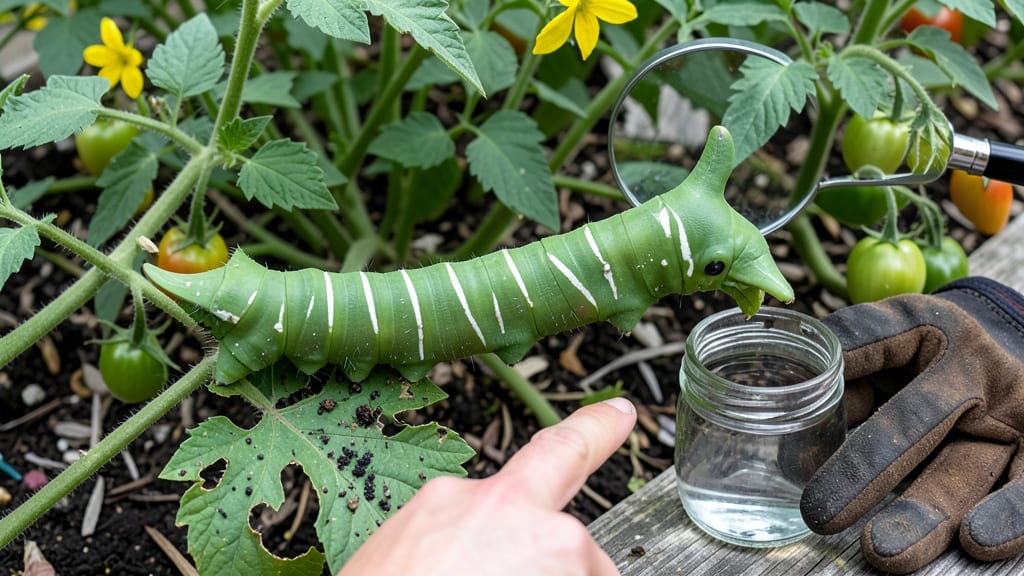
Can tomato hornworms hurt you? Their venomous sting is harmless to humans, causing only a mild, temporary irritation similar to a bee sting. Handling them barehanded may lead to slight discomfort, but they pose no serious health risks or allergic reactions.
These caterpillars pack tiny venomous spines that can deliver an uncomfortable pinch when touched, but their sting lacks the potency to cause lasting harm. 🌿 The irritation usually fades within minutes, and most people experience nothing worse than a minor itch.
Their venom evolved to deter predators like birds—not humans—so while they might arch their backs defensively, they won’t leave you with anything more than temporary discomfort.
If you’re gardening and encounter one, use tongs or gloves to avoid contact entirely. For those curious about their role, these voracious eaters actually help control pests like aphids and tomato hornworms, making them a gardener’s unlikely ally despite their intimidating appearance.
The key is recognizing their ecological value while handling them safely.
💡 In This Article
- Understanding Tomato Hornworm Venom and Stinging Mechanics
- Safe Handling and Removal Techniques for Gardeners
Understanding tomato hornworm venom and stinging mechanics
The tomato hornworm's "venom" isn't actually venom in the traditional sense—it's a specialized defense mechanism using tiny, hollow spines called setae along its body. These spines inject a mild chemical cocktail containing formic acid and other irritants when pressed against skin.
The sting triggers a localized histamine response, similar to how nettles cause irritation through microscopic glass-like structures. 🔥
Each spine functions like a microscopic hypodermic needle, delivering its irritant payload when broken off against skin. The hornworm's primary predators are birds and wasps, which these spines evolved to deter—not humans.
Unlike true venomous creatures (like snakes or spiders), hornworms lack the biochemical machinery to produce potent neurotoxins. Their sting is more about mechanical irritation than chemical harm.
For comparison, the pain level ranks around 2-3 on a 10-point scale, comparable to a bee sting but without the swelling or allergic potential. The irritation typically fades within 5-15 minutes, though sensitive individuals might experience itching for up to an hour.
The spines themselves are microscopic (0.004 inches long), making them nearly invisible without magnification.
What makes hornworms particularly effective at defense is their arching behavior. When threatened, they raise their rear end to expose their most venomous spines—a visual warning that deters even curious predators.
This behavior, combined with their rapid growth (reaching 4 inches in just 2 weeks), makes them formidable despite their harmless nature to humans.
The chemical composition of their sting differs significantly from other caterpillars. For example, the hickory tussock moth uses urushiol (the same compound in poison ivy), while hornworms rely on formic acid—a compound found in ant venom but in much lower concentrations.
This explains why their sting feels more like a mild burn than an allergic reaction.
Interestingly, the hornworm's sting serves no evolutionary purpose against humans. Our large size and lack of natural predation pressure mean these caterpillars have no need to develop more potent defenses.
Their venom system remains perfectly adapted to their ecological niche—deterring small predators while leaving humans completely unaffected beyond temporary irritation. 💫