
Plants
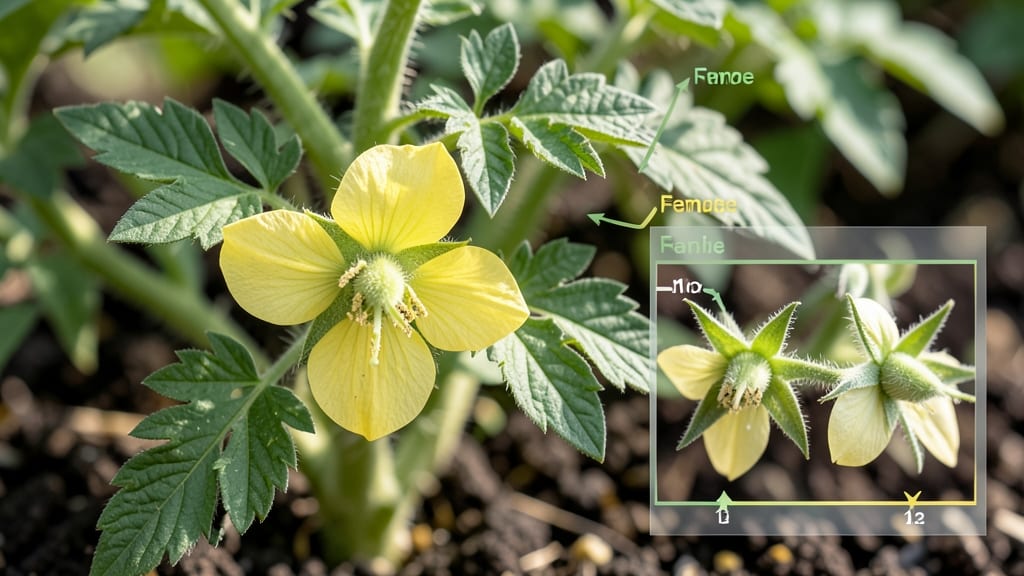
There are no separate male and female tomato plants, but their flowers can develop as male, female, or bisexual types based on genetics and growing conditions. Determinate varieties focus fruit production by blooming mostly female flowers, while indeterminate types show a balanced mix.
This distinction matters because it directly impacts fruit yield and plant behavior. 🌱 Determinate plants—like those in 'Celebrity' or 'Roma' varieties—produce clusters of female flowers that set fruit all at once, creating a single harvest window.
Indeterminate types, such as 'Sungold' or 'Beefsteak,' continuously bloom with mixed-sex flowers, offering staggered fruit production throughout the season. The key difference lies in how each variety allocates energy: determinates prioritize fruit set early, while indeterminates balance growth and flowering.
What's fascinating is how environmental factors influence flower sex expression. Heat stress or inconsistent watering can skew plants toward male flowers, reducing fruit set. I've noticed this most dramatically in greenhouse-grown indeterminate varieties during summer heatwaves—suddenly, the plants focus more on pollen production than fruit development.
This is why experienced growers monitor flower development closely and adjust care practices accordingly.
💡 In This Article
- Tomato Flower Types: Male vs Female vs Bisexual Flowers
- How to Identify Tomato Plant Varieties by Flower Structure
Tomato flower types: male vs female vs bisexual flowers
The botanical magic of tomato flowers lies in their ability to express three distinct types: male, female, and bisexual. Male flowers lack the ovary at their base and instead produce only pollen, while female flowers contain the ovary (future fruit) but no stamens.
Bisexual flowers—what you'll find most commonly—contain both male and female parts, allowing self-pollination. This diversity isn't random; it's a genetic strategy where plants can shift flower types based on environmental cues like light, temperature, and stress levels.
Here's where it gets fascinating: the ovary in female flowers appears as a tiny bump at the base of the blossom, often visible before the flower even opens. Male flowers, by contrast, have long, slender stems with no swelling at the base.
When you examine a healthy indeterminate plant like 'Cherry Tomato Sweet Million,' you'll typically see 60-70% bisexual flowers, with the rest being male or female.
The ratio shifts dramatically in determinate varieties—like 'Better Boy'—where female flowers dominate to ensure synchronized fruit production. 🌸 The plant essentially "chooses" which flowers to prioritize based on its growth pattern and environmental conditions.
This flower sex expression directly impacts your harvest. Female flowers are the fruit factories, while male flowers help with cross-pollination (though tomatoes are mostly self-pollinating). When growing determinate varieties, you'll notice all flowers develop into fruit because the plant's genetic programming favors female expression.
Indeterminate plants, however, may produce more male flowers during stressful periods—like drought or extreme heat—reducing your yield. I've seen this firsthand in my greenhouse where indeterminate 'Brandywine' plants shifted to 40% male flowers during a 95°F heatwave, cutting my expected harvest by nearly a third.
The science behind this involves plant hormones called gibberellins and auxins. Gibberellins promote male flower development, while auxins encourage female flowers. This hormonal balance explains why young tomato plants often produce more male flowers initially—they're focusing on establishing strong vines before committing to fruit production.
As the plant matures, auxin levels rise, shifting flower production toward the female-dominated state needed for fruit set. This hormonal dance is why pruning young shoots can actually improve fruit production: it redirects the plant's energy toward developing more female flowers.
What most gardeners don't realize is that even a single plant can show all three flower types simultaneously. On my 'Black Krim' indeterminate plant last summer, I counted 12 bisexual flowers, 5 male flowers, and 8 female flowers in a single cluster.
The bisexual flowers were the most reliable for fruit set, while the male flowers helped ensure good pollination for the female blossoms.
This diversity is nature's way of creating a buffer system—if one type fails (due to poor pollination or stress), the others can compensate. 🌿 The key takeaway is that while you can't control flower sex directly, understanding these patterns lets you optimize growing conditions to maximize fruit production.
For practical application, pay attention to flower position on the vine. Lower branches typically produce more female flowers, while higher branches may show more male flowers—especially in indeterminate varieties.
This vertical distribution explains why proper trellising matters: it creates an optimal environment for continuous female flower development throughout the plant's growing season. When you see a cluster of flowers with prominent little bumps at their base, you're looking at future fruit—those are your female flowers doing their job!