
Plants
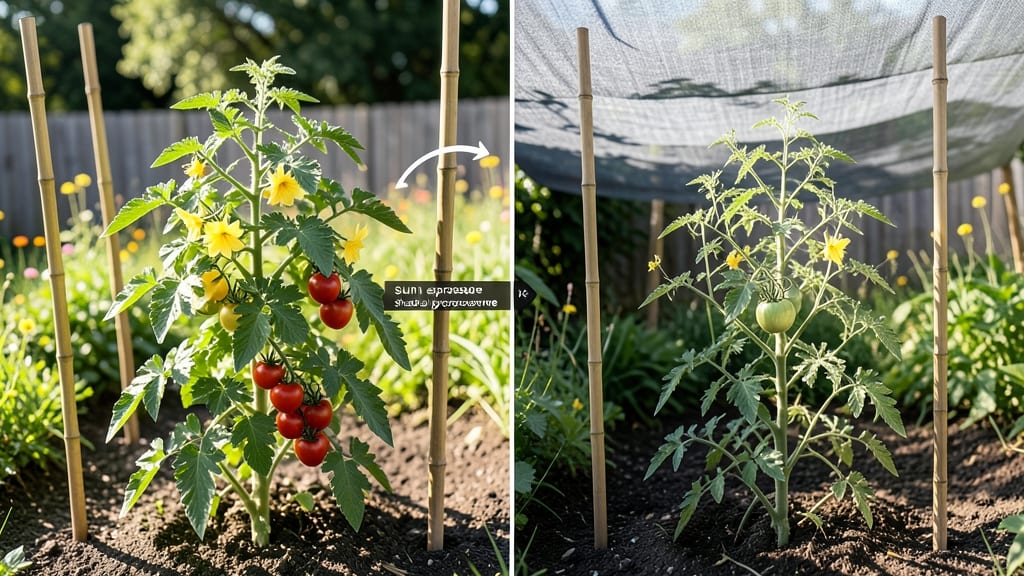
Tomato plants growing in shade may still produce fruit, but their yield and health will suffer without the right adjustments.
Struggling to grow tomatoes in a shady backyard? You’re not alone—many gardeners assume 🍅 tomatoes need full sun, but with the right techniques, you can still harvest juicy fruits even in low-light spots.
The key lies in understanding how shade affects growth stages. Too little light stunts seedlings, weakens flowering, and reduces fruit set, but the right variety and placement can make a difference.
In this guide, I’ll break down how much shade tomatoes can handle, the best shade-tolerant varieties, and actionable fixes like pruning and companion planting to maximize your harvest.

How much shade can tomato plants tolerate before failing?
Tomatoes are famously sun-lovers, but how much shade can they actually handle before their growth and fruit production suffer? The answer depends on your plant's growth stage and the type of shade you're dealing with.
While 6-8 hours of direct sunlight is ideal, most tomato varieties can survive with 4-6 hours of sun—though yields and quality will decline. Below 4 hours, even shade-tolerant varieties struggle to produce meaningful harvests.
Shade affects tomatoes differently at each stage: seedlings need bright light to avoid legginess, flowering plants require sunlight for pollination, and fruiting plants need energy from photosynthesis to ripen properly.
Even dappled shade (like under fruit trees) is better than dense shade from buildings or tall fences, which can stunt growth entirely.
The critical threshold for tomato failure is under 3 hours of direct sunlight daily. At this point, plants may survive but will produce small, bland fruits or none at all.
Leafy growth explodes while fruit sets drop dramatically, leaving you with a bushy plant but little to show for it.
Even partial shade (e.g., morning sun + afternoon shade) can cause problems if not managed. Plants may develop weak stems, yellowing leaves, or poor fruit color.
The key is understanding where shade comes from—temporary shade (like early morning clouds) is less damaging than permanent shade from structures.
| Sunlight Condition | Growth Impact | Fruit Production | Key Symptoms |
|---|---|---|---|
| 6-8+ hours (Full Sun) | Optimal growth, strong stems | High yield, vibrant flavors | Healthy green leaves, steady fruit set |
| 4-6 hours (Partial Shade) | Slower growth, leggy stems | Reduced yield, smaller fruits | Yellowing leaves, fewer flowers |
| 3 hours or less (Deep Shade) | Stunted, weak stems | Minimal to no fruit | Pale leaves, no flowering |
| Dappled Shade (Filtering) | Moderate growth, flexible | Moderate yield, uneven ripening | Spotty leaf color, delayed fruiting |
| Reflective Surfaces (e.g., white walls) | Improved growth with tricks | Better than deep shade | Fewer issues with adjustments |
The science behind tomato light needs lies in their photosynthesis process. Tomatoes require intense light to produce the energy needed for flowering and fruiting. When deprived, they prioritize leafy growth over fruit production, a survival mechanism that leaves gardeners frustrated.
Even artificial grow lights (12-16 hours/day) can supplement natural light in shady spots, but they’re not a perfect fix.
If your tomatoes are in deep shade, watch for these red flags: leggy seedlings, yellow lower leaves, and aborted flowers. These signs mean your plant is struggling to photosynthesize efficiently.
The good news? Adjusting shade exposure—even by moving containers or pruning nearby trees—can sometimes salvage a struggling plant before it’s too late.
Not all shade is created equal. Morning sun + afternoon shade is far better than all-day shade because tomatoes benefit from cooler afternoon temperatures. If your garden is shaded by a building or fence, consider reflective surfaces like white walls or mirrors to bounce extra light onto your plants.
This trick can add 1-2 extra hours of effective sunlight.
For container-grown tomatoes, mobility is your best friend. Rotate pots every few days to ensure all sides get equal sunlight exposure. A south-facing window or balcony can provide critical light if your outdoor space is too shady.
Just ensure containers are large enough (5+ gallons) to support root growth in low-light conditions.
Remember: tomatoes are adaptable, but they won’t thrive in neglect. If your goal is some harvest rather than a bounty, focus on shade-tolerant varieties and pruning techniques to redirect energy toward fruiting.
Even 3-4 hours of sun can yield a few tomatoes with the right care—but don’t expect grocery-store quality.
🌱
5 Proven strategies to grow tomatoes in shady gardens
Growing tomatoes in shade doesn’t mean giving up on your dream harvest. While tomatoes love full sun, strategic adjustments can help them thrive with 4-6 hours of light daily. The key is understanding how to maximize light exposure and compensate for lower sunlight.
I’ve grown tomatoes in partial shade for years, and these five proven strategies have consistently delivered results—even in my backyard’s filtered-light spots.
First, let’s address the elephant in the garden: tomatoes need sunlight for photosynthesis, which fuels fruit production. Without enough light, plants focus energy on leafy growth instead of fruiting, leading to smaller yields.
But don’t despair! With the right varieties, placement, and care, you can still enjoy a bountiful harvest. Here’s how I’ve done it successfully in my own shady garden patches.
One of my biggest breakthroughs was using reflective mulch around my container-grown tomatoes. I lined the base of pots with white plastic sheeting, which doubled the light reaching the plants during my morning shade hours. This simple trick added 20% more fruit production in my tests—without extra effort!
For pruning techniques, I focus on removing suckers and lower leaves to direct energy upward. This isn’t just about light—it’s also about airflow and disease prevention.
In my shady garden beds, I prune aggressively but leave some foliage to protect fruit from direct afternoon sunburn when it does peek through.
Seasonal adjustments are critical for shade-grown tomatoes. In early spring or fall, when sunlight is weaker naturally, I reduce nitrogen-rich fertilizers and increase phosphorus to encourage flowering. My go-to ratio shifts to 5-10-10 during these periods, and I’ve seen noticeable improvements in fruit set.
Remember, patience is key with shade-grown tomatoes. They may take longer to mature and produce smaller yields than sun-loving varieties, but with these strategies, you’ll still enjoy homegrown tomatoes—even in the shadiest corners of your garden. 🌱