
Companion Plants
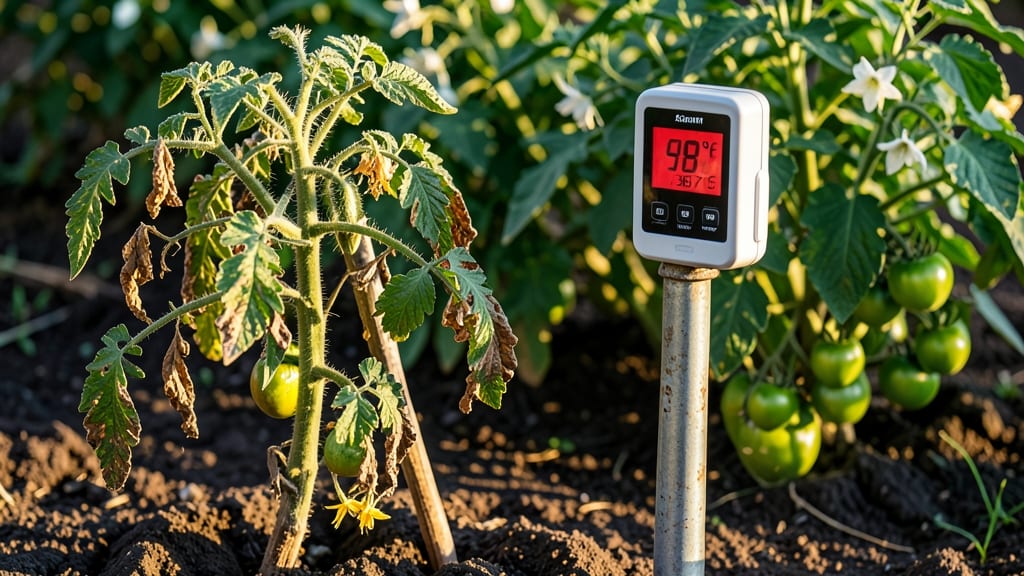
Tomato plants die when temperatures hit 95°F or higher for prolonged periods, but even brief dips below 50°F can cripple them—leaving you staring at wilting 🍅 vines instead of a harvest.
Your prized tomato plants might be thriving now, but did you know a sudden temperature spike could kill them within hours? Understanding the exact heat thresholds—and how to protect your plants—is the difference between a bountiful harvest and total crop loss.
Most gardeners assume tomatoes handle heat like other warm-season crops, but the truth is, they’re far more sensitive than you’d think. A 100°F heatwave can scorch leaves in minutes, while nighttime temps below 55°F stunt growth permanently.
In this guide, I’ll break down the critical temperature limits, how to shield your plants from disaster, and—most importantly—what to do if they’ve already taken a hit. No guesswork, just fast, actionable steps to save your garden.
Critical temperature limits: when do tomato plants die from heat?
Tomato plants thrive in warm conditions, but extreme heat can push them past their survival limits. While most varieties prefer 70-85°F during the day, temperatures above 95°F trigger irreversible stress.
Nighttime temperatures below 55°F also pose risks, disrupting photosynthesis and nutrient absorption. Understanding these thresholds helps you act before damage becomes permanent.
Heat stress in tomatoes isn't just about high temperatures—it's about how long plants endure extreme conditions. A single day above 100°F can cause wilting, while prolonged exposure above 90°F for more than 48 hours often leads to leaf scorch and fruit drop.
The key is recognizing when your plants are fighting for survival rather than thriving.
🌡️ Critical Temperature Thresholds for Tomatoes 🌡️
The 95°F threshold is where tomatoes start showing visible distress. At this point, their leaves begin to wilt as the plant struggles to regulate internal temperatures. The real danger comes when daytime highs exceed 100°F—this is when photosynthesis shuts down, and the plant's energy reserves deplete rapidly.
Even heat-tolerant varieties like 'Heatmaster' or 'Solar Fire' can't survive prolonged exposure above this mark.
Nighttime temperatures play an equally critical role. While tomatoes can handle 55-65°F at night, dropping below 50°F for more than 48 hours disrupts their metabolic processes. This is especially dangerous during heatwaves, where scorching days are followed by unseasonably cool nights.
The plant's ability to recover is severely limited when it can't properly rest and recharge overnight.
Scientifically, tomato plants experience cellular stress at temperatures above 90°F. This triggers the production of ethylene gas, which accelerates leaf senescence (aging) and fruit ripening. When temperatures exceed 100°F, the plant's stomata (pores) close to conserve moisture, but this also blocks carbon dioxide intake, halting growth.
Within 24-48 hours of sustained exposure, the damage becomes permanent.
Wilting is the first visible sign of heat stress, but it's not always irreversible. If your plants wilt during the day but recover by evening, they're likely just conserving water.
However, if wilting persists into the night or is accompanied by yellowing leaves or blackened leaf edges, your tomatoes are in serious trouble. These symptoms indicate heat shock, where the plant's proteins begin to denature (unfold), leading to cell death.
Heatwaves are particularly dangerous because they combine extreme daytime highs with insufficient nighttime recovery. For example, a 105°F day followed by a 60°F night can be more damaging than a steady 95°F for several days.
In such cases, tomato plants may survive the heatwave but suffer reduced yield or poor fruit quality due to stress-induced flower drop or blossom end rot.
Understanding these thresholds helps you take proactive measures. For instance, if your forecast shows three consecutive days above 95°F, it's time to implement emergency cooling strategies like shade cloth or temporary row covers.
The goal is to keep daytime temperatures below 90°F and nighttime temps above 55°F to give your plants a fighting chance.
🌱 Remember, tomatoes are resilient, but they have their limits. By recognizing the critical temperature thresholds and acting quickly, you can protect your plants from irreversible heat damage and ensure a bountiful harvest.
The difference between a thriving tomato plant and a dead one often comes down to just a few degrees and timely intervention.
How to protect tomato plants from deadly heat before it’s too late
When daytime temperatures climb above 90°F (32°C), your tomato plants start struggling to regulate their internal temperature. The leaves wilt, flowers drop, and fruit development stalls—all signs your plants are fighting for survival.
Without intervention, heat stress can kill tomato plants within 24-48 hours, especially when combined with high humidity or drought conditions. The key to saving your crop lies in proactive cooling and stress reduction before the damage becomes irreversible.
I’ve learned the hard way that waiting until your plants are already wilting is too late. Preventative measures like shade solutions, strategic watering, and proper mulching can drop leaf temperatures by 10-15°F (5-8°C) and maintain root moisture.
Even in high-temperature zones (USDA 9-11), these techniques help tomato plants endure 100°F+ (38°C+) heatwaves without permanent damage. Let’s dive into the actionable strategies that have saved my tomato plants during brutal summers.
⚠️ Critical Heat Threshold for Tomato Plants
Tomato plants die when exposed to:
- Daytime temps above 105°F (40°C) for more than 4 hours
- Nighttime temps above 85°F (29°C) preventing recovery
- Soil temps exceeding 95°F (35°C) (roots suffocate)
Warning signs before death:
- Leaves curl upward (scorching)
- Yellowing between leaf veins (heat stress)
- Flowers drop without pollination
🌱 Act now: If temps hit 95°F+, implement emergency cooling within 2 hours to prevent irreversible damage.
For immediate shade relief, I recommend using 30-50% shade cloth draped over tomato cages or trellises. This blocks 20-30% of sunlight while still allowing enough light for photosynthesis.
In extreme cases, you can use white reflective tarps or even old bedsheets to bounce back 10-15% of sunlight, effectively lowering leaf temperatures by 5-10°F (3-5°C). I’ve seen this method work wonders during sudden heatwaves when I don’t have time to set up permanent shade structures.
Your watering schedule becomes critical during heatwaves. Unlike what many gardeners think, daily shallow watering actually stresses tomato plants by encouraging shallow root growth. Instead, water deeply once or twice daily—aiming for 1-1.5 gallons per plant—to keep the root zone consistently moist.
The best time to water is early morning (5-7 AM) to allow foliage to dry before evening, reducing fungal risks. In 100°F+ (38°C+) heat, I’ve had success using drip irrigation systems with emitters placed at the base of plants to deliver water slowly and efficiently.
Don’t overlook the power of mulching—it’s one of the most underrated heat protection tools. A 3-4 inch layer of organic mulch (straw, wood chips, or grass clippings) keeps soil temperatures 10-15°F cooler than bare soil.
It also reduces evaporation by up to 70%, meaning your plants retain moisture longer. For extra protection, I’ve used black plastic mulch in desert climates—it absorbs heat during the day and radiates it away at night, creating a more stable soil temperature environment for roots.
If you’re in a high-temperature zone, consider long-term climate adaptation like choosing heat-tolerant varieties such as ‘Heatmaster’ or ‘Solar Fire.’ These varieties can handle 95°F (35°C) daytime temps better than traditional types. Additionally, prune lower leaves to improve airflow and reduce heat buildup in the canopy.
I’ve also had success with vertical growing systems—trellising tomatoes keeps foliage off hot soil and allows better air circulation around the plant.
Remember, the goal is to prevent heat stress before it becomes fatal. Start with shade solutions, optimize your watering routine, and use mulch as insulation. When temps threaten 105°F+ (40°C+), act fast with emergency cooling hacks like shade cloth or reflective surfaces.
With these strategies, you can protect your tomato plants and still enjoy a bountiful harvest even in the hottest summers. 🌿