
Plants
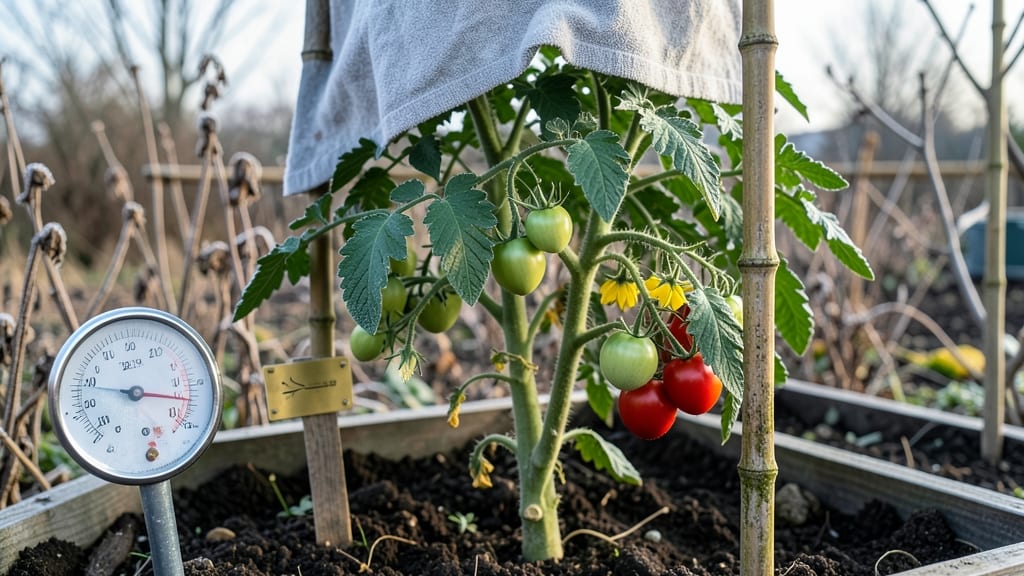
The coldest temperature tomato plants can handle is 32°F (0°C) for brief periods, though sustained cold below 40°F (4°C) causes irreversible damage. Frost (32°F/0°C or colder) destroys leaves and roots instantly, while sub-freezing temps kill plants completely. Even cold-resistant varieties struggle below 28°F (-2°C) without protection.
The survival range of tomato plants depends on their exposure time and variety. 🌱 Most garden tomatoes hit their cold limit at 32°F (0°C), where ice crystals form in plant cells, rupturing membranes and killing tissue.
This is why a single overnight frost can devastate an entire crop—unlike hardier vegetables that might recover. Cold-hardy varieties like 'Stupice' or 'Mountain Merit' can dip to 28°F (-2°C) for short periods, but even they'll need protective measures during extended chilly spells.
The key difference between these thresholds is time: a few hours at 28°F might be survivable, but prolonged exposure at 32°F or lower becomes fatal.
What makes this tricky for gardeners is that tomatoes are tropical plants at heart—they originate from regions where temperatures rarely drop below 60°F (15°C). Their metabolic processes slow dramatically below 50°F (10°C), which is why you'll often see stunted growth or blossom drop even before leaves show frost damage.
This biological limitation explains why northern gardeners either grow tomatoes in containers (which can be moved indoors) or focus on cold-tolerant varieties during shorter growing seasons.
💡 In This Article
- Tomato Plant Freezing Thresholds: Science Behind Cold Damage
- Protecting Tomato Plants from Cold: Step-by-Step Frost Prevention
Tomato plant freezing thresholds: science behind cold damage
When tomato plants hit 32°F (0°C), their cellular structure begins to fail catastrophically. Ice crystals form in the plant's vacuoles (water storage compartments) and expand, physically rupturing cell membranes—a process called freeze-induced dehydration.
This damage is irreversible, causing leaves to turn black within hours and roots to lose their ability to absorb water. Unlike hardy crops like kale or cabbage, tomatoes lack protective compounds like antifreeze proteins that help other plants survive similar temperatures.
Their tropical origins mean they're essentially ill-equipped for anything below 50°F (10°C).
The real danger zone starts at 40°F (4°C), where tomato metabolism slows to a crawl. Enzymes responsible for growth and photosynthesis become inactive, leading to stunted growth and blossom drop—a phenomenon where flowers abort before setting fruit.
This explains why gardeners in cooler climates often see healthy-looking plants suddenly stop producing tomatoes despite warm daytime temperatures. The damage compounds over time: just 24 hours below 40°F can reduce yield by 30-50%, while prolonged exposure at 32°F kills plants completely within 4-6 hours.
Variety plays a surprising role in cold tolerance. Cold-hardy tomatoes like 'Stupice' (which can handle 28°F/-2°C briefly) or 'Mountain Merit' (down to 28°F/-2°C for short periods) have thicker cell walls and higher sugar content that provides some protection. However, even these varieties won't survive prolonged exposure at 32°F.
In contrast, heirloom varieties like 'Brandywine' or 'Cherokee Purple' have almost no cold tolerance—they'll show frost damage at 34°F (1°C). The difference comes down to breeding: cold-hardy tomatoes were developed to prioritize cell membrane stability over flavor complexity.
What makes frost particularly devastating is how quickly it affects tomatoes. While other plants might show gradual yellowing, tomatoes experience instant cellular rupture when temperatures hit 32°F (0°C). The roots, which are the most vulnerable, can't recover even if above-ground foliage appears intact.
This is why gardeners often find tomato plants looking healthy one morning and completely dead the next after an overnight frost. The roots simply can't absorb water fast enough to compensate for the damage, leading to rapid dehydration and collapse.
Here's a visual comparison of how different temperatures affect tomatoes:
- Above 50°F (10°C): Normal growth, optimal photosynthesis
- 40-50°F (4-10°C): Metabolic slowdown, blossom drop begins
- 32-40°F (0-4°C): Cell membrane damage starts, irreversible in 6-24 hours
- Below 32°F (0°C): Instant frost damage, plant death within hours
The key takeaway is that tomatoes are not frost-tolerant—they're frost-sensitive plants that require protection at any temperature below 40°F (4°C).
Even a light frost at 32°F (0°C) can destroy a plant's ability to recover, which is why gardeners in marginal climates use techniques like row covers or cold frames to maintain temperatures above this critical threshold. 🌡️