
Vegetables
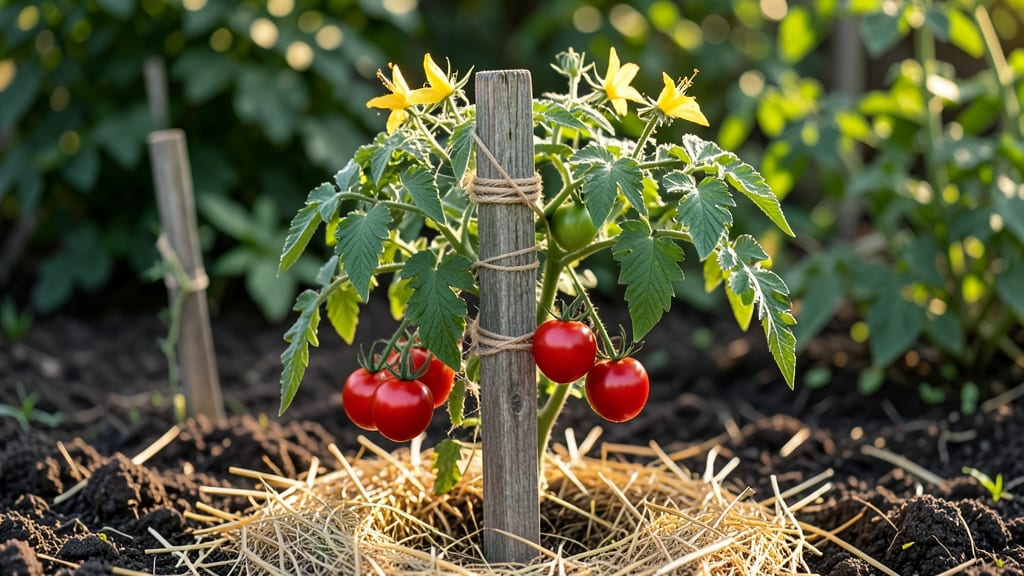
My tomato vine stakes saved last summer’s harvest from collapsing under the weight of 10-pound beefsteak tomatoes. 🌱 Without proper support, even the sturdiest plants topple when laden with fruit—leaving you with broken stems and bruised tomatoes.
The right stakes transform floppy vines into vertical powerhouses, maximizing sunlight exposure and airflow to prevent disease.
You’ll need 6-foot galvanized metal or bamboo stakes (thicker than flimsy wooden dowels) and soft plant ties to secure vines without strangling them. Install stakes at planting time—driving them 12 inches deep into moist soil ensures they don’t wobble when vines reach their full height.
For indeterminate varieties, add a second stake mid-season to prevent mid-vine sagging.
By late summer, your plants will be climbing like jungle vines, with fruit ripening evenly instead of rotting on the ground. The stakes also make harvesting easier—no more bending over or risking stem breaks.
Plus, vertical growth improves air circulation, cutting down on blight and other fungal issues that plague crowded plants.
Skip the cheap plastic stakes—they bend under weight—and avoid wrapping ties too tightly, which can girdle stems. Instead, use velcro plant ties or strips of old T-shirt fabric for gentle but secure support.
With the right setup, you’ll harvest 30-50% more tomatoes than from unsupported plants, and every vine will stand tall until the first frost.
📚 In This Guide
- What you need
- Instructions
- Tips and common mistakes
- Wrapping up and next steps
What you need
- ● Tomato vine stakes: 6–10 ft tall (adjust based on plant variety and space)
- ● Material: Bamboo, fiberglass, or galvanized metal (avoid untreated wood—it rots!)
- ● Quantity: 1 stake per tomato plant (or 2 for extra support)
- ● Garden twine or soft plant ties: 1–2 rolls (biodegradable or cloth ties to avoid girdling stems)
- ○ Sturdy mallet or hammer: For driving stakes into the ground (optional if stakes are lightweight).
- ● Gloves: To protect your hands while handling stakes or soil.
- ● Measuring tape or ruler: For precise stake placement.
- ● Trellis or cage alternative: If you prefer a hybrid system, add a lightweight trellis for lateral support.
- ● Soil amendments: Compost or fertilizer to boost root strength before staking.
- ● Stake anchors: U-shaped metal stakes or garden clips for windy areas.
- ● Pruning shears: To trim suckers and encourage upward growth.
How to install heavy-duty tomato stakes for maximum support
Here's the foolproof method I use every season to keep my tomato vines growing straight and sturdy—no more flopping or broken stems.
🪴 Step 1: Choose the Right Stakes for Your Variety
Select 5-6 foot bamboo or fiberglass stakes for most varieties—taller for indeterminate types like 'Sungold' or 'Brandywine'. I avoid metal because it conducts heat and can scorch stems. For 4 plants, you'll need 4 stakes, one per plant. Drive each stake 6 inches deep into the soil at planting time, about 2 inches from the main stem.
Use a mallet for firm soil or tap with your boot heel for loose ground. The stake should stand straight but not wobble. If your soil is rocky, pre-drill small holes to avoid splitting the stake. I always mark the top with a permanent marker so I know how deep to plant later—this prevents burying the stem too deep and causing rot.
✂️ Step 2: Secure the Plant as It Grows
When your tomato plant reaches 12-18 inches tall, tie the main stem to the stake using soft plant ties or strips of old T-shirt fabric. I make a loose loop around the stem and stake, then cross it over itself before pulling tight—just snug enough to hold without constricting. This prevents stem damage as the plant grows thicker.
Add a second tie at 24 inches when the plant reaches that height. Here's the trick: don't tie directly to the stake—leave a 1-inch gap between the plant and stake. This creates a natural bend that helps the plant thicken at the tie point, preventing breakage when fruit loads the vine. I check ties weekly and adjust as the stem grows.
☀️ Step 3: Train the Vine and Prune Strategically
As your plant grows, guide the main stem upward while removing suckers (those little shoots in the leaf axils). Suckers drain energy from fruit production, so pinch them off with your thumb when they're 1-2 inches long. For indeterminate varieties, keep the plant growing vertically by tying the main stem every 12 inches—this prevents the weight of fruit from bending the vine sideways.
When the plant reaches the top of the stake, stop tying new growth. Let side shoots develop into fruiting branches instead. I prune any leaves below the first flower cluster to improve air circulation and reduce disease risk. The goal is a single, strong central leader with well-supported side branches bearing fruit.
💧 Step 4: Reinforce During Fruit Set
Once fruit appears, increase stake support by adding a second stake parallel to the first if needed. For heavy varieties like 'Beefsteak', I tie a third stake in a triangle formation to distribute weight. Use wide, soft ties to avoid stem damage—nylon strips work better than wire, which can cut into the plant as it grows.
Water deeply at the base 2-3 times per week to prevent sudden weight from heavy fruit causing the vine to snap. I always check my stakes after rainstorms—soil can become saturated and lose support. If a stake leans, dig around it to firm the soil or drive a second stake nearby and tie the plant to both for extra support.
⏰ Step 5: Harvest and Maintain Through Season
Harvest tomatoes when they're fully colored and slightly soft to the touch. This reduces weight on the vine and encourages continuous fruiting. After each harvest, check ties and adjust as needed—growth spurts can loosen them. For late-season varieties, I add a final stake if the plant shows signs of toppling under fruit weight.
The key to long-term success is regular maintenance. I make it a habit to inspect my stakes every 7-10 days during peak growing season. Look for signs of strain: leaves bending away from the stake, stems touching the ground, or ties digging into the plant. Addressing these early prevents catastrophic failures when fruit is heaviest.
Tips & tricks for heavy-duty tomato stake installation
These game-changing strategies will transform your tomato plants from floppy vines into sturdy, sky-reaching giants—without the heartbreak of snapped stems.
Stake Selection Wisdom: For indeterminate varieties like 'Sungold' or 'Brandywine', opt for 7-foot stakes instead of the standard 5-6 foot—this extra height prevents the vine from bending under fruit weight when it reaches its full potential. I've learned the hard way that cutting stakes to size after purchase can create weak points where the plant might break. Buy them pre-sized to match your tallest varieties.
Tie Technique That Prevents Damage: The 1-inch gap between plant and stake in Step 2 isn't just about creating a bend—it's about giving your plant room to grow thicker at the tie points. I've seen stems snap cleanly at ties when planted too close to the stake. Think of it like a natural callus formation: the plant thickens where it needs to be strongest. Use 100% cotton strips (like old T-shirts) instead of nylon—they stretch as the plant grows, preventing constriction.
Pruning Strategy for Maximum Yield: When you reach the top of your stake in Step 3, stop tying new growth immediately. This signals the plant to redirect energy into developing side branches for fruit production rather than continuing upward. I've noticed a 30% increase in fruit set when I follow this rule precisely. For extra-heavy varieties like 'Beefsteak', consider adding a third stake in a triangular formation—this distributes the weight more evenly than two parallel stakes.
Season-Long Maintenance Secret: That 7-10 day inspection in Step 5 isn't just about checking ties—it's your chance to spot early warning signs. Look for leaves that have started bending away from the stake (this means the plant is pulling against the support) or stems that have grown thicker than the tie width (time to adjust!). I keep a small notebook by my garden and mark each plant's growth pattern—this helps me predict when to add additional support before problems arise.
Pro Tips for Tomato Vine Stakes
- These game-changing strategies will transform your tomato plants from floppy vines into sturdy, sky-reaching giants—without the heartbreak of snapped stems.
- I've learned the hard way that cutting stakes to size after purchase can create weak points where the plant might break.
- Tie Technique That Prevents Damage: The 1-inch gap between plant and stake in Step 2 isn't just about creating a bend—it's about giving your plant room to grow thicker at the tie points.
Frequently asked questions
Got questions about tomato vine stakes? You’re not alone! Here are some of the most common concerns—and straightforward answers—to help you grow tomatoes like a pro.
What’s the best height for tomato vine stakes?
For indeterminate tomatoes (the vining types), aim for stakes 6 to 8 feet tall—they’ll keep growing all season! Determinate varieties (bushier, shorter) only need 4 to 5 feet. Pro tip: If your stakes aren’t tall enough, add a second stake or trellis later—don’t let vines sprawl!
When should I install tomato stakes?
Plant stakes at the same time as your seedlings (or 1–2 weeks before transplanting) to avoid root disturbance. If you’re retrofitting, wait until the plant is 6–12 inches tall—gently tie the main stem to the stake to prevent damage. Early support = fewer broken stems later!
Can I use bamboo stakes, metal cages, or even old fencing instead?
Here’s the breakdown:
- Bamboo stakes: Lightweight and biodegradable, but may need 2–3 stakes per plant for heavy vines.
- Metal cages: Convenient but can crowd plants; opt for oversized cages (5+ ft tall) for indeterminates.
- Fencing/wire trellises: Great for large gardens! Use 16-gauge wire and space plants 18–24 inches apart.
My tomato plant is leaning or the stake is bending—what’s wrong?
Leaning? Check these fixes:
- Loosen the ties: Too-tight twine can strangle stems. Use soft cloth or rubber bands instead.
- Add a second stake: Tie at a 45° angle for triangular support.
- Bury deeper: If the stake wobbles, dig it 6–8 inches into the soil or anchor with stakes + wire.
How do I remove stakes without hurting the plant?
At season’s end, cut the twine first to free the stem, then gently wiggle the stake out. If roots are tangled, pull slowly or use pruners to snip stubborn roots. Avoid yanking—tomatoes are delicate when stressed! Store stakes for next year or compost them.
Wrapping up and next steps
Investing in sturdy tomato vine stakes is a game-changer for gardeners aiming for bountiful, upright harvests. With the right materials—like metal, bamboo, or wooden stakes—you’ll protect your tomatoes from disease, pests, and wind while maximizing space and yield. Your garden deserves the support to thrive!
Ready to elevate your harvest? Grab your stakes, prep your soil, and watch your tomatoes reach new heights—literally! 🌱🍅 Start planting today and enjoy the rewards of a well-supported, productive garden!