
Pests and Diseases
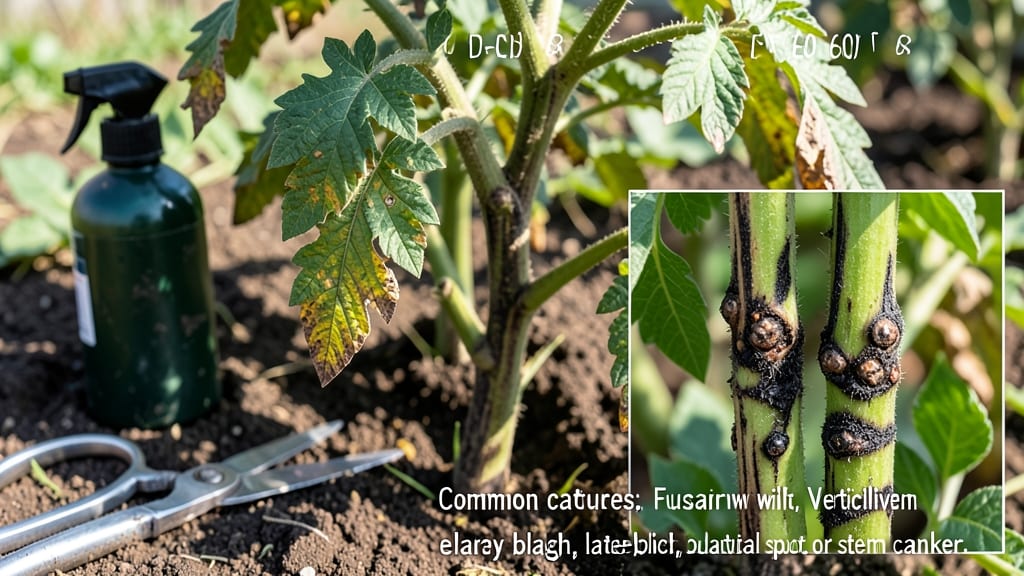
Your tomato plants’ stems are the lifeline to bountiful harvests—and tomato stem disease can cut them off before they even start. 🌱 I’ve seen fusarium wilt and verticillium wilt turn thriving vines into limp skeletons in just weeks, but early detection is your secret weapon.
These fungal infections don’t just kill leaves; they clog the plant’s waterways, leaving you with shriveled fruit or worse, a total loss.
The first warning signs are subtle: yellowing leaves that start at the bottom, wilting even when the soil’s wet, or stems that feel hollow when you squeeze them. These diseases thrive in warm, damp soil and spread through contaminated tools or infected plant debris.
The good news? You can still save some plants—and prevent future outbreaks—if you act fast. The key is catching it early and cutting off infected stems before the fungus spreads to your entire garden.
Once you spot the symptoms, your first move is to prune away infected stems immediately, using clean tools and sterilizing them with rubbing alcohol between cuts. For mild cases, organic treatments like compost tea or copper fungicide can help rebuild plant resilience.
But if the disease has taken hold, you may need to remove the entire plant to protect your harvest. The goal isn’t just to treat the problem—it’s to create a garden where healthy tomatoes can thrive without constant threats.
Prevention is where the real game-changer lies. Rotate your crops yearly, avoid overhead watering, and choose disease-resistant varieties like ‘Celebrity’ or ‘Mountain Merit.’ Healthy soil with plenty of organic matter also helps plants fight off infections naturally.
With these steps, you’ll keep your tomato plants strong, your harvests abundant, and those stem diseases at bay for good.
Root Causes Of Stem Weakness
Tomato stem diseases don’t just happen—they’re the result of a perfect storm of environmental stress, microbial invaders, or poor growing practices. Understanding why your tomato plants develop weak, discolored, or rotting stems is the first step to prevention.
Below, we break down the key culprits, from fungal pathogens to cultural mistakes, with science-backed explanations and actionable insights.
Fungi like Fusarium oxysporum, Verticillium dahliae, and Phytophthora infestans are the top villains behind tomato stem diseases. These soilborne or airborne microbes thrive in warm, moist conditions and exploit weak points in your plants.
- How they attack:
- Spores land on stems or enter through wounds (e.g., pruning cuts, insect bites), germinating in damp conditions.
- Hyphae (fungal threads) block water transport, causing wilting, yellowing, or stem collapse.
- Fusarium wilt produces a vascular discoloration (brown streaks in stems), while Phytophthora causes soft rot at the base.
- Why your garden is vulnerable:
- Overhead watering keeps stems wet, creating fungal highways.
- Poor drainage or compacted soil traps moisture, encouraging spore growth.
- Old crop residues (especially infected tomato debris) harbor spores year-round.
Actionable fix: Rotate crops annually, sterilize tools with 70% alcohol, and avoid working with plants when foliage is wet. 🌡️ Pro tip: Use resistant varieties (e.g., 'Mountain Merit' for Verticillium) and mulch with straw to reduce soil splash.
Insects like aphids, whiteflies, and spider mites don’t just sap nutrients—they injure stems, creating entry points for pathogens. Their sticky honeydew also fosters sooty mold, which stresses plants and opens them up to secondary infections.
- Key pests and their role:
- Aphids: Inject toxins and spread viral diseases (e.g., Tomato Mosaic Virus) that weaken stems.
- Corn earworms: Bore into stems, causing internal rot and bacterial/fungal entry.
- Stem borers (e.g., tomato fruitworm): Larvae tunnel through stems, disrupting vascular tissue.
- Why it escalates:
- Drought-stressed plants attract more pests, creating a feedback loop.
- Synthetic pesticides can kill beneficial insects (e.g., ladybugs), leaving pests unchecked.
Actionable fix: Monitor plants weekly for frass (insect droppings) or silken webbing. Use neem oil or kaolin clay as barriers, and introduce parasitic wasps (e.g., Trichogramma) to control larvae. 🔍 Pro tip: Prune heavily infested leaves below the damage to prevent spread.
Tomato stems are delicate—too much or too little of the wrong thing (water, heat, or humidity) throws their defenses into chaos. These factors don’t cause disease directly but suppress immunity, making plants prime targets.
| Stressor | How It Weakens Stems | Red Flags |
|---|---|---|
| Overwatering | Drowns roots, starving stems of oxygen; creates anaerobic soil that breeds Phytophthora. | Mushy, blackened base; foul odor; wilting despite wet soil. |
| Underwatering | Triggers osmotic stress, making stems brittle and prone to cracking (entry for bacteria). | Leathery, curled leaves; stems snap easily when bent. |
| Extreme Heat | Denatures proteins in stem cells, reducing disease resistance. High temps also volatilize beneficial microbes in soil. | Sun-scorched stems (white/yellow patches); rapid wilting in afternoon. |
| High Humidity | Slows evaporation, keeping foliage damp for 24+ hours, ideal for fungal spores. | White powdery growth (mildew) or water-soaked lesions on stems. |
Actionable fix:
- Water deeply but infrequently (1–1.5 inches per week), aiming for soil 2–3 inches down.
- Use drip irrigation or soaker hoses to avoid wetting stems.
- Provide afternoon shade in hot climates (e.g., shade cloth) to prevent heat stress.
- Improve air circulation with spacing (18–24" apart) or pruning to reduce humidity pockets.
Even the best-intentioned gardener can accidentally invite stem diseases through poor practices. These "garden sins" create the conditions pathogens need to thrive.
- Overcrowding:
- Competes for nutrients, weakening stems and reducing airflow (fungi love stagnant air).
- Shaded inner plants develop long, leggy stems that snap under fruit weight.
- Improper Pruning:
- Cutting too close to the stem leaves a wound that’s an open invitation for bacteria (e.g., Pseudomonas).
- Removing too many leaves reduces photosynthesis, starving the stem of energy to fight infections.
- Reusing Containers:
- Old potting mix may harbor Fusarium spores. Even sterilizing doesn’t always kill resting spores.
- Plastic pots trap moisture against stems, creating a fungal incubator.
- Ignoring Soil Health:
- Compacted or nutrient-poor soil stresses roots, making stems more susceptible to collapse.
- High nitrogen fertilizers promote leafy growth over stem strength, leading to floppy, disease-prone plants.
Fixing Weakened Tomato Stems Naturally
Now that you’ve identified the root cause of your tomato plant’s stem issues—whether it’s fungal infections, bacterial rot, or environmental stress—it’s time to act. The good news?
Many solutions are simple, cost-effective, and require minimal tools. Below, we’ll map out practical fixes for each common cause, plus prevention tips to keep your plants thriving.
Fix: Remove, Replace, and Rebuild Resistance
- 🔥 Prune Infected Stems Immediately
- Use sterilized pruning shears (wipe with rubbing alcohol) to cut off any yellowing, wilting, or blackened stems at least 1 inch below the damage.
- Dispose of infected plant debris in a sealed trash bag (not compost)—fungal spores can survive in soil.
- 🍳 Apply Copper Fungicide Spray
- Mix 1 tbsp copper sulfate (or a store-bought copper fungicide) with 1 gallon of water and spray early in the morning (avoid direct sunlight, which can burn leaves).
- Reapply every 7–10 days until the issue resolves.
- 🌡️ Improve Air Circulation
- Space plants 18–24 inches apart to reduce humidity buildup.
- Use tomato cages or stakes instead of letting vines sprawl on the ground.
💡 Prevention Tip:
- Rotate crops—don’t plant tomatoes (or nightshades like peppers/eggplants) in the same spot for 3 years.
- Water at the base (not overhead) to keep foliage dry.
Fix: Isolate, Clean, and Boost Soil Health
- 👨🍳 Remove and Destroy Infected Plants
- Bacterial diseases like bacterial wilt or stem rot spread quickly. Pull the entire plant (roots and all) and bag it for trash—do not compost.
- Sterilize tools between plants to avoid cross-contamination.
- ⏰ Solarize the Soil (For Severe Cases)
- If multiple plants are affected, cover the soil with clear plastic for 4–6 weeks in hot sun to kill bacteria.
- Alternatively, replace top 6 inches of soil with fresh, sterile potting mix.
- 🥘 Use Beneficial Bacteria
- Add compost tea or Bacillus subtilis (a natural soil bacterium) to outcompete harmful bacteria.
- Avoid over-fertilizing with nitrogen—it encourages soft, susceptible growth.
💡 Prevention Tip:
- Buy disease-resistant varieties (e.g., ‘Mountain Merit’ or ‘Defiant PhR’ tomatoes).
- Disinfect containers with a 10% bleach solution before replanting.
Fix: Adjust Care and Support Weak Structures
- 💧 Fix Watering Habits
- Water deeply but infrequently—tomatoes need 1–1.5 inches per week, but never let soil stay soggy.
- Use drip irrigation or soaker hoses to deliver water at the base.
- 🪵 Provide Structural Support
- Stake or cage plants early to prevent stems from snapping under fruit weight.
- For weak stems, wrap a soft tie (like an old T-shirt strip) around the stem and stake for support.
- 🌡️ Shield from Extreme Heat
- Mulch with straw or grass clippings to retain moisture and regulate soil temperature.
- Shade cloth (30–50%) can help in intense afternoon sun.
💡 Prevention Tip:
- Test soil drainage—if water pools after 30 minutes, amend with perlite or sand.
- Harvest overripe tomatoes early to reduce stress on the plant.
If your tomato’s stem is completely mushy or collapsed, it may be too late to save.
But you can salvage the harvest: - Pick all remaining fruit (even unripe tomatoes will ripen indoors). - Check for hidden pests—sometimes aphids or spider mites weaken stems. Spray with neem oil if needed.
Final Thought: The key to long-term success is prevention—healthy soil, proper spacing, and early intervention make all the difference. Once you’ve treated the current issue, keep an eye out for recurrence and adjust your garden routine accordingly.
Now, grab those shears and get to work—your next bountiful tomato harvest is waiting! 🍅🌱
Frequently asked questions
What are the first signs of tomato stem disease I should watch for?
Look for yellowing leaves starting at the bottom of the plant, even when soil is moist. Wilting that happens first thing in the morning or hollow stems when you gently squeeze them are red flags. Early blight may show as concentric brown rings on stems, while fungal wilts often cause brown streaks inside stems when cut open.
Can I save a tomato plant if the stem is already infected?
For mild cases, prune away only the infected stems using sterilized tools, then treat with copper fungicide or neem oil. However, if the disease has spread to the main stem or roots, it's often best to remove the entire plant to prevent spreading. Always dispose of infected plant material in sealed trash—not compost!
How do I prevent tomato stem diseases in my garden?
Start with crop rotation—avoid planting tomatoes in the same spot for 3+ years. Use drip irrigation instead of overhead watering, and space plants 18-24 inches apart for better airflow. Choose disease-resistant varieties like 'Mountain Merit' or 'Defiant PhR', and always sterilize tools between plants.
What's the difference between fungal and bacterial stem diseases?
Fungal diseases like fusarium or verticillium wilt spread through soil and block water transport, causing yellowing and wilting. Bacterial stem rots (like Ralstonia solanacearum) create water-soaked, mushy stems that often ooze bacteria. Fungal infections respond to fungicides, while bacterial diseases usually require complete plant removal.
Will compost tea help treat tomato stem diseases?
Compost tea can boost plant immunity and help prevent mild infections, but it won't cure established fungal or bacterial diseases. For active infections, use copper fungicide or bacillus-based treatments instead. The best approach is to prevent diseases by maintaining healthy soil and proper plant care from the start.