
Size
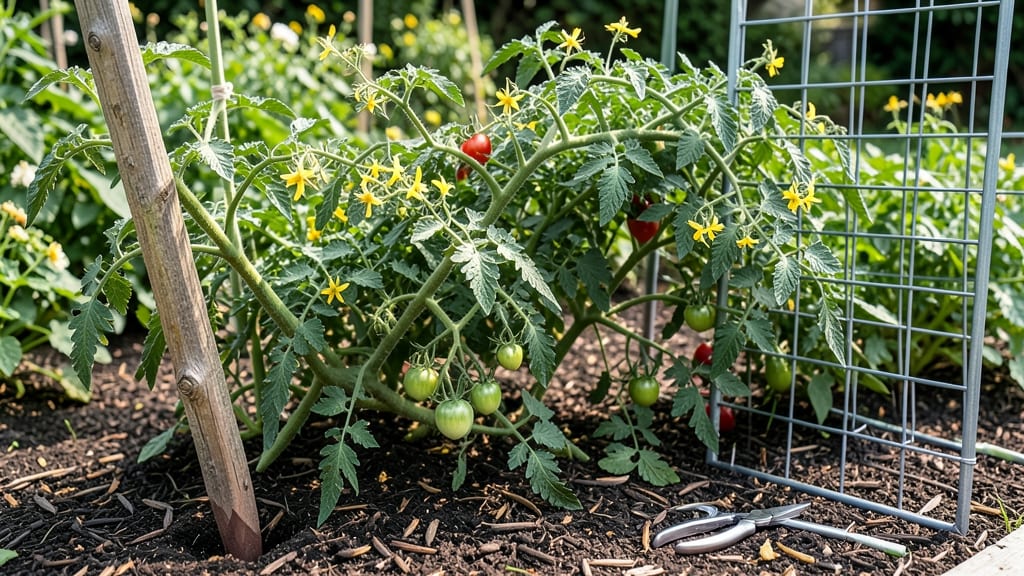
Last summer, my tomato plants were too tall—10-foot monsters that flopped over like drunk giants by August. 🌿 The problem isn’t just height; it’s how to support those heavy vines without turning your garden into a tangled mess.
After three seasons of trial and error, I’ve perfected a trellis system that keeps plants upright and productive, even when they outgrow their space.
The root causes? Usually a mix of over-fertilizing (too much nitrogen), skipping pruning (letting suckers run wild), or picking a determinate variety that’s genetically wired for height. My cherry tomatoes were the worst offenders—each vine weighed down by pounds of fruit by midsummer.
The fix isn’t just tying them up; it’s training them to grow with support from day one.
By the time harvest rolls around, you’ll have straight, sturdy stems holding heavy clusters without snapping. The key is pruning strategically (removing suckers early) and using wide-spaced, flexible trellises (like wooden A-frames or heavy-duty cages).
I’ll show you exactly how to balance growth and yield—so your tomatoes stay tall and proud, not toppled and tragic.
Works for indeterminate varieties (like Sungolds) or determinate bushes (like Roma) that just need a little guidance. Let’s turn those towering vines into neat, productive powerhouses—without the drama.
Root Causes Of Sky-High Tomatoes
When your tomato plants stretch toward the sky like overzealous sun-worshippers, it’s usually a cry for help—not just a quirky growth habit. Understanding why this happens is the first step to reclaiming control over your garden giants. Let’s dig into the science behind those towering tomato towers.
Not all tomatoes are created equal—and some are hardwired to reach for the heavens. Indeterminate tomato varieties (like 'Sungold,' 'Brandywine,' or 'Cherokee Purple') grow continuously until frost, producing vines that can climb 6–10 feet or more.
These plants rely on vertical support to channel their energy into fruit production rather than sprawling horizontally.
Why it matters: If you planted indeterminate types without a trellis, their natural growth habit will default to vertical sprawl, leading to weak stems and top-heavy plants. Even determinate varieties (like 'Roma' or 'Celebrity') can stretch excessively if they’re crowded or deprived of sunlight.
💡 Pro Tip: Check your seed packets or plant tags—if "indeterminate" is listed, plan for a sturdy trellis before planting. No trellis? Opt for dwarf or bush varieties if height isn’t your goal.
Tomatoes are sun-hungry divas, and when they don’t get enough light, they stretch like a yawn. This phenomenon, called etiolation, occurs when plants prioritize reaching for light over thickening their stems or producing leaves. The result? Long, leggy, weak stems that flop under the weight of fruit.
What triggers it:
- Shade from other plants: Tall weeds, nearby trees, or even dense foliage can block sunlight, forcing tomatoes to lean or stretch upward.
- Overcrowding: Planting tomatoes too close together (or mixing them with shade-loving plants like basil) creates a "light competition" that encourages vertical growth.
- Seasonal changes: Early spring or late fall planting may leave seedlings in low-light conditions, setting them up for a growth spurt once temperatures rise.
🌡️ Science Note: Tomatoes need 6–8 hours of direct sunlight daily. Anything less, and they’ll start "bolting" upward to escape the shade.
Watering is a delicate balance, and tomatoes throw a tantrum when it’s off-kilter. Both overwatering and underwatering can trigger excessive height growth, but for different reasons.
🔥 Overwatering: Weak Stems, Tall Dreams
When soil stays soggy, roots struggle to absorb oxygen, leading to poor nutrient uptake—especially nitrogen, which is critical for stem strength. Without proper nourishment, plants grow taller to maximize light exposure, but their stems remain hollow and brittle.
Signs you’re overdoing it:
- Yellowing lower leaves (a classic nitrogen deficiency symptom).
- Mushy soil that stays damp for days after watering.
- Plants leaning or flopping despite a trellis.
💧 Underwatering: The Desperate Reach
On the flip side, inconsistent watering (or drought stress) can cause tomatoes to bolt upward in a last-ditch effort to survive. When soil dries out, roots can’t deliver water efficiently, triggering a survival mechanism where the plant prioritizes height over fruit production.
Signs of thirsty tomatoes:
- Wilting leaves that perk up after watering (not permanent wilting!).
- Leaves curling or scalding (brown edges).
- Stems developing a woody or brittle texture.
🔥 Fix It: Water deeply 1–2 inches per week (more in extreme heat) and aim for the soil, not the leaves. Use drip irrigation or soaker hoses to keep roots consistently moist.
Tomatoes are tropical plants at heart, and they hate when temperatures swing too far from their comfort zone. Both heat stress and cold snaps can trigger rapid, weak growth.
🔥 Scorching Heat: The "Bolting" Response
When daytime temps exceed 90°F (32°C), tomatoes enter a state of heat stress. Their natural response? Growing faster and taller to escape the heat, but at the cost of fruit set and stem strength.
High temperatures also disrupt pollination, leading to fewer (but potentially larger) tomatoes on weak vines.
What to watch for:
- Leaves drooping during the day but recovering at night.
- Flowers dropping off before fruiting.
- Stems growing too quickly with minimal leaf production.
❄️ Cold Snaps: The "Stunted Growth" Trick
Conversely, temperatures below 50°F (10°C) can stunt root growth, forcing the plant to focus on vertical expansion to reach warmer air layers. Early spring or late fall plantings are especially vulnerable if nights dip too low.
💡 Pro Tip: Use row covers or black plastic mulch to moderate soil temps. For heat stress, provide afternoon shade with shade cloth (30–50%) or plant in partial shade.
Tomatoes are heavy feeders, and when their diet is off, they’ll grow tall but weak. The two biggest culprits? Nitrogen excess and phosphorus/potassium deficits.
💥 Too Much Nitrogen: Leafy, Leggy, and Lazy
Nitrogen is the "growth hormone" of plants, but too much leads to foliage over fruit. Tomatoes will produce lush, green leaves but weak stems that can’t support their own weight. This is especially common with fresh manure or over-fertilizing with high-nitrogen feeds (like lawn fertilizer).
Signs of nitrogen overload:
- Excessive leaf growth with few flowers.
- Stems that bend under their own weight.
- Yellowing leaves (starting with older ones).
🍅 Missing PK: The Hidden Starvation
Phosphorus and potassium are the unsung heroes of tomato growth. Phosphorus helps root development, while potassium strengthens cell walls—both critical for sturdy stems. A deficiency leads to weak, elongated growth and poor fruit set.
How to check:
- Phosphorus deficiency: Dark green or purplish leaves, especially on undersides.
- Potassium deficiency: Yellowing leaf edges (like a "scorched" look), weak stems.
✨ Fix It: Use a <
Quick Fixes for Towering Tomatoes
If your tomato plants are reaching for the sky like overzealous sunflowers, don’t panic—there are simple, effective ways to bring them back under control. The key is identifying the root cause (whether it’s genetics, overcrowding, or poor support) and applying the right fix.
Below are practical solutions tailored to common triggers, along with prevention tips to keep your plants sturdy and productive.
Problem: Too little space or weak stakes let vines flop, encouraging vertical growth.
How to Correct It:
- 🔥 Prune Aggressively (But Strategically) Trim back excessive suckers (side shoots) to redirect energy to fruit production. Focus on removing:
- Suckers larger than a pencil (they drain energy).
- Leaves shading lower fruit (aim for a "bushy pyramid" shape). Pro Tip: Use clean pruners and cut at a 45° angle to prevent disease. 🔪✨
- 👨🍳 Install Sturdy Supports If your plants are already toppling, act fast: - For indeterminate varieties (vining types): Use a strong trellis, cage, or bamboo stakes (3–4 feet tall).
Secure vines with soft ties (old T-shirts, rubber bands, or plant clips). - For determinate varieties (bush types): Add low cages or stakes (2–3 feet) to prevent sprawl. - Budget Hack: Repurpose old ladders or wire fencing as trellises. 💡
- 🌱 Thin Out Plants If seedlings are packed too closely (less than 18" apart), transplant extras to a new spot. Space indeterminate tomatoes 24–36 inches apart and determinate types 18–24 inches apart.
Problem: Poor soil, light, or water stress triggers leggy, weak growth.
How to Correct It:
- 💧 Water Deeply & Consistently Shallow watering encourages rapid, weak stem growth. Instead:
- Water at the base (not leaves) early in the morning (1–1.5 inches per week).
- Use mulch (straw or grass clippings) to retain moisture and cool roots. 🌡️
- ☀️ Optimize Sunlight Tomatoes need 6–8 hours of direct sun daily.
If yours are stretching toward light: - Move potted plants to a sunnier spot. - Prune nearby shade-causing plants (e.g., corn, tall weeds). - Urban Fix: Use reflective surfaces (white sheets, mirrors) to bounce light into shaded areas. 🔄
- 🥗 Fertilize Smartly Too much nitrogen = lush leaves, few tomatoes. Switch to a balanced fertilizer (10-10-10 or 5-10-10) or compost tea to boost root strength.
- Avoid: High-nitrogen lawn fertilizers. 🚫💪
Problem: Genetic traits (like indeterminate varieties) or seasonal changes cause relentless vertical growth.
How to Stay Ahead:
- 🌱 Choose the Right Varieties
- For compact gardens: Pick determinate tomatoes (e.g., 'Roma,' 'Celebrity') or dwarf indeterminate types (e.g., 'Tiny Tim').
- For vertical gardens: Opt for indeterminate vining types (e.g., 'Sungold,' 'Brandywine') but prune aggressively.
- ⏰ Start Pruning Early Begin trimming suckers when plants are 12–18 inches tall. This keeps them manageable and encourages bushier growth.
- Timing Tip: Prune on dry, sunny days to reduce disease risk. ☀️🌿
- 🎯 Use Growth Regulators (Optional) For extreme cases, pinch back the top 2–3 inches of the main stem to signal the plant to stop climbing. Do this before flowering to avoid stunting fruit set.
If your tomatoes are already leaning dangerously, act now:
- 🪵 Drive a stake into the soil next to the plant (not touching the stem).
- 🧵 Gently weave vines through a tomato cage or trellis in a spiral pattern.
- 🔗 Secure loosely with ties—never cinch tightly (stems need to grow!).
- 🌱 Add a second stake on the opposite side if needed for balance.
Warning: Avoid tying plants too tightly—this can strangle stems as they thicken. 🚨
Final Pro Tip: 🌟 Monitor and adjust weekly! Tomato growth is dynamic—check supports, prune suckers, and water deeply to keep plants happy and productive. With these fixes, your towering tomatoes will soon be bushy, fruitful, and trellis-tamed!
Frequently asked questions
Why do my tomato plants grow so tall so fast?
Rapid vertical growth usually happens when plants seek sunlight (called etiolation) or respond to stress like inconsistent watering or poor soil nutrients. Indeterminate varieties naturally grow tall, but overcrowding or shade from other plants can accelerate this. Check for 6-8 hours of sunlight daily and ensure proper spacing (18-36 inches apart depending on variety).
Can I still get good fruit from super-tall tomato plants?
Yes! With proper support, tall plants can produce just as much fruit as shorter ones. The key is using sturdy trellises or cages and pruning aggressively to remove suckers (side shoots). Focus on keeping the main stem strong and training vines upward. Just be prepared for heavier fruit clusters that may need extra support as they grow.
What's the best way to prune tall tomato plants without hurting them?
Use clean pruners and cut at a 45° angle just above a leaf node. Remove suckers (shoots growing between main stem and branches) when they're smaller than a pencil. For indeterminate varieties, prune early and often (every 1-2 weeks) to encourage bushier growth. Always prune on dry, sunny days to prevent disease.
Will tall tomato plants survive winter if I leave them in the ground?
Most tomato plants are annuals and won't survive winter, but you can try overwintering tender varieties in containers. Move potted plants to a protected location (like a garage) before frost. For in-ground plants, harvest all fruit before first frost (28-32°F) and pull up the plants. The roots won't survive, but you can compost the plant material for next year's garden.
How do I know if my tomato plant is too tall for my trellis?
If your plant is consistently reaching 6+ inches above your trellis height or vines are sagging between supports, it's time to upgrade. Look for signs like leaves curling downward or fruit touching the ground. For extreme cases, add secondary supports (like additional stakes or a taller cage) to distribute the plant's weight. Never let vines drag on soil to prevent disease.