
Pruning
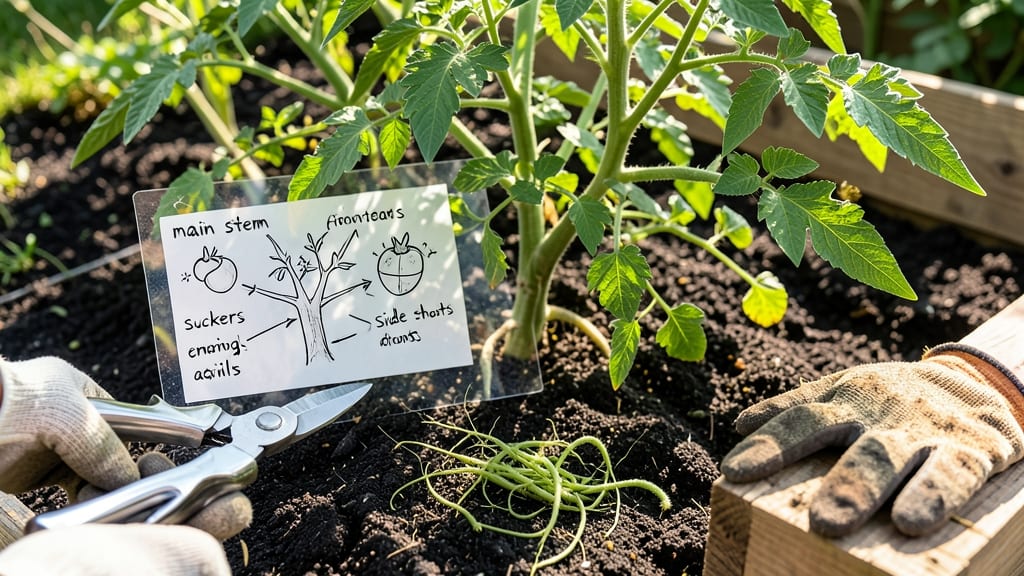
That tomato plant pruning diagram you’ve been searching for finally exists—and it’s the game-changer for bushier vines and bigger fruit. 🌱 I spent three summers experimenting with different pruning styles, and what I learned completely transformed my harvest.
The key? Removing the right growth at the right time to redirect energy where it matters most.
Most gardeners avoid pruning tomatoes because they’re afraid of stunting the plant, but done correctly, it’s like giving your tomatoes a spa day.
You’ll boost airflow to prevent diseases like blight, encourage stronger stems, and coax the plant to focus its energy on producing juicy, vine-ripened tomatoes instead of extra foliage. The best part? It works for both determinate (bush) and indeterminate (vining) varieties.
By the end of this guide, you’ll know exactly where to make cuts, what tools to use, and how to spot the difference between helpful growth and the stuff that’s holding your tomatoes back.
No more guesswork—just confident pruning that leads to a harvest so abundant, your neighbors will ask for cuttings.
We’ll cover the exact steps in the diagram, including how to identify suckers, when to prune for maximum yield, and what to do if you’ve already missed the ideal timing.
Trust me, your future self will thank you when you’re staring at a vine heavy with fruit instead of a tangled mess.
📚 In This Guide
- What you need
- Instructions
- Tips and common mistakes
- Wrapping up and next steps
What you need
- ● Pruning shears or sharp bypass pruners – Look for sterilized, sharp blades (avoid dull tools that crush stems).
- ● Rubbing alcohol (70% or higher) or bleach solution – 1 part bleach to 9 parts water (for sterilizing tools between cuts).
- ○ Gloves (optional but recommended) – Garden or work gloves to protect hands from thorns and sap.
- ● Tomato plant pruning diagram (printed or digital) – Use our blank">free visual guide for reference!
- ● Small bucket or bag – For collecting pruned branches (compost them later!).
- ● Stakes or cages (if needed) – For indeterminate varieties to support new growth.
- ● Hand lens or magnifying glass – To spot pests or diseases on stems before pruning.
- ● Garden twine – For securing sprawling vines to trellises.
- ○ Pruning sealant (optional) – For large cuts (e.g., blank">tree wound paint), though most tomato plants heal fine without it.
- ● Notebook & pen – To track pruning dates and plant progress!
Step-by-Step guide to pruning tomato plants for maximum yield
Here’s how I prune tomatoes to get stronger vines and juicier fruit—no guesswork, just proven techniques.
✂️ Step 1: Identify and Remove Suckers Early
Suckers are the small shoots that grow in the crotch between the main stem and a branch. Pinch them off when they’re no bigger than a pencil—this prevents them from draining energy from your fruit. I start checking for suckers when the plant hits 12-18 inches tall, usually 3-4 weeks after transplanting. Use clean pruners or your fingers to avoid tearing the stem.
Real talk: If you wait until suckers are bigger, you’ll spend more time pruning than harvesting. Focus on the first 6-8 inches of the plant first—those suckers steal nutrients that could be going to your tomatoes. Once the main stem is thick as your thumb, you can relax a little on lower suckers.
🌿 Step 2: Prune Strategically for Airflow and Light
Leave 1-2 main stems (for indeterminate varieties) or no more than 3-4 stems (for determinate bushes). For indeterminate tomatoes, I keep the strongest central stem and remove weaker side branches that grow below the first flower cluster. This ensures energy goes to fruit production, not extra foliage.
Watch for yellowing leaves at the base—they’re a sign of overcrowding. Remove them immediately, even if they’re not suckers. Good airflow prevents diseases like blight. I prune on dry mornings to let wounds heal faster and reduce bacterial entry points.
☀️ Step 3: Support and Prune for Sun Exposure
As the plant grows, tie the main stem to a sturdy stake or cage every 6-12 inches to prevent breaking. Prune any branches growing inside the cage—they’ll never get enough light. I also remove leaves below the first flower cluster once the plant is 3 feet tall to improve airflow and sunlight penetration to the fruit.
Here’s the thing—if you see leggy growth (long, thin stems with tiny leaves), you’re pruning too aggressively. Leave 12-18 inches of foliage above the top fruit cluster to keep the plant photosynthesizing. The goal is balance: enough leaves for energy, but not so many that they shade the fruit.
⏰ Step 4: Stop Pruning When Fruit Sets In
Once your plant is bearing fruit, switch to minimal pruning. Remove only diseased or yellowing leaves and suckers that appear above the top flower cluster. Over-pruning late in the season stresses the plant and can reduce yield. I stop pruning entirely 4-6 weeks before the first frost to let the plant focus on ripening existing fruit.
You’ll know you’re doing it right when your plant has thick stems, plenty of leaves, and fruit that’s evenly colored and sized. If your tomatoes stay small or green, you might be pruning too much—or not enough. Adjust next season based on what you see.
Tips & tricks for perfect tomato plant pruning
Between us, these small adjustments make all the difference between a scraggly plant and a fruit-loaded powerhouse.
Timing is Everything: Start pruning when your plants reach 12-18 inches tall—that's typically 3-4 weeks after transplanting. This early intervention prevents those sneaky suckers from stealing energy. I check my plants every 5-7 days during the growing season, focusing first on the lower stem where suckers appear most aggressively.
Tool Technique: Cleanliness matters! Sterilize your pruners with rubbing alcohol between plants to prevent spreading disease. I also use my fingers for small suckers—just pinch cleanly at the base where the sucker meets the stem. Avoid tearing the stem, which creates open wounds that attract pests. For larger branches, sharp pruners make quick work of it without damaging the main stem.
Visual Cues for Balance: When pruning for airflow in Step 2, aim to leave 12-18 inches of foliage above the top fruit cluster. This creates that perfect balance—enough leaves for energy production but not so many they shade the fruit. Think of it like a haircut: you want to shape the plant, not strip it bare. Leggy growth (long, thin stems) is your signal to stop pruning and let the plant focus on fruit development.
Seasonal Strategy: The 4-6 weeks before first frost is your final pruning deadline. This gives your plant time to redirect all its energy to ripening existing fruit rather than growing new leaves. I mark my calendar with the average frost date and stop all pruning activities by that date—no exceptions! This simple timing adjustment can mean the difference between green tomatoes and a harvest of ripe fruit.
Pro Tips for Tomato Plant Pruning Diagram
- Between us, these small adjustments make all the difference between a scraggly plant and a fruit-loaded powerhouse.
- Timing is Everything: Start pruning when your plants reach 12-18 inches tall—that's typically 3-4 weeks after transplanting.
- Tool Technique: Cleanliness matters!
Frequently asked questions
Got questions about pruning tomato plants? You’re not alone!
Here are some of the most common concerns—plus quick, actionable answers to keep your vines thriving and your harvests bountiful.
When is the best time to prune tomato plants?
Prune your tomato plants early and often—start when they’re about 12 inches tall and continue throughout the growing season. For indeterminate varieties, prune regularly to encourage air circulation and fruit production. For determinate (bush) tomatoes, minimal pruning is needed—just remove suckers and damaged leaves. Pro tip: Avoid heavy pruning late in the season, as it can stress plants before harvest.
What’s the difference between suckers and leaves I should remove?
Suckers are the small shoots that grow in the V-shaped fork between the main stem and a branch. These compete with fruit for energy—pinch or snip them off. Remove yellow, diseased, or crowded leaves (especially lower ones) to improve airflow and reduce pests. Never remove more than 25% of the foliage at once!
Can I prune tomato plants too much?
Yes! Over-pruning weakens plants, reduces photosynthesis, and can lead to fewer fruits or blossom-end rot. Stick to these rules:
- Indeterminate tomatoes: Prune suckers only—never the main stem or fruit-bearing branches.
- Determinate tomatoes: Light pruning (just suckers and damaged leaves) is best.
- Stop pruning 4–6 weeks before your first expected frost.
What if my tomato plant looks stressed after pruning?
If your plant wilts or stops growing after pruning, it’s likely overdone. Recover with these steps:
- Water deeply to reduce shock.
- Apply a balanced fertilizer (like 10-10-10) to boost recovery.
- Avoid pruning for 1–2 weeks to let the plant rebound.
Do I need a diagram to prune correctly?
A tomato pruning diagram (like the one in this guide) visualizes where to cut—especially for suckers and lateral branches. No diagram? Look for the V-shaped fork between stems; suckers grow here. For indeterminate varieties, aim to leave 2–3 main stems for support. Pro tip: Snap suckers with your fingers (no tools needed!) to avoid damaging the plant.
Wrapping up and next steps
Mastering the art of tomato plant pruning isn’t just about snipping—it’s about unlocking your garden’s full potential! With the right tools, a clear tomato plant pruning diagram, and a few key techniques, you’ll soon be harvesting bushier vines and plumper fruit like a pro. 🌱✂️
Ready to put your new skills to work? Start by grabbing your pruners and pruning your first tomato plant today—your future harvest will thank you! For extra confidence, revisit the FAQs or sketch your own diagram to track progress. Happy gardening!