
Plants
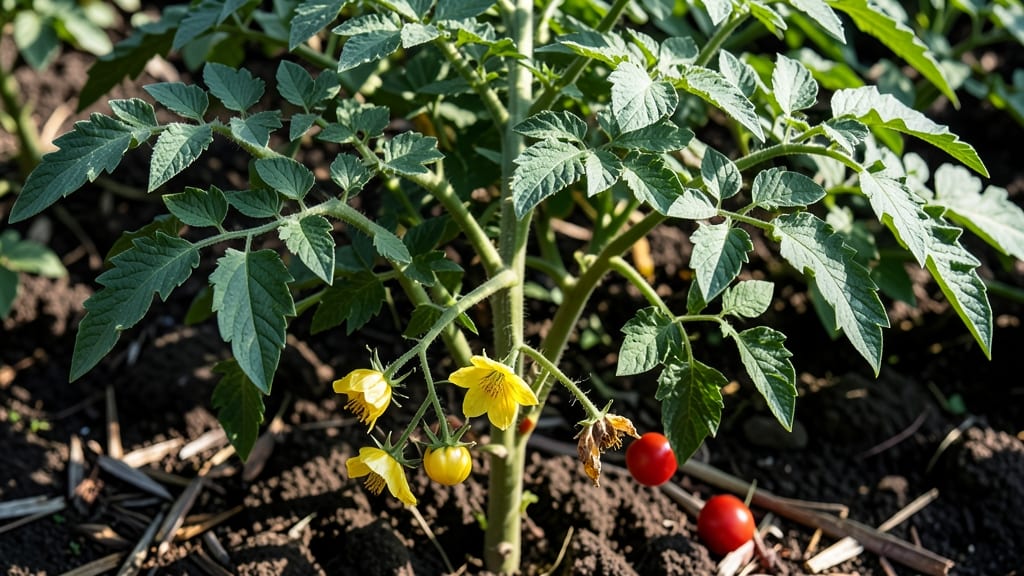
Your tomato plant is not producing fruit—this happens more often than you'd think. 🌱 After years of troubleshooting, I've narrowed it down to three key triggers: temperature swings, poor pollination, and fertilization mistakes.
The good news? Each fix takes less than 10 minutes once you know what to look for.
Start by checking your plant's environment—tomatoes need consistent 70-85°F days and 55-60°F nights. Even a single day below 55°F can cause blossom drop. Next, inspect flowers: if they're not opening fully or bees aren't visiting, you'll need to hand-pollinate with a small brush.
Over-fertilizing with nitrogen also starves plants of the phosphorus they need for fruit production.
What you'll achieve is a plant that holds onto blossoms and starts converting them into juicy red tomatoes within 2-3 weeks of making adjustments. The first harvest will taste like nothing from the grocery store—sweet, meaty, and packed with flavor.
I've seen plants go from dropping flowers to producing 20+ tomatoes in a single season after these fixes.
Works for both container-grown tomatoes and in-ground plants, and the same principles apply whether you're growing cherry tomatoes or beefsteaks. The only difference is scale—smaller varieties recover faster, but the process is identical. Let's get those fruits growing!
Root Causes Behind Empty Tomatoes
Tomato plants are thriving, but where are the fruits? 🍅🤔 If your tomato blossoms are falling off or simply not turning into juicy tomatoes, the issue likely stems from one (or more) of these key factors.
Let’s break down the science behind why your tomato plants might be playing hard to get when it comes to producing fruit.
Tomatoes rely on pollination—the transfer of pollen from the male anthers to the female stigma—to trigger fruit development. Without it, flowers drop off, leaving you with empty vines. Here’s why it fails:
- Lack of Bees or Wind: Many tomato varieties (especially self-pollinating ones like Solanum lycopersicum) need vibration to release pollen.
Bees naturally do this, but if they’re scarce (due to pesticides, weather, or urban gardens), pollen stays stuck. - Weather Woes: Heavy rain or high humidity can wash away pollen before it reaches the stigma, or even drown flowers entirely. - Genetics Matter: Some self-pollinating varieties (like cherry tomatoes) may still need a little help if conditions are off.
💡 Pro Tip: Give your plants a gentle shake every few days during bloom time—especially on cloudy or windless days. Or, use a small paintbrush to manually pollinate flowers.
Tomatoes are temperature-sensitive—too hot or too cold can halt fruit set. Here’s how extremes play a role:
| Temperature Issue | Effect on Flowers/Fruit | Solution |
|---|---|---|
| Below 55°F (13°C) | Flowers won’t open or drop before pollination. | Use row covers or move pots indoors at night. |
| Above 90°F (32°C) | Pollen sterilizes (becomes non-viable), causing blossom drop. | Provide shade cloth (30-50% coverage) or water deeply to cool roots. |
| Rapid Temperature Swings | Stress disrupts hormonal signals needed for fruit development. | Mulch to stabilize soil temps and avoid late-night watering. |
🌡️ Hot Flash Alert: If daytime temps hit 95°F+ (35°C+) for weeks, even established plants may stop setting fruit. Prune lower leaves to improve airflow and reduce heat stress.
Tomatoes are heavy feeders, and the wrong nutrients (or too little) can sabotage fruit production. Common offenders:
- Too Much Nitrogen (N): Lush green leaves but no flowers or fruit?
Excess nitrogen promotes vegetative growth at the expense of reproduction. - Fix: Switch to a balanced fertilizer (like 5-10-10) or add phosphorus-rich compost (phosphorus = fruit development). - Deficient Phosphorus (P): Flowers form but drop early—a classic sign of phosphorus starvation. - Fix: Apply bone meal or a high-phosphorus fertilizer (e.g., 10-20-10) at planting and mid-season. - Potassium (K) Shortage: Weak stems, yellowing leaves, and poor fruit set?
Potassium helps flower and fruit development. - Fix: Use wood ash (sparingly) or a potassium sulfate supplement.
📊 Soil Test First! Before guessing, test your soil’s pH and nutrient levels—tomatoes thrive in pH 6.0–6.8.
Water stress—too much or too little—disrupts the hormonal balance needed for fruit set. Here’s how:
- Underwatering: Causes blossom end rot (black spots on fruit) and premature flower drop due to stress. - Fix: Water deeply 1–2 times per week (1–1.5 inches total).
Use drip irrigation to keep soil moist but not soggy. - Overwatering: Leads to root rot, which starves the plant of nutrients and energy for fruit production. - Fix: Ensure well-draining soil and avoid watering at night.
Mulch to retain moisture evenly. - Inconsistent Watering: Fluctuations confuse the plant’s growth hormones, causing flowers to abort. - Fix: Stick to a consistent schedule—morning watering is best.
💧 Pro Tip: If your soil feels dry 2 inches below the surface, it’s time to water. Use a moisture meter for precision.
Hidden threats like blight, viruses, or sap-sucking pests can drain your plant’s energy, leaving it too weak to produce fruit.
- Early Blight or Late Blight: Fungal diseases cause leaf spots and wilting, reducing photosynthesis and fruit development.
- Fix: Remove infected leaves, space plants for airflow, and apply copper fungicide preventatively.
- Aphids, Whiteflies, or Spider Mites: These sap-suckers weaken plants, leading to flower drop.
- Fix: Spray with neem oil or introduce ladybugs for natural pest control.
- Verticillium or Fusarium Wilt: Soil-borne fungi that clog the plant’s vascular system, causing stunted growth.
- Fix: Rotate crops, sterilize tools, and plant resistant varieties (e.g., ‘Mountain Merit’).
🛡️ Prevention is Key: Healthy plants resist pests better—prune for airflow, avoid overhead watering, and inspect leaves weekly.
Tomatoes produce ethylene and auxin—hormones that signal fruit development. If disrupted, flowers may not set fruit or will drop early.
- Ethylene Deficiency: Needed for fruit initiation, often lacking in greenhouse-grown or stressed plants. - Fix: Use ethylene-releasing products (like Ethephon) or apple slices near plants (they emit ethylene naturally). - Auxin Blockage: Herbicide drift (e.g., 2,4-D) or chemical stress can interfere with fruit hormones. - Fix: Avoid spraying weed killers near tomatoes.
If contaminated, flush soil with water and monitor for recovery.
✨ Nature’s Helper: Place a banana peel near the base of the plant—it releases potassium and ethylene to boost fruit set!
Tomato plants need balance—too much pruning removes flower clusters (especially on indeterminate varieties).
- Removing Too Many Leaves: Reduces photosynthesis, starving flowers of energy.
- Fix: Prune only suckers (side shoots) and lower leaves (up to 12 inches from the ground).
- Pruning at the Wrong Time: Cutting back during flowering can cause stress and blossom drop.
- Fix: Prune early in the season (before flowers appear) and avoid heavy cuts during bloom.
🔪 Pruning Rules:
- Determinate (bush) tomatoes: Minimal pruning—just remove diseased leaves.
- Indeterminate (vining) tomatoes: Prune suckers weekly but leave flower clusters intact.
Not all tomatoes are created equal—some varieties are less productive under certain conditions.
- Heat-Sensitive Varieties: Some tomatoes (like Beefsteak) stop setting fruit in extreme heat.
- Fix: Choose heat-tolerant varieties (e.g., ‘Solar Fire’, ‘Heatmaster’).
- Disease-Prone Hybrids: Weak genetics can lead to poor fruit set even with ideal care.
- Fix: Opt for heirloom or disease-resistant seeds (e.g., ‘Celebrity’, ‘Roma’).
🌱 Pro Tip: Check your tomato’s days to maturity—some take longer to fruit in cool climates. Start seeds indoors if your season is short!
Empty tomato plants are rarely a mystery—they’re usually a cry for help from your plant. By addressing pollination, temperature, nutrients, water, pests, hormones, pruning, or genetics, you’ll give your tomatoes
Quick Fixes for Blossom Drop
When your tomato plants are full of flowers but no fruit appears, don’t panic—there’s almost always a fix! Below are targeted solutions for common causes, from environmental tweaks to plant care adjustments. Each remedy includes prevention tips to keep your tomatoes thriving (and producing) all season.
Problem: Tomatoes thrive in 60–85°F (15–29°C). Extreme heat or cold causes blossoms to drop before fruiting.
Fix It:
- 🌞 Shield from scorching sun (especially in peak afternoon heat). Use shade cloth (30–50%) or plant in partial shade during summer.
- ❄️ Protect from cold snaps. Cover plants with frost blankets if temps dip below 50°F (10°C) at night.
- 💡 Pro Tip: If your area has late spring frosts, opt for early-maturing varieties (like ‘Early Girl’ or ‘Stupice’) to avoid fruit loss.
Prevent It:
- 📅 Time it right: Start seeds indoors 6–8 weeks before last frost, then transplant after soil warms to at least 60°F (15°C).
- 🌱 Choose heat-tolerant varieties like ‘Solar Fire’ or ‘Heatmaster’ for hot climates.
Problem: Inconsistent watering (drought stress or overwatering) disrupts pollination and fruit set.
Fix It:
- 🔥 Deep water weekly (1–2 inches per week). Use a soaker hose or drip irrigation to deliver water at the base, not the leaves.
- 🌧️ Avoid wetting flowers (prevents disease and encourages pollinators).
- 💧 Check soil moisture: Stick your finger 2 inches deep—if dry, water thoroughly. If soggy, hold off until it dries slightly.
Prevent It:
- 🕒 Water in the morning (reduces evaporation and fungal risks).
- 🌱 Mulch heavily (2–3 inches of straw or wood chips) to retain moisture and regulate soil temp.
Problem: Without bees, wind, or gentle vibrations, flowers won’t turn into fruit.
Fix It:
- 👨🍳 Hand-pollinate daily (especially in greenhouses, urban areas, or bad weather):
- 🌸 Gently shake plants in the morning (mimics wind).
- 🖌️ Use a paintbrush or cotton swab to transfer pollen from male (outer) to female (center) flowers.
- 🔪 For stubborn cases, lightly tap blossoms with your finger to release pollen.
Prevent It:
- 🐝 Attract pollinators: Plant bee-friendly flowers (basil, marigolds, alyssum) near tomatoes.
- 🌿 Avoid pesticides (especially neonicotinoids) that harm bees.
Problem: Too much nitrogen (leafy growth) or lack of phosphorus/potassium stunts fruit production.
Fix It:
- 📊 Test your soil (home kits work!). If deficient:
- 💪 Boost phosphorus (P): Use bone meal or a 5-10-10 fertilizer at planting.
- 🍆 Add potassium (K): Mix in wood ash or kelp meal mid-season.
- 🍅 Balance nitrogen: Switch to a low-N, high-P/K fertilizer (like 2-4-4) when flowers appear.
- 🍅 Feed during fruiting: Apply a tomato-specific fertilizer (like 3-4-6) every 2–3 weeks.
Prevent It:
- 🌱 Compost before planting (adds organic nutrients slowly).
- ☀️ Avoid over-fertilizing early—focus on roots first, then fruit.
Problem: Competition for resources (water, nutrients, sunlight) leads to weak flowering.
Fix It:
- 🔪 Prune aggressively (but carefully!):
- Remove suckers (shoots between stem and branches) to redirect energy to fruit.
- 🌿 Trim lower leaves (up to 12 inches from the ground) to improve airflow and sunlight.
- 📏 Space plants properly:
- Determinate (bush) tomatoes: 18–24 inches apart.
- Indeterminate (vining) tomatoes: 24–36 inches apart (or cage them).
Prevent It:
- 🌱 Start with the right spacing when transplanting.
- 🪴 Use containers? Choose 5-gallon pots minimum for indeterminate types.
Problem: Aphids, hornworms, or fungal diseases (like blight) drain energy from fruit production.
Fix It:
- 🐜 Spot pests? Act fast:
- 🍅 Handpick hornworms (look for green caterpillars with white stripes).
- 💦 Spray aphids with soapy water (1 tsp mild soap per quart of water).
- 🌿 Use row covers to block pests early.
- 🍄 Fungal issues? Improve airflow:
- 🔪 Prune dense foliage.
- 🌧️ Water at the base, not overhead.
- 🍄 Apply copper fungicide if blight appears.
Prevent It:
- 🌱 Rotate crops (don’t plant tomatoes in the same spot yearly).
- 🌿 Interplant with herbs (basil repels pests, marigolds deter nematodes).
🎯 Final Checklist for Success: ✅ Temperature: Keep plants in 60–85°F (15–29°C) zone. ✅ Water: Deep and consistent (1–2 inches/week). ✅ Pollinate: Shake or brush flowers daily if needed. ✅ Fertilize: Switch to high-P/K when blooms appear. ✅ Prune: Remove suckers and lower leaves for airflow. ✅ Pest-proof: Monitor and act early to protect fruit.
With these fixes, your tomato plants should start setting fruit within 1–2 weeks! 🍅🔥
Frequently asked questions
Why do my tomato flowers keep falling off before turning into fruit?
This is called blossom drop, usually caused by temperature stress (below 55°F or above 90°F), poor pollination, or inconsistent watering. Check your plant's environment first—tomatoes need stable daytime temps between 70-85°F for fruit to set. If flowers aren't opening, try hand-pollinating with a paintbrush or gently shaking plants daily.
How do I know if my tomato plant needs more phosphorus for fruit production?
Look for these signs: dark green leaves with purple stems, small or no flowers, or flowers dropping immediately. These indicate phosphorus deficiency. Boost it by mixing bone meal into the soil at planting, then use a 5-10-10 fertilizer when flowers appear. Avoid high-nitrogen fertilizers—they promote leafy growth at the expense of fruit.
Can I still save my tomato plant if it's already dropped all its flowers?
Yes! Prune back suckers and lower leaves to redirect energy, then switch to a high-phosphorus fertilizer (like 2-4-4). New flowers should appear within 2-3 weeks if the plant is otherwise healthy. For extreme cases, try ethylene-releasing products (like Ethephon) to stimulate fruit set, or place apple slices near the base—they naturally release ethylene.
What's the difference between determinate and indeterminate tomatoes when it comes to fruit production?
Determinate varieties (bush tomatoes) produce fruit all at once in a single cluster, while indeterminate (vining tomatoes) keep flowering and fruiting until frost. Determinate plants need less pruning but may drop fruit if stressed, while indeterminate varieties require regular sucker removal but can produce fruit all season. Choose determinate for shorter seasons or containers.
How do I know if my tomato plant is getting enough sunlight for fruit production?
Tomatoes need 6-8 hours of direct sunlight daily. If leaves look pale or leggy, it's not getting enough. Check for yellowing between veins (a sign of insufficient light) or burnt leaf edges (too much harsh afternoon sun). For containers, place them in the sunniest spot and rotate weekly. If indoors, supplement with grow lights 12-14 hours/day.