
Plants
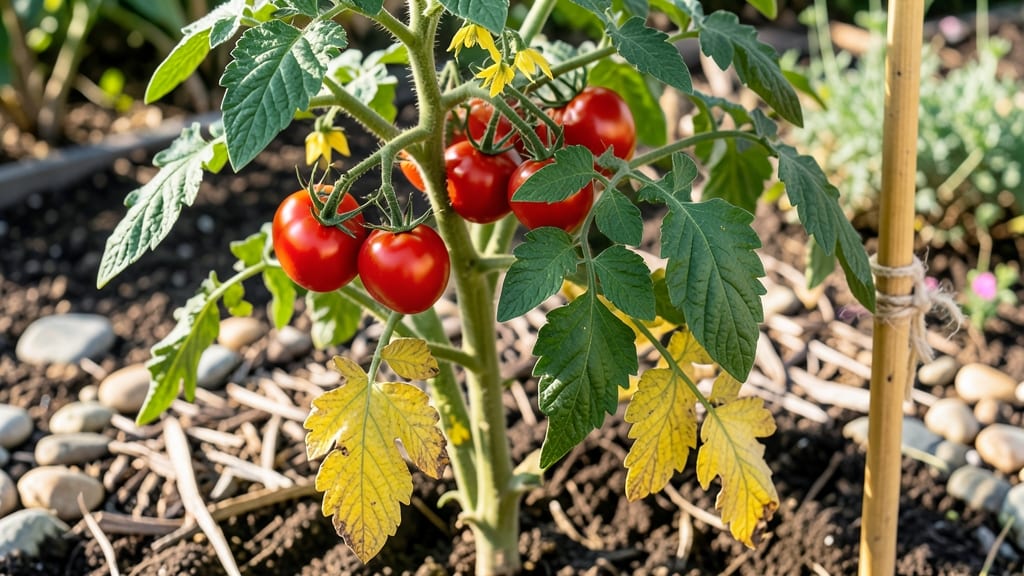
Your tomato plant’s lower leaves turning yellow isn’t a death sentence—it’s a clear signal your plant needs attention. 🌱 I’ve seen this happen with overwatering, nutrient starvation, or even early blight, and the fix is usually simpler than you’d think.
The key is figuring out which issue you’re dealing with first.
Start by checking the soil: if it’s soggy, you’re likely overwatering. Yellow leaves with crisp edges? That’s classic nutrient deficiency—especially nitrogen or magnesium. For fungal issues, look for dark spots on the leaves.
Once you pinpoint the problem, you can prune affected leaves, adjust your watering schedule, or give the soil a boost with compost or fertilizer.
📚 In This Guide
- What you need
- Instructions
- Tips and common mistakes
- Wrapping up and next steps
What you need
- ● Diagnostic tools: pH testing kit (soil pH 6.0–6.8 is ideal for tomatoes)
- ● Moisture meter (to check soil hydration)
- ● Nutrient solutions: Balanced fertilizer (e.g., 10-10-10 NPK, 1 tbsp per 1 gallon of water)
- ● Epsom salt (magnesium sulfate, 1 tbsp per gallon of water for deficiency)
- ● Liquid iron supplement (e.g., chelated iron, 1 tsp per gallon)
- ● Garden tools: Pruning shears (sterilized with rubbing alcohol)
- ● Garden trowel or small shovel
- ● Watering can with a fine rose (for gentle application)
- ○ Safety gear (optional but recommended):strong> Garden gloves (to protect from thorns and chemicals)
- ● Face mask (if handling heavy fertilizers)
- ● Compost or worm castings (1 cup per plant to enrich soil naturally)
- ● Mulch (straw or shredded leaves to retain moisture and regulate temperature)
- ● Organic matter like coffee grounds (½ cup per plant for nitrogen boost)
- ● Calcium supplement (e.g., crushed eggshells or lime for soil pH adjustment)
- ● Plant support stakes or cages (if pruning affects stability)
Tomato plant lower leaves turning yellow: how to diagnose and fix it
Yellowing lower leaves on tomatoes often signal a nutrient imbalance—but it’s rarely as serious as it looks.
🌿 Step 1: Identify the Root Cause
Start by examining the yellow leaves closely. If they’re soft, mushy, or smell foul, you’re dealing with overwatering or disease—not nutrients. But if the leaves are dry, crispy, or just pale yellow with green veins, it’s likely a nutrient deficiency. Check the soil: if it’s bone-dry, watering is the issue. If it’s soggy, you’ve got drainage or overwatering problems.
Look at the plant’s growth pattern next. Leggy stems with sparse leaves? That’s low light or nitrogen deficiency. Small, dark green leaves with yellow edges? Potassium or magnesium deficiency. Here’s the thing—tomatoes are heavy feeders, and if your soil lacks key nutrients, the lower leaves yellow first as the plant redirects resources upward.
💧 Step 2: Adjust Watering and Soil Conditions
Water deeply once a week (or more in extreme heat) until the top 6 inches of soil feel moist. Yellowing from overwatering usually starts at the bottom and spreads upward—so if the newest leaves stay green, you’re overdoing it. For underwatering, the yellowing starts at the bottom but the plant feels dry and crispy to the touch.
Improve drainage by amending the soil with 1-2 inches of compost (if your soil is heavy clay) or sand (if it’s too dense). Tomato roots need oxygen, and compacted soil suffocates them. I like to add a thin layer of mulch around the base to retain moisture without smothering the plant. This keeps roots cool and prevents soil-borne diseases that worsen yellowing.
☀️ Step 3: Feed the Right Nutrients
If the leaves are yellow but still firm, it’s time to fertilize. Use a balanced tomato fertilizer (like 10-10-10 or 5-5-5) and apply it every 2-3 weeks during the growing season. For a quick fix, mix 1 tablespoon of Epsom salt (for magnesium) into a gallon of water and water the base of the plant. You’ll see improvement in 3-5 days if magnesium was the issue.
Don’t overdo it—too much fertilizer burns roots. If the yellowing spreads to new leaves, flush the soil with plain water to leach out excess salts. I also recommend a seaweed-based fertilizer for a gentle nutrient boost without shocking the plant. Watch for new growth in the top leaves within 1-2 weeks—that’s your sign it’s working.
✂️ Step 4: Prune and Support for Recovery
Remove any yellow or diseased leaves with clean pruners, cutting just above a leaf node. This prevents the plant from wasting energy on dead tissue. Prune in the early morning when the plant is hydrated, and avoid removing more than 20% of the foliage at once—you don’t want to stress it further.
Support the plant with a stake or cage if it’s top-heavy from new growth. A weak stem can’t deliver nutrients efficiently, and yellowing often worsens when the plant struggles to stand. I tie the main stem loosely to the stake every 5-7 days as it grows, using soft plant ties to avoid damaging the bark.
Tips & tricks for reviving yellowing tomato plant leaves
Here's how to turn those yellow lower leaves around without losing your sanity—or your tomatoes.
Diagnosis Tip: Pay attention to the texture of those yellow leaves. If they're soft and mushy, you're dealing with overwatering or disease, not nutrients. But if they're dry and crispy with green veins, that's your plant screaming for help with nitrogen, potassium, or magnesium. I've seen gardeners waste weeks trying to fix nutrient issues when it was just too much water causing the problem. Trust me, check the soil first—it's the easiest mistake to make.
Watering Wisdom: That "water deeply once a week" rule is your golden ticket, but here's the catch: the top 6 inches should feel moist, not soggy. Use your finger to test—if it's bone-dry, you're underwatering. If it's still damp after 24 hours, you're overdoing it. I like to water in the morning so the leaves have time to dry before evening, which prevents fungal issues that make yellowing worse. And if your soil drains like a sieve, it's time to amend it.
Fertilizer Fix: When you're ready to fertilize, don't just dump that 10-10-10 mix on top of dry soil—mix it into the top 2 inches first. The roots need to make contact with those nutrients, not just sit below dry soil. And that Epsom salt trick? It works fast for magnesium deficiency, but don't overdo it—1 tablespoon per gallon is plenty. I've seen people double that amount and end up with salt-burned roots, which makes things worse.
Pruning Strategy: When you're pruning those yellow leaves, cut just above a leaf node where new growth can emerge. And here's what nobody tells you—don't remove more than 20% of the foliage at once. I made this mistake early on and nearly shocked my plant into stress mode. Spread those pruning sessions out over a week if you need to remove a lot of leaves. The plant needs time to adjust, just like you would after a big haircut.
Pro Tips for Tomato Plant Lower Leaves Turning Yellow
- Here's how to turn those yellow lower leaves around without losing your sanity—or your tomatoes.
- Diagnosis Tip: Pay attention to the texture of those yellow leaves.
- Watering Wisdom: That "water deeply once a week" rule is your golden ticket, but here's the catch: the top 6 inches should feel moist, not soggy.
Frequently asked questions
Got questions about why your tomato plant’s lower leaves are turning yellow? Here are some common ones—and the answers you need to get your plants back on track!
Why do only the lower leaves turn yellow first?
Tomato plants naturally shed older leaves as they age, a process called senescence. The lower leaves are the first to yellow and drop because they’re no longer as efficient at photosynthesis. However, if yellowing spreads quickly or new leaves show signs, it could signal a deeper issue like disease or nutrient deficiency.
How long does it take to fix yellow leaves?
With the right care, you may see improvement in 3–7 days if the issue is watering or nutrient-related. For fungal diseases or pests, it could take 1–2 weeks to fully resolve. Consistency is key—stick with your treatment plan and monitor progress closely!
Can overwatering really cause yellow leaves?
Overwatering leads to root rot, which starves the plant of oxygen and nutrients. Yellowing leaves paired with mushy stems or a foul smell are red flags. Let the top inch of soil dry out before watering again, and ensure pots have drainage holes.
What’s the difference between yellow leaves from overwatering vs. nutrient deficiency?
| Overwatering | Nutrient Deficiency |
|---|---|
| Leaves are yellow and mushy, often with brown edges. | Leaves are yellow but crispy, with possible leaf curling or stunted growth. |
| Soil smells sour or rotten. | Soil may look dry or compacted. |
| Roots appear dark, mushy, or slimy. | Roots may be brittle or stunted. |
Can I save my tomato plant if the yellowing has spread to most leaves?
It depends! If the upper leaves and fruit are still healthy, prune the severely yellowed lower leaves (use clean scissors) to redirect energy. However, if more than 50% of the plant is affected or you see wilting, spots, or mold, the plant may not recover. Consider saving seeds or composting it to prevent spreading issues to other plants.
Wrapping up and next steps
Don’t let yellowing lower leaves stress you out—your tomato plants are totally recoverable with the right care! 🌱 By identifying the root cause (whether it’s nutrient deficiency, pests, or overwatering) and taking action in just three simple steps, you’ll have lush, healthy plants ready to produce juicy tomatoes in no time. Stay patient and consistent, and soon you’ll be harvesting like a pro!
Ready to turn things around? Check your plants daily, adjust your care routine, and watch those leaves bounce back. Happy gardening! 🌿