
Plants
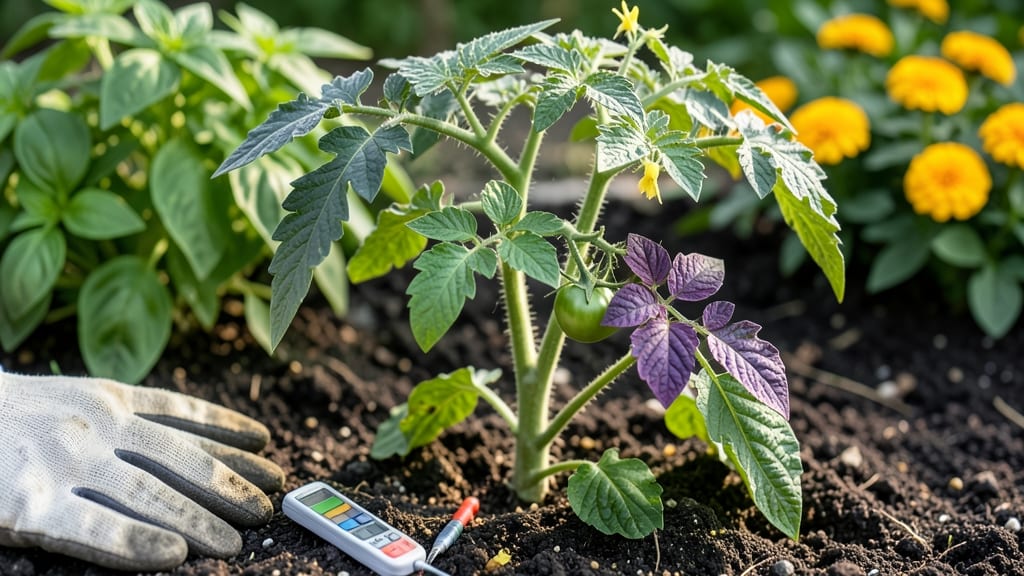
Your tomato plant’s leaves turning purple isn’t just unsightly—it’s a cry for help, often signaling calcium deficiency that’s quietly sabotaging your harvest. 🌱 I’ve seen this happen after just one week of stress, and the good news is, it’s fixable with targeted action.
The key is catching it early, when the edges of younger leaves first show that telltale purple blush before the plant shuts down completely.
This isn’t just about throwing lime on the soil (though that helps)—it’s about diagnosing whether the problem stems from root issues (compacted soil, poor drainage), overwatering (diluting nutrients), or environmental stress (too much nitrogen, temperature swings).
The purple starts at leaf edges because those areas grow fastest, and when calcium can’t reach them, the plant’s survival instincts kick in—even if it means sacrificing new growth. Think of it like a plant version of muscle cramps: it’s screaming for balance.
By the time you finish these 3 simple steps—soil testing, targeted amendments, and watering adjustments—you’ll see fresh green leaves in 7-10 days if the roots are still healthy.
The fix isn’t just about saving the current plant; it’s about preventing next season’s purple panic by adjusting your fertilizer routine and soil prep. Trust me, your future tomatoes will thank you with bigger, sweeter fruit.
We’ll walk through how to spot the difference between calcium deficiency and other stressors (like boron deficiency or disease), plus when to call in backup—because sometimes, the purple means it’s time to replant rather than rescue.
Let’s turn that purple back to vibrant green before your plant throws in the towel.
Hidden Triggers Behind Purple Leaves
When your tomato plant’s leaves start showing off with unusual purple hues, it’s rarely just a fashion statement—it’s a cry for help. These color shifts are your plant’s way of signaling stress, and understanding the root causes is the first step to saving your harvest.
Below, we break down the most common culprits, backed by science, so you can diagnose and act fast.
Tomatoes are calcium-hungry plants, and when they don’t get enough, their leaves develop interveinal chlorosis (yellowing between veins) followed by purple tinges—especially on younger leaves. Calcium is vital for cell wall structure, and without it, your plant’s growth stalls, leading to:
- Weak cell membranes: Leaves can’t maintain rigidity, causing edges to curl or purple spots.
- Blossom end rot: While this affects fruits, calcium deficiency often starts in the leaves first.
- Poor nutrient uptake: Magnesium and potassium absorption drops, worsening deficiency symptoms.
Why it happens: Soil pH above 6.5 locks out calcium, while dry soil prevents roots from accessing it. Even if your soil tests "fertile," uneven watering or high potassium fertilizer can starve your tomatoes of calcium.
Actionable fix: Test your soil’s pH and amend with gypsum (calcium sulfate) or crushed eggshells. Water deeply 2–3 times weekly to keep roots hydrated.
Purple leaves can also signal a phosphorus deficiency, but here’s the twist: it’s often masked by excess nitrogen. Phosphorus helps energy transfer in plants, and when levels dip, your tomato’s leaves may turn purple—especially on the undersides or along veins.
However, if nitrogen is flooding the soil, phosphorus symptoms get drowned out until it’s too late.
- Slow root growth: Roots struggle to absorb nutrients, worsening deficiency.
- Stunted flowering/fruiting: Purple leaves pair with fewer blossoms or deformed fruit.
- Poor stress resistance: Plants become more vulnerable to disease or heat.
Why it happens: Over-fertilizing with nitrogen-heavy (e.g., blood meal) or low-phosphorus (e.g., manure-only) amendments skews the nutrient ratio. Sandy soils also leach phosphorus quickly.
Actionable fix: Apply a balanced 10-10-10 fertilizer or bone meal (3-15-0) at planting. Side-dress with compost mid-season to boost organic phosphorus.
Purple isn’t always about nutrients—it can be your plant’s emergency response to environmental shocks. Tomatoes produce anthocyanins (the purple pigment) to:
- Protect leaves from UV damage (common in hot, sunny climates).
- Insulate against cold snaps (especially in early spring/fall).
- Signal drought stress: Purple stems/leaves mean roots are struggling to pull up water.
Why it happens:
Trigger
Signs to Watch For
Quick Test
Heat stress
Purple on upper leaves, wilting by noon, fruit sunscald.
Check soil moisture—if dry 1 inch down, water immediately.
Cold damage
Purple on new growth, crispy edges, slow recovery.
Cover plants with frost cloth if temps drop below 50°F.
Drought
Purple stems + leaves, dry soil, wilting even at watering time.
Poke soil with a finger—if it springs back slowly, you’re underwatering.
Actionable fix: Mulch with straw or wood chips to retain moisture and regulate soil temp. For heat stress, provide afternoon shade cloth (30–50% shade).
Not all purple leaves are about deficiencies—sometimes, your plant is overloaded. Excessive salts, heavy metals, or even too much fertilizer can cause purple discoloration by:
- Burning root tips: High salt concentrations (from synthetic fertilizers or tap water) prevent nutrient uptake.
- Altering pH extremes: Soil pH below 5.5 or above 7.5 locks out nutrients, mimicking deficiency.
- Metal buildup: Old, contaminated soil or well water high in magnesium or boron can cause purple mottling.
Why it happens:
- Over-fertilizing: Dumping chemical fertilizers without leaching (rain/water) leaves salts behind.
- Hard water: High calcium/magnesium content in tap water can build up over time.
- Poor drainage: Waterlogged soil suffocates roots, causing them to leach out nutrients.
Actionable fix:
- Flush soil with 2 inches of water to leach salts (do this monthly in containers).
- Test soil for EC (electrical conductivity)—ideal range is 1.0–2.5 dS/m.
- Switch to organic amendments (compost, worm castings) to improve soil structure.
Quick Fixes for Purple Tomato Leaves
Now that you know why your tomato plant’s leaves are turning purple—likely due to calcium deficiency, nutrient imbalance, or environmental stress—it’s time to take action! The good news? Most fixes are simple, cost-effective, and can restore your plant to health in just a few days.
Below, we’ll break down practical solutions for each common cause, along with prevention tips to keep your tomatoes thriving.
Calcium deficiency is the #1 culprit behind purple-tinged leaves and blossom end rot. Here’s how to correct it fast:
🔥 Step 1: Apply Calcium-Rich Amendments
Tomatoes need calcium in a soluble form (not just lime, which is slow-acting). Try these: - Crushed eggshells: Boil 3–4 eggshells, grind them into a fine powder, and sprinkle 1 tbsp around the base of the plant.
Water well. - Calcium nitrate or gypsum: Mix 1 tbsp of gypsum (calcium sulfate) into the top 2 inches of soil and water thoroughly.
For a faster fix, use 1 tsp of calcium nitrate dissolved in 1 gallon of water as a foliar spray. - Epsom salt (for magnesium support): If leaves are both purple and yellow, mix 1 tbsp Epsom salt in 1 gallon of water and spray on leaves weekly.
🍳 Step 2: Improve Soil Drainage & pH
Purple leaves often signal poor calcium uptake due to compacted or alkaline soil. - Test your soil: Use a pH test kit (ideal range: 6.0–6.8).
If it’s above 7.0, add sulfur or peat moss to lower pH. - Aerate the soil: Loosen the top 4–6 inches with a fork to help roots absorb calcium.
Add compost or aged manure for organic matter. - Mulch heavily: Use straw or grass clippings to retain moisture and prevent calcium leaching.
👨🍳 Step 3: Water Smartly (No More Stress!)
Overwatering or uneven moisture triggers calcium deficiency.
- Water deeply but infrequently: Aim for 1–1.5 inches per week (check soil moisture 2 inches down—it should feel damp, not soggy).
- Use drip irrigation: Avoid wetting leaves (fungus risk) and keep roots consistently moist.
- Avoid night watering: Wet foliage at night invites disease.
Water in the early morning.
If purple leaves appear along with stunted growth or dark green veins, your plant may have a phosphorus (P) or potassium (K) overload while lacking calcium.
💡 Step 1: Flush the Soil
Over-fertilizing with high-P or high-K fertilizers (like 5-10-10 or banana peel tea) can block calcium. - Leach excess salts: Water the soil heavily for 20–30 minutes to flush out built-up nutrients.
Repeat 2–3 times over a week. - Switch to a balanced fertilizer: Use a low-P, high-Ca fertilizer like 10-10-10 or 5-5-5 (with micronutrients).
🎯 Step 2: Boost Calcium & Reduce Phosphorus
- Stop using bone meal or fish emulsion (high in P).
Instead, opt for: - Worm castings (gentle, calcium-rich) - Kelp meal (provides potassium without overloading P) - Side-dress with compost tea: Brew 1 cup compost + 5 gallons water, steep for 24 hours, and pour around the base.
✨ Step 3: Monitor & Adjust
- Check fertilizer labels: Avoid products with P2O5 or K2O listed first (e.g., 3-4-5 is safer than 10-5-5).
- Use foliar sprays: Mix 1 tsp calcium chloride + 1 tsp Epsom salt in 1 gallon of water and spray leaves weekly for 2–3 weeks.
Purple leaves can also signal physical stress from temperature swings, windburn, or fungal pressure.
🔪 Step 1: Protect from Temperature Shocks
- Cover young plants: Use frost blankets if nights dip below 50°F (10°C).
- Move potted tomatoes: If outdoors, bring them indoors or to a sheltered spot during cold snaps.
- Avoid late planting: Start seeds 6–8 weeks before last frost for stronger, resilient plants.
⏰ Step 2: Improve Air Circulation
Stagnant air = fungus and stress.
- Prune lower leaves: Remove leaves touching the soil to prevent disease.
- Space plants 18–24 inches apart: Crowding causes windburn and poor gas exchange.
- Use a small fan: Place a gentle fan near plants for 1–2 hours daily to strengthen stems.
🌡️ Step 3: Shield from Harsh Conditions
- Windbreaks: Plant fast-growing companions like bush beans or marigolds on the windward side.
- Row covers: Use floating row covers if your area gets strong winds or hail.
- Avoid overhead watering: Water at the base only to prevent leaf burn.
Once your plant recovers, keep these habits to avoid future issues: ✅ Soil prep is key: Amend soil with crushed eggshells or gypsum before planting. ✅ Fertilize wisely: Use low-P fertilizers (like 5-5-5) and side-dress with compost every 4–6 weeks. ✅ Mulch like a pro: Straw or wood chips retain moisture and regulate soil temp. ✅ Test soil annually: Know your pH and nutrient levels to adjust proactively. ✅ Rotate crops: Avoid planting tomatoes in the same spot yearly to prevent calcium depletion.
| Problem | Fast Fix | Prevention |
|---|---|---|
| Calcium deficiency | Eggshell tea, gypsum, foliar spray | Mulch, test soil pH, avoid overwatering |
| Phosphorus/potassium overload | Soil flush, balanced fertilizer | Use low-P fertilizers, compost tea |
| Cold/wind stress | Frost blankets, windbreaks, pruning | Plant at optimal time, improve airflow |
| Poor drainage | Aerate soil, compost, drip irrigation | Raised beds, sandy loam mix |
Pro Tip: 💡 If purple leaves persist after 2 weeks, consider root health—your plant may need more oxygen (try aerating roots with a fork) or less salt (rinse soil with rainwater).
With these fixes, your tomato plant should green up in 7–14 days—and you’ll be on your way to a bountiful, purple-free harvest! 🍅🌿
Frequently asked questions
Why are only the younger leaves turning purple while older ones stay green?
This classic pattern signals calcium deficiency—your tomato’s fastest-growing leaves can’t get enough calcium to build strong cell walls. The older leaves stay green because they’ve already stored nutrients, while new growth gets starved first. Check your soil pH (ideal: 6.0–6.8) and water consistently—dry soil blocks calcium uptake.
Can I fix purple leaves by just adding lime to the soil?
Not always! Lime raises pH but doesn’t provide soluble calcium fast enough. For quick results, use gypsum (calcium sulfate) or crushed eggshells instead. Test your soil first—if pH is already high (7.0+), lime will make the problem worse by locking out calcium.
What’s the difference between purple from calcium deficiency and purple from cold stress?
Cold stress turns entire leaves purple (not just edges) and often appears after 50°F (10°C) nights. Calcium deficiency starts at leaf edges and spreads inward. Check stems: Cold damage causes crispy edges, while deficiency makes stems stay soft. Cover plants at night if temps drop!
Will my tomato plant recover if I see purple leaves now?
Yes, but act fast! If caught early (first purple signs), your plant can bounce back in 7–14 days with calcium amendments and proper watering. However, if leaves are crispy or falling off, roots may be damaged—consider replanting if no improvement after 2 weeks.
How often should I fertilize tomatoes to avoid purple leaves?
Too much fertilizer causes purple! Use a balanced 5-5-5 or 10-10-10 every 4–6 weeks (not monthly). For organic growers, compost tea or worm castings work better. Avoid high-phosphorus amendments like bone meal—they block calcium uptake.