
Planting
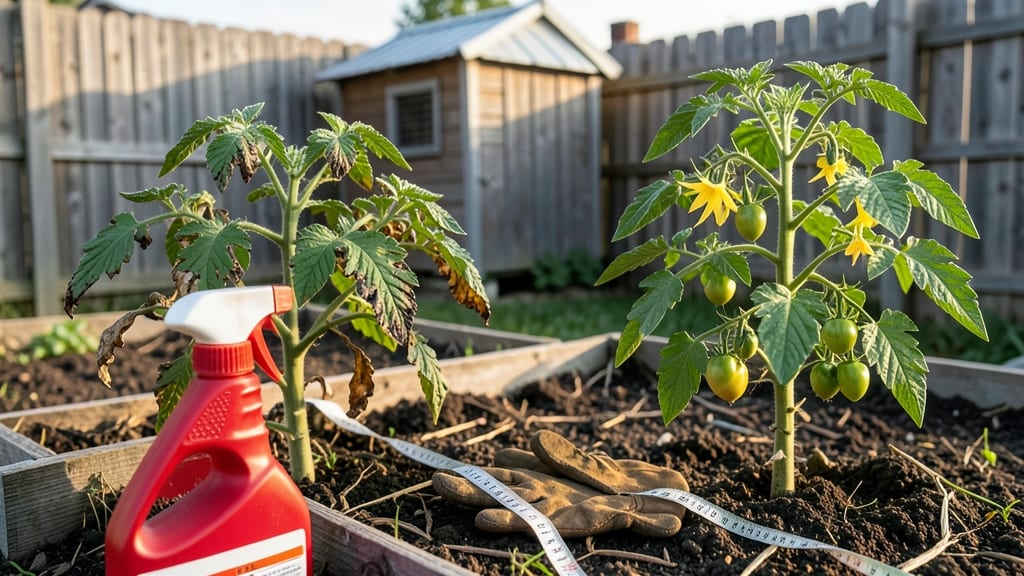
Tomato plant herbicide damage can turn your lush tomato plants into crispy, chemical-scorched messes in hours. 🌱 I’ve seen it happen—one minute your plants are thriving, the next they’re wilted and yellowing like they’ve been hit by a weed killer. The good news? With the right moves, you can often nurse them back to health in just 48 hours, even if they look dead now.
The damage happens when herbicides (especially glyphosate or 2,4-D) get on leaves or roots, disrupting the plant’s ability to absorb water and nutrients. The first signs? Brown, curled leaves or a sudden droop that feels like a heatwave hit overnight.
My tomatoes once looked like this after a neighbor sprayed nearby—until I acted fast with a soil flush and organic amendments.
You’ll start by rinsing the leaves with water to remove surface chemicals, then flushing the soil with 5 gallons of water to dilute any absorbed herbicide.
Add compost or worm castings to help the roots recover faster—within 24-48 hours, you should see new growth pushing through if the roots are still alive. The key is speed: the sooner you act, the better the comeback.
For long-term protection, switch to organic weed control—mulch, vinegar sprays, or even a barrier cloth around your garden beds. Prevention is easier than cleanup, and your tomatoes will thank you with juicy, healthy fruit all season long. Let’s get those plants back on track!
How Herbicides Harm Tomato Plants
Herbicides are powerful tools for controlling weeds, but when misapplied, they can devastate your tomato plants—often within hours. Understanding why herbicide damage occurs is the first step to prevention and recovery.
Below, we break down the key reasons tomato plants suffer from chemical exposure, from accidental overspray to systemic absorption issues.
Tomato plants are often collateral damage when herbicides designed for broadleaf weeds or grassy invaders drift onto foliage. Here’s how it happens:
- Wind or improper application: Strong winds can carry herbicide particles beyond their target area, landing on tomato leaves. Even a light dusting can disrupt the plant’s cuticle (its natural protective layer), leading to chlorosis (yellowing) or necrosis (dead tissue).
- Overlapping spray patterns: If you’re treating weeds near your tomato patch with a handheld sprayer or granular herbicide, residual chemicals can seep into the soil and be absorbed by roots—or splash onto leaves during watering.
- Neighbor’s treatment: Herbicides applied to lawns, driveways, or adjacent crops (like corn or soybeans) can drift onto your garden. Glyphosate (e.g., Roundup) is notorious for this, as it’s often used in high-volume applications.
Why it’s deadly: Tomato leaves are soft and thin compared to weeds, making them highly susceptible to chemical burn. The plant’s stomata (pores) can absorb herbicides directly, disrupting photosynthesis and causing rapid wilting.
Even if your tomato plants look healthy above ground, hidden herbicide residues in the soil can wreak havoc on their roots. Here’s the science:
- Persistent chemicals: Some herbicides (like 2,4-D or dicamba) break down slowly and can linger in the soil for months or years. If you planted tomatoes in a former lawn or weed-infested area, residual chemicals may still be active.
- Root absorption: Tomato roots uptake water and nutrients—and unfortunately, any dissolved herbicides in the soil. Once inside the plant’s vascular system, these chemicals can disrupt cell division or block enzyme production, leading to stunted growth or deformed leaves.
- pH and organic matter interactions: Herbicides bind to soil particles differently based on pH and organic content. In sandy or low-organic soils, they move faster through the root zone, increasing uptake risk.
Signs of soil damage: Look for crinkled or curled leaves, unusual purple tinges (a sign of phosphorus deficiency caused by herbicide interference), or roots that appear brown/black when washed.
Not all herbicides are created equal—and using the wrong one on your tomato patch can be catastrophic. Here’s why:
- Selective vs. non-selective:
- Non-selective herbicides (e.g., glyphosate, glufosinate) kill all green plants, including tomatoes. Even a tiny amount can cause systemic damage.
- Selective herbicides (e.g., triclopyr for broadleaf weeds) may seem safe, but tomatoes are extremely sensitive to their active ingredients.
- Misreading labels: Some herbicides are labeled for “ornamental plants” but omit tomatoes. Others warn against use on “Solanaceae” (the tomato family), which includes peppers and eggplants.
- Concentration errors: Diluting herbicides incorrectly can make them more potent than intended, increasing damage risk.
Red flag: If your tomato leaves develop irregular brown patches with yellow halos (like a bullseye), it’s often a sign of 2,4-D or dicamba exposure—both common in “weed and feed” lawn products.
Herbicides don’t work alone—they team up with heat, drought, or poor soil health to maximize harm. Here’s how:
- Heat and drought: Under high temperatures (above 85°F), tomato plants transpire faster (lose more water), which speeds up herbicide absorption through leaves. Drought-stressed plants are also less resilient to chemical damage.
- Poor soil health: If your soil lacks organic matter or has low microbial activity, herbicide breakdown slows down, increasing toxicity over time.
- Fungal or pest stress: Plants already weakened by blight, aphids, or spider mites have compromised cell walls, making them easier targets for herbicide penetration.
Pro tip: 💡 If you’ve applied herbicides near your tomatoes in the past, conduct a simple soil test for residual chemicals. Many extension offices offer affordable kits.
Now that you know why herbicides turn your tomato plants into chemical casualties, the next steps are identifying the damage and acting fast to reverse it. Stay tuned for our deep dive into symptoms and emergency fixes!
How to Revive Your Tomatoes
If your tomato plants have been hit by herbicide damage, don’t panic—many plants can bounce back with the right care. The key is acting fast, identifying the type of damage, and applying targeted solutions.
Below, we break down the fixes based on the most common causes of herbicide damage, along with prevention tips to keep your garden thriving.
Cause: Direct contact with post-emergent herbicides (like glyphosate or 2,4-D) or overspray from lawn treatments. How to Treat It:Herbicide burn on leaves often appears as yellowing, browning, or crispy edges. Here’s how to help your plant recover:
- 💦 Flush the Plant Immediately
Use a gentle stream of water (not pressure) to rinse off any residual herbicide. Focus on the undersides of leaves where chemicals often linger. Repeat every 12 hours for 24–48 hours.
- 🌿 Trim Damaged Foliage
Prune any severely burned or yellowed leaves with clean, sharp scissors. This helps the plant redirect energy to healthy growth. Avoid cutting more than 20–30% of the foliage at once.
- 💧 Hydrate with Care
Water deeply at the base of the plant (not the leaves) to avoid reapplying herbicide residue. Use a soaker hose or drip irrigation to keep soil moist but not soggy.
- 🌡️ Apply a Foliar Boost
Mix 1 tablespoon of liquid seaweed fertilizer or fish emulsion in a gallon of water and spray lightly on the remaining healthy leaves. This provides nutrients to speed up recovery.
Always check weather forecasts before applying herbicides—rain within 24 hours can wash away chemicals and reduce drift. If treating lawns near tomato plants, use a physical barrier (like cardboard or mulch) to shield young plants.
Cause: Pre-emergent herbicides (like atrazine or pendimethalin) applied to the soil before planting, or residual chemicals from previous seasons. How to Treat It:Root damage is harder to spot but often shows as stunted growth, wilting, or slow recovery after transplanting. Try these steps:
- 🔄 Test Your Soil
If you suspect herbicide contamination, send a soil sample to your local extension office. They can test for residual chemicals and recommend amendments like activated charcoal or compost to bind toxins.
- 🌱 Transplant to Clean Soil
If roots are severely affected, carefully dig up the plant and replant it in fresh, herbicide-free soil. Gently rinse the roots with water before transplanting.
- 💪 Boost Microbial Activity
Add mycorrhizal fungi or a beneficial bacteria inoculant to the soil. These microbes help break down residual chemicals and improve nutrient uptake.
- 🍅 Support with Fertilizer
Use a balanced, organic fertilizer (like 5-5-5) to encourage new root growth. Avoid high-nitrogen fertilizers, which can stress the plant further.
Always read herbicide labels for re-entry intervals (how long to wait before planting). For pre-emergent herbicides, wait at least 3–6 months before planting tomatoes in the same soil.
Cause: Accidental drift from nearby herbicide applications (common with broadleaf herbicides like 2,4-D). How to Treat It:If your plants were hit by drift, act quickly to prevent systemic damage:
- 🛡️ Isolate the Plant
Move the tomato plant to a shaded or covered area (like a greenhouse or row cover) to prevent further exposure to airborne chemicals.
- 🧼 Wash Leaves with Mild Soap
Mix 1 teaspoon of mild dish soap (like Castile soap) with a gallon of water and gently spray the leaves. This helps break down residual herbicide without harming the plant.
- 🌧️ Encourage Rainfall
If natural rain isn’t in the forecast, set up a misting system to simulate rain and rinse off chemicals. Do this for 2–3 days in a row.
- 🚫 Avoid Further Treatments
Do not apply any pesticides, fertilizers, or foliar sprays until the plant shows signs of recovery (usually 5–7 days). Chemicals can compound the damage.
Plant tomatoes downwind of herbicide-treated areas to minimize drift risk. If you must treat lawns near your garden, use corn gluten meal or vinegar-based herbicides (less likely to drift).
Cause: General stress from herbicide exposure, regardless of type. How to Treat It:Give your tomato plants a fighting chance with these natural recovery aids:
- 🍋 Vinegar Rinse (For Mild Cases)
Mix 1 part white vinegar with 3 parts water and lightly spray the leaves. Vinegar helps neutralize some herbicide residues (but avoid overusing it—it can burn leaves in high concentrations).
- 🌿 Compost Tea Soak
Steep 1 cup of compost in 5 gallons of water for 24 hours, then strain and water the base of the plant. This introduces beneficial microbes and nutrients to aid recovery.
- 🍃 Epsom Salt Boost
Dissolve 1 tablespoon of Epsom salt in a gallon of water and water the soil. Magnesium sulfate helps strengthen cell walls and improve resilience.
- 🌞 Provide Optimal Conditions
Ensure your plant gets 6–8 hours of sunlight, well-draining soil, and consistent moisture. Stress from poor conditions slows recovery.
Rotate crops yearly to avoid herbicide buildup in the soil. If you must replant tomatoes in the same spot, solarize the soil in summer (cover with clear plastic for 4–6 weeks) to break down residual chemicals.
With these steps, most tomato plants can recover from herbicide damage within 48 hours to 2 weeks, depending on the severity. Keep an eye on new growth—if your plant starts producing fresh, healthy leaves, it’s on the mend!
For severe cases, don’t hesitate to replace the plant and focus on protecting the rest of your garden.
Frequently asked questions
How quickly will my tomato plants show signs of herbicide damage?
Tomato plants can show symptoms within hours of herbicide exposure, especially with direct contact on leaves. Look for yellowing (chlorosis), brown crispy edges, or sudden wilting. Root damage may take 1-3 days to appear as stunted growth or leaf curling.
Can I still save my tomato plants if the leaves are completely brown and crispy?
It depends on the roots! If stems are still firm and green, new leaves may regrow in 3-7 days with proper care. Trim all brown leaves, flush with water, and apply compost tea. If stems are mushy or black, the plant is likely beyond saving—focus on protecting nearby plants.
What's the safest way to test if my soil contains residual herbicides?
Contact your local agricultural extension office for soil testing kits. They can detect glyphosate, 2,4-D, and dicamba levels. Alternatively, plant a sacrificial crop like radishes—if they show herbicide symptoms, your tomatoes are at risk too.
Will rain help remove herbicide from my tomato plants?
Yes, but timing matters! Light rain within 24 hours of exposure can rinse off surface chemicals. Heavy rain may help, but avoid watering plants yourself for 48 hours—this prevents spreading residue. For immediate action, use a gentle hose spray on leaves.
Can I use vinegar to neutralize herbicide damage?
Diluted vinegar (1:3 ratio) may help mild cases by breaking down some residues, but it’s not a cure-all. Use it as a last resort—overuse can burn healthy leaves. For better results, focus on soil flushing and compost amendments instead.