
Vegetables
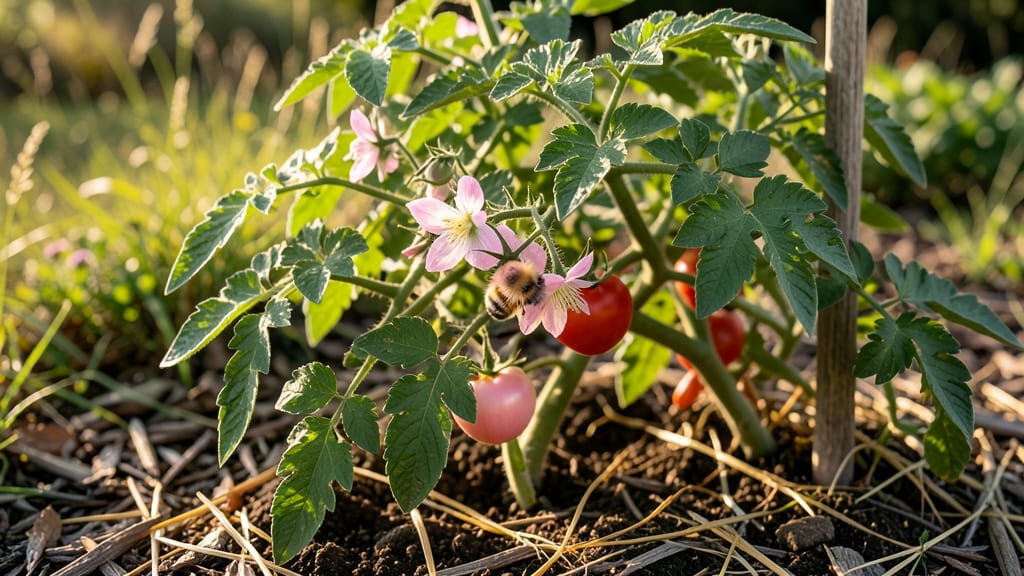
Pink Bumble Bee tomatoes climb like vines and produce fruit like a dream—indeterminate varieties that turn trellises into living pink waterfalls. 🌱 I fell for this tomato the first time I saw it sprawling across my fence, its cherry-sized fruits blushing pink and dripping sweetness.
The name isn’t just cute; it’s a promise of both beauty and bounty, with each vine yielding pounds of fruit all season long.
This variety thrives when paired with pollinators like bumble bees, which adore its flowers and boost fruit set. Plant it near herbs like basil or marigolds to create a pollinator magnet while keeping pests at bay.
The towering growth habit makes it perfect for vertical gardens, saving space and adding drama to cottage-style plots or edible landscapes.
Imagine snipping clusters of sun-kissed tomatoes for salads, sauces, or fresh eating—harvests that last from midsummer until frost. The plants stay productive year after year, and their vibrant pink hue turns any garden corner into a showstopper.
Plus, the more bees visit, the sweeter and more abundant the tomatoes become.
Whether you’re designing a pollinator-friendly edible garden or simply want a stunning, high-yielding tomato, Pink Bumble Bee delivers. Pair it with trellises, companion plants, and a splash of color to create a garden that’s as delicious as it is beautiful.
📚 In This Guide
- What you need
- Instructions
- Tips and common mistakes
- Wrapping up and next steps
What you need
- ● Tomato Seeds or Seedlings: 1–2 Tomato Pink Bumble Bee seeds (indeterminate variety) or 1–2 healthy seedlings (check for strong stems and vibrant leaves).
- ● Growing Containers or Garden Bed: Containers: 5-gallon pots or larger (minimum 12" diameter) with drainage holes (2–3 pots if starting from seed).
- ● Garden Bed: Well-draining soil in a sunny spot (6+ hours of sunlight daily).
- ● High-Quality Potting Mix: 1 bag (1.5–2 cubic feet) of sterile, well-draining potting mix (avoid garden soil—it compacts easily!).
- ● Fertilizer: Balanced, organic fertilizer (e.g., 5-5-5 or 10-10-10) or compost (start with 1–2 tbsp per plant at planting).
- ● Support System: 1–2 tomato cages (5–6 ft tall) or stakes (6+ ft) with soft ties (for indeterminate growth!).
- ● Watering Can or Hose: With a gentle spray nozzle to avoid disturbing soil.
- ● Pruning Shears: Small, sharp shears for trimming suckers and dead leaves.
- ● Mulch: Straw or shredded leaves to retain moisture and suppress weeds.
- ● Plant Food: Liquid tomato fertilizer (e.g., fish emulsion or seaweed extract) for a mid-season boost.
- ● Row Covers: Lightweight fabric to protect seedlings from pests or late frosts.
- ● pH Test Kit: To ensure soil pH is between 6.0–6.8 (ideal for tomatoes!).
- ● Grow Lights: If starting seeds indoors (12–16 hours of light daily).
Step-by-step guide for growing tomato 'pink Bumble Bee'
This indeterminate variety thrives with proper support and care—here's how to coax its towering vines into a bounty of sweet fruit.
🌱 Step 1: Start Seeds Indoors 8-10 Weeks Before Last Frost
Fill seed trays with sterile seed-starting mix and sow seeds ¼ inch deep—they need warmth to germinate. Place trays on a heat mat set to 75-85°F and cover with a humidity dome. Germination takes 7-14 days, but don't water until you see first true leaves—overwatering now causes damping-off.
Once seedlings emerge, remove the dome and position under grow lights for 14-16 hours daily. Use full-spectrum LEDs 2-4 inches above plants to prevent leggy growth. Rotate trays daily so seedlings grow straight and sturdy.
☀️ Step 2: Harden Off and Transplant After All Danger of Frost
Two weeks before transplanting, move seedlings outside for 1-2 hours daily in partial shade. Gradually increase exposure to full sun over 10-14 days—this toughens stems and prevents shock. Choose a sunny, sheltered spot with 6+ hours of direct light and well-draining soil.
Transplant in the evening to reduce stress. Bury stems ⅔ of the way to encourage root growth—'Pink Bumble Bee' responds well to this technique. Space plants 18-24 inches apart in rows 3 feet apart to allow airflow and future trellising.
🪴 Step 3: Install Sturdy Trellis and Prune for Maximum Yield
Install a 6-foot tall trellis or cage immediately after transplanting. This variety grows 8-10 feet tall, so use heavy-duty stakes or a tomato tower to support vines. Tie main stems to the trellis with soft plant ties every 12 inches as they grow.
Prune suckers (shoots in the joint between stem and branch) when they're 2-3 inches long. Remove leaves touching the soil to prevent disease. Focus on 1-2 main stems for best air circulation—this prevents blight and encourages larger fruit.
💧 Step 4: Water Deeply and Fertilize for Continuous Blooms
Water at the base 1-2 inches per week, keeping soil consistently moist but not soggy. 'Pink Bumble Bee' produces fruit continuously, so mulch heavily to retain moisture and cool roots. Avoid wetting foliage to prevent fungal diseases.
Feed every 2-3 weeks with a balanced fertilizer (10-10-10) until flowering begins, then switch to low-nitrogen, high-phosphorus (5-10-10) to boost fruiting. Stop fertilizing 4-6 weeks before harvest to improve flavor.
✂️ Step 5: Harvest and Prune for Fall Extension
Pick fruit when fully colored and slightly soft to the touch—70-80 days after transplanting. 'Pink Bumble Bee' ripens unevenly, so check clusters every 2-3 days. Remove overripe tomatoes immediately to prevent pests and disease.
In fall, prune back ⅓ of the plant to redirect energy to remaining fruit. If frost threatens, harvest green tomatoes and ripen indoors in a paper bag with a banana for 1-2 weeks. This variety produces until hard frost, so keep pruning and harvesting until the end of the season.
Tips & tricks for growing towering pink Bumble Bee tomatoes
Real talk: This variety's height and productivity demand a few key strategies to avoid common pitfalls. Here's what I've learned after growing these beauties for years.
Heat Mat Precision: That 75-85°F heat mat range is critical for germination. I use a digital thermometer to monitor temps—any lower than 75°F and germination slows dramatically. If your kitchen runs cool, consider a seedling heat mat with built-in thermostat for consistent results. The moment you see those first true leaves, remove the humidity dome immediately to prevent fungal growth.
Lighting Game-Changer: Those 14-16 hours of grow light aren't optional—they're what transforms leggy seedlings into sturdy plants. I position my lights 2-3 inches above the seedlings and adjust the height as they grow. Pro tip: Use a timer to automate this—consistency is everything. If you notice stems stretching toward the light, you're too far away.
Transplanting Technique: Burying stems ⅔ of the way might sound counterintuitive, but it triggers root growth along the buried portion. I make a small trench and gently press the stem into the soil at a 45-degree angle. This creates a stronger root system that supports those towering vines. Water thoroughly after transplanting to settle the soil around the stems.
Pruning Strategy: When pruning suckers at 2-3 inches, I use sharp, clean pruners to avoid tearing the plant. Focus on removing suckers from the main stem's lower half first—this directs energy upward where we want it. I also remove any leaves touching the soil immediately after transplanting to prevent soil-borne diseases from climbing the plant.
Pro Tips for Tomato Pink Bumble Bee
- Real talk: This variety's height and productivity demand a few key strategies to avoid common pitfalls.
- Heat Mat Precision: That 75-85°F heat mat range is critical for germination.
- Lighting Game-Changer: Those 14-16 hours of grow light aren't optional—they're what transforms leggy seedlings into sturdy plants.
Frequently asked questions
Got questions about growing the stunning Tomato Pink Bumble Bee?
You’re not alone! Here are answers to the most common queries to help you cultivate this prolific indeterminate variety with confidence.
How tall can the Tomato Pink Bumble Bee grow, and do I need a cage?
The Pink Bumble Bee is an indeterminate variety, meaning it can grow 6–10 feet tall with proper support! While cages work, a sturdy trellis or tomato tower is ideal to prevent sprawling. Prune suckers regularly to encourage upward growth and better air circulation—your plants will thank you!
When is the best time to plant Pink Bumble Bee seeds or seedlings?
Start seeds 6–8 weeks before your last frost date indoors (around 70°F) for transplanting after danger of frost has passed. For direct sowing, wait until soil temps reach 60°F+. In warm climates, you can even plant in early spring or fall for extended harvests. Pro tip: Use black plastic mulch to warm the soil faster!
Why are my Pink Bumble Bee tomatoes cracking, and how do I fix it?
Cracking is often due to inconsistent watering or rapid growth from too much nitrogen. Keep soil evenly moist (not soggy!) and avoid heavy watering late in the day. For extra insurance, mulch heavily and consider a balanced fertilizer (like 5-5-5) to steady growth. Harvest promptly when tomatoes are 70–80% ripe to minimize stress!
Are Pink Bumble Bee tomatoes good for bumblebees, or is it just a marketing gimmick?
Not a gimmick—this variety is open-pollinated, meaning it attracts pollinators like bumblebees naturally! The pink hue is a genetic trait, but its large, accessible flowers and high nectar content make it a bee magnet. Bonus: Happy bees = better fruit set! Plant near other pollinator-friendly flowers (like marigolds or basil) for a thriving ecosystem.
Can I grow Pink Bumble Bee in containers, and what size pot do I need?
This variety thrives in 5-gallon+ containers with 12–18 inches of depth and drainage holes. Use a lightweight potting mix (add perlite or compost) and a tomato cage or stake for support. Water frequently (containers dry out fast!) and feed with liquid fertilizer every 2–3 weeks for maximum yields. Pro tip: Place pots in full sun (6+ hours/day) and rotate them weekly for even growth.
Wrapping up and next steps
The Tomato Pink Bumble Bee is a game-changer for gardeners seeking bountiful, disease-resistant harvests with minimal fuss! Its indeterminate growth and vibrant pink fruit make it a standout choice—perfect for containers, trellises, or sprawling gardens. 🌱✨
Ready to grow your own delicious, eye-catching tomatoes? Start by gathering your supplies, then plant with confidence—your future harvest is just a seed away! 🌱 Jump to the planting guide to begin your journey today.