
Vegetables
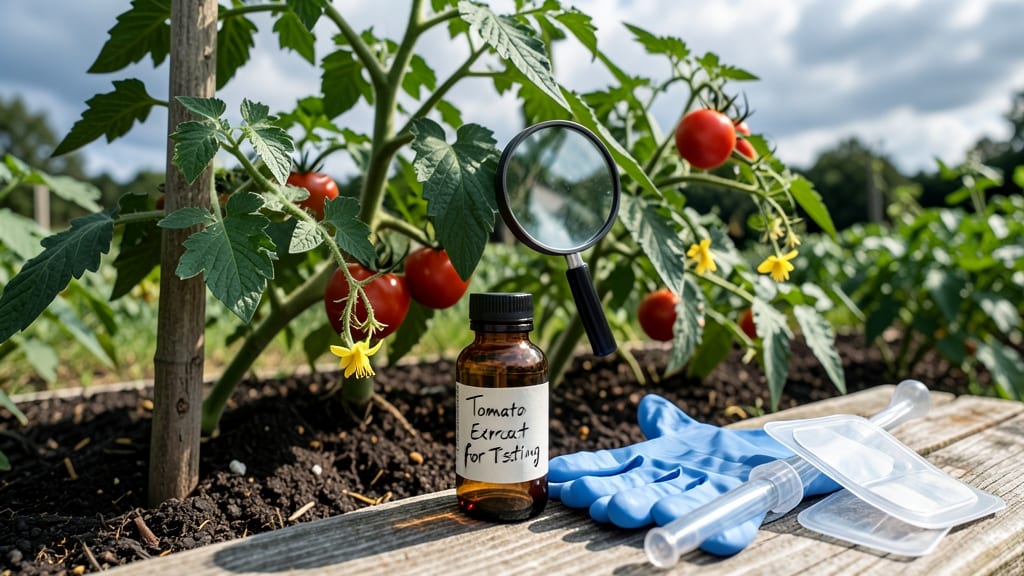
A tomato allergy test detects sensitivity through skin prick or blood tests that identify IgE antibodies reacting to tomato proteins—like those in the Solanaceae family—with results appearing within minutes to days.
Understanding how these tests work helps you prepare properly.
The skin prick test involves placing diluted tomato extracts on your arm and gently pricking the skin to observe reactions, while blood tests measure specific IgE levels in your system. 🔥 Both methods help pinpoint whether your immune system overreacts to proteins like profilins or lipid transfer proteins found in tomatoes.
If you test positive, an allergist can guide you on managing symptoms and avoiding cross-reactive foods like peppers or potatoes.
Preparation is key—stop taking antihistamines 72 hours before testing, and avoid tomato-based foods for a few days. Results typically arrive quickly, but false positives can occur, so follow up with a specialist if needed.
This testing isn’t just about tomatoes; it often reveals broader nightshade sensitivities that might affect your diet.
💡 In This Article
- How Skin Prick and Blood Tests Detect Tomato Allergies
- Preparing for and Interpreting Tomato Allergy Test Results
How skin prick and blood tests detect tomato allergies
The skin prick test works by exposing your immune system to tiny amounts of tomato proteins in a controlled way. During this procedure, a healthcare provider places small drops of diluted tomato extract—containing proteins like profilins or lipid transfer proteins (LTPs)—on your forearm or back.
They then gently prick the skin beneath each drop to allow these allergens to enter the epidermis. If your immune system recognizes these proteins as threats, it releases histamine and other chemicals, causing a visible reaction like redness or swelling within 15-20 minutes.
This immediate response indicates an IgE-mediated allergy, which is the same mechanism behind reactions to peanuts or shellfish.
Blood tests, on the other hand, take a more direct approach by measuring your IgE antibody levels in a lab setting. Tests like ImmunoCAP or RAST (Radioallergosorbent Test) analyze your blood for specific IgE antibodies that bind to tomato proteins.
These tests are particularly useful if you have severe eczema or skin conditions that make skin prick tests unreliable. The process involves drawing blood and sending it to a lab, where technicians look for elevated IgE levels against tomato allergens.
Unlike skin tests, blood tests don’t rely on immediate reactions but instead provide a precise measurement of your immune system’s sensitivity, often with results available within 1-2 weeks. 🔥
Both tests target the same underlying issue: your immune system’s overreaction to proteins found in tomatoes and other Solanaceae family vegetables.
Profilins, for example, are heat-sensitive proteins that can trigger oral allergy syndrome (OAS) when you eat raw tomatoes, while LTPs are more heat-stable and may cause reactions even when tomatoes are cooked. This is why some people react to tomato sauce but not fresh tomatoes, or vice versa.
Understanding which specific proteins your body targets helps allergists tailor your avoidance plan and predict cross-reactivity with foods like eggplants or bell peppers.
One key difference between the tests lies in their sensitivity and specificity. Skin prick tests are generally 95% accurate for detecting IgE-mediated allergies but can produce false positives due to skin irritation. Blood tests, while more precise, may miss some reactions if your IgE levels are only slightly elevated.
That’s why allergists often recommend combining both tests for a comprehensive diagnosis. For instance, if your skin prick test shows a mild reaction but your blood test confirms high IgE levels, it strengthens the case for a true allergy rather than a false alarm.
Consider this real-world example: A patient might test positive for tomato allergies but also show reactions to latex or birch pollen due to cross-reactivity. This is because profilins in tomatoes share structural similarities with proteins in these unrelated substances.
Your allergist will use these test results to create a personalized avoidance strategy, which might include cooking methods (like peeling tomatoes to reduce exposure to skin allergens) or substituting nightshades with low-risk alternatives like zucchini or cucumbers.
The goal isn’t just to identify the allergy but to help you navigate your diet safely and confidently. ✨
Another critical factor is the concentration of allergens used in testing. Skin prick tests typically use standardized extracts with 0.01-0.1 micrograms of protein per drop, while blood tests measure IgE levels in kU/L (kilounits per liter).
A positive skin test might show a 3-5mm wheal (raised bump) at the test site, whereas a blood test could report IgE levels above 0.35 kU/L for a confirmed allergy.
These measurements provide a clear benchmark for your healthcare provider to determine the severity of your reaction and whether you need to avoid tomatoes entirely or can tolerate them in specific forms.
What most people don’t realize is that these tests also help uncover broader patterns in your immune system. For example, if you test positive for tomato allergies but negative for peppers, it might indicate a sensitivity to specific proteins rather than a general nightshade allergy.
This distinction is crucial for managing your diet long-term. Your allergist might recommend a double-blind placebo-controlled food challenge (DBPCFC)—the gold standard for diagnosing food allergies—to confirm your reactions in a controlled setting. This step ensures you’re not unnecessarily restricting foods that might actually be safe for you. 💫