
Pests and Diseases
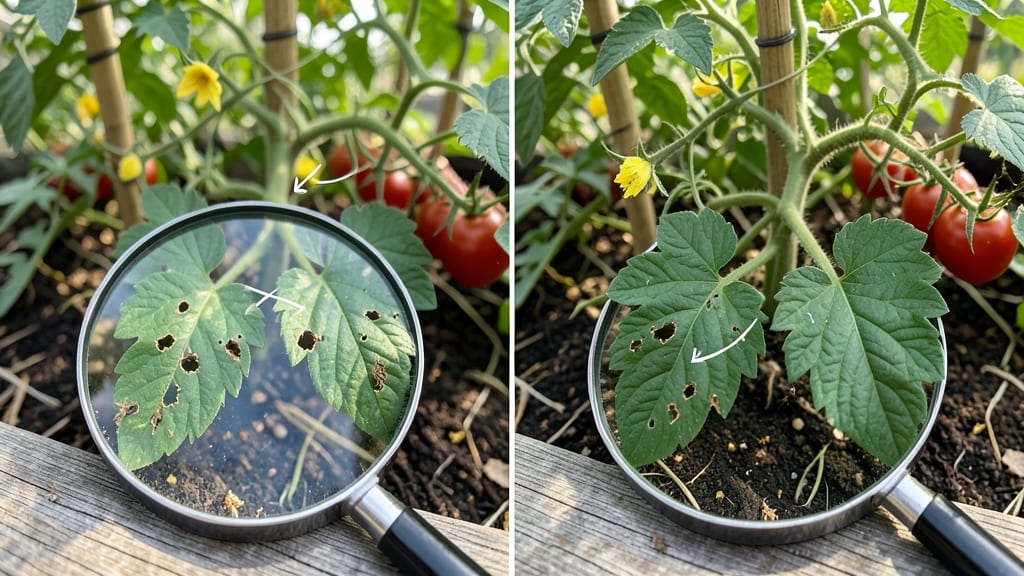
Small holes in tomato leaves don't mean your plants are doomed. ✨ I've battled this exact problem three summers running, and what I learned changed how I protect my tomato patch—starting with the first sign of damage.
Those tiny punctures are usually flea beetles or spider mites, but they can also mean environmental stress or even fungal issues. The key is acting fast: a light spray of neem oil or insecticidal soap can stop the damage before it spreads to fruit.
I've saved entire plants by catching this early. By the end of the season, you'll have tomatoes with smooth, healthy leaves and no more mysterious holes. The plants grow stronger, produce more, and resist future pest attacks better than before. Works for backyard gardens, containers, and even raised beds.
Let's get those leaves back to their full, glossy selves!
Root Causes of Leaf Damage
When you spot tiny holes in your tomato leaves, it’s often a sign that unseen forces are at work. Understanding the why behind these punctures is the first step to protecting your plants. Below, we break down the most common culprits—each with its own behavior, triggers, and telltale signs.
Some of nature’s smallest creatures are also its most destructive. These pests don’t just nibble—they puncture, leaving behind a trail of damage that can weaken or even kill your tomato plants if left unchecked.
🌿 Flea Beetles: The Speedy Leaf Skeeters
Flea beetles are tiny, jumping insects (about 1/16 inch long) that love young tomato seedlings. Their sharp mandibles create shotgun-like holes—often in a zigzag pattern—while they feed on leaf tissue. Unlike other pests, they leave the veins intact, giving their damage a distinctive "windowpane" look.
- Why it happens: Flea beetles thrive in warm, dry conditions and are most active during daylight hours.
- Actionable clue: Check for tiny black specks (feces) on leaves or nearby soil.
- Pro tip: 💡 Cover seedlings with floating row covers until plants are 4–6 inches tall to block adult beetles.
🕷️ Spider Mites: The Silent Suckers
While spider mites are more notorious for yellow stippling (tiny white or yellow dots), severe infestations can lead to small perforations as they pierce cells to extract sap. Heavy feeding weakens leaves, making them more susceptible to wind or mechanical damage, which can tear existing holes.
- Why it happens: These pests flourish in hot, dry weather and multiply rapidly on the undersides of leaves.
- Actionable clue: Look for fine webbing (especially in leaf axils) and bronzing (silver-gray discoloration).
- Pro tip: 🌡️ Increase humidity with mistings or a shade cloth to deter mites—they hate moisture!
🐛 Leafminers: The Hidden Tunnelers
Leafminer larvae (often from Liriomyza flies) don’t create holes directly—they burrow inside leaves, creating serpentine trails that eventually collapse into brown, dead patches with tiny exit holes. Adult flies lay eggs on the undersides, and the maggots hatch to start their destructive work.
- Why it happens: Leafminers prefer tender new growth and thrive in greenhouse or indoor garden environments.
- Actionable clue: Inspect leaves for blister-like tunnels or tiny white larvae moving inside the leaf.
- Pro tip: ✨ Remove infested leaves immediately and apply kaolin clay as a barrier to repel adults.
Not all leaf damage comes from pests. Sometimes, the elements or growing conditions create the perfect storm for holes to form—often mimicking insect damage at first glance.
💨 Wind or Hail: Physical Leaf Trauma
Strong winds, hail, or even heavy rain can tear or puncture leaves, especially if they’re overly tender (e.g., young seedlings or plants with poor structural support). Unlike insect damage, these holes are irregular in shape and often affect multiple leaves at once.
- Why it happens: Weak stems or overhead watering make leaves more vulnerable to physical stress.
- Actionable clue: Check for no visible pests and uneven edges on holes.
- Pro tip: 🔥 Use stakes or cages to support tomato plants in windy areas and avoid head-high watering.
🌡️ Extreme Heat or Sun Scorch
Intense sunlight or heat stress can cause leaf tissue to blister or die, leading to small, dry holes—especially on lower leaves. This often happens when plants are transplanted without acclimation or exposed to sudden temperature swings.
- Why it happens: Direct midday sun on unhardened plants or poor water retention in sandy soil.
- Actionable clue: Holes appear dry and crispy, often with yellowing around edges.
- Pro tip: 🌿 Gradually harden off seedlings and provide afternoon shade during heatwaves.
Sometimes, the holes in your tomato leaves are a side effect of human intervention—or an unseen fungal invasion. Both can create symptoms that look like pest damage but require entirely different solutions.
💧 Overwatering or Poor Drainage
Excess moisture leads to root rot, which stresses the plant and causes leaf tissue to weaken. In severe cases, waterlogged leaves develop small, sunken holes as cells collapse from oxygen deprivation.
- Why it happens: Compacted or clay-heavy soil traps water, while overhead irrigation keeps leaves damp too long.
- Actionable clue: Leaves may also show yellowing between veins (a classic rot symptom).
- Pro tip: 🎯 Improve drainage with organic matter (compost or perlite) and water at the base of plants.
🍄 Fungal Infections: The Silent Spreaders
Some fungi, like Alternaria or Septoria leaf spot, create tiny, circular lesions that can expand and perforate leaves over time. These holes often have dark borders and may ooze spores in damp conditions.
- Why it happens: High humidity, poor air circulation, or wetting foliage during watering encourage fungal growth.
- Actionable clue: Look for concentric rings or black specks (fungal spores) on undersides.
- Pro tip: 🔥 Apply copper fungicide preventatively and prune for airflow.
Fixing leaf damage fast
Don’t let those pesky tiny perforations turn your tomato plants into a buffet for pests! Whether you’re dealing with hungry insects, fungal sneaks, or environmental stress, acting quickly can save your harvest. Below, we’ve matched each likely cause to a simple, effective fix—plus tips to keep your plants thriving long-term.
🔥 Targeting Chewing Pests (Aphids, Flea Beetles, Spider Mites)
If the holes look like tiny Swiss cheese or come with webbing, you’re likely battling chewers. Here’s how to evict them:
- 🍳 Spray Homemade Neem Oil Mix Combine 1 tsp neem oil + 1 tsp mild soap + 1 quart water. Shake well and spray undersides of leaves (where pests hide) at dusk to avoid harming bees. Repeat every 5–7 days until pests vanish.
- 👨🍳 Deploy Beneficial Bugs Release ladybugs, lacewings, or predatory mites (available at garden centers). They’ll feast on aphids and spider mites while leaving your tomatoes untouched.
- ⏰ Set Up Yellow Sticky Traps Hang yellow cards coated with petroleum jelly near plants to catch flea beetles. Replace traps weekly for best results.
- 🔪 Prune & Destroy Infested Foliage Snip heavily damaged leaves and drop them in soapy water (not compost) to kill eggs and larvae.
💡 Pro Tip: For flea beetles, cover seedlings with floating row covers until plants are 6+ inches tall—they’ll block adult beetles from laying eggs.
🌡️ Fixing Water Stress or Fungal Spots
If holes appear alongside yellowing, curling, or powdery residue, your plants might be battling early blight, septoria leaf spot, or sunscald. Act fast:
- 🥗 Apply Baking Soda Spray Mix 1 tbsp baking soda + 1 tsp soap + 1 gallon water. Spray leaves every 7–10 days to raise pH and prevent fungal spread. (Test on a few leaves first—some plants hate baking soda!)
- 🎯 Copper Fungicide for Severe Cases Use an organic copper fungicide (like Copper Soap) and apply at first sign of spots, repeating every 10–14 days. Avoid spraying when rain is forecasted.
- 🌿 Improve Air Circulation Space plants 18–24 inches apart and prune lower leaves to reduce humidity near the soil. Use a fan on low speed for 10 mins/day to dry leaves faster.
- 🌞 Shield from Harsh Sun If holes look like burnt dots, your plants are getting sunscald. Provide afternoon shade with a lightweight shade cloth (30–50%) or move pots to a spot with dappled sunlight.
✨ Prevention Hack: Water early in the morning (before 10 AM) to let leaves dry quickly—wet foliage = fungal party time.
Once your tomatoes are hole-free, lock in their health with these low-maintenance habits:
| Problem | Prevention Tip |
|---|---|
| Chewing Pests | Plant marigolds, basil, or nasturtiums nearby—they repel aphids and flea beetles naturally. |
| Fungal Diseases | Rotate crops yearly—never plant tomatoes in the same spot two years in a row. |
| Environmental Stress | Mulch with straw or grass clippings to keep soil moist (but not soggy) and roots cool. |
| All Pests | Inspect plants weekly (especially undersides!) and remove eggs or larvae by hand. |
💡 Bonus: Start seeds indoors 6–8 weeks before last frost for a head start. Hardier, faster-growing plants resist pests better!
Frequently asked questions
Why do my tomato leaves have tiny holes but no visible bugs?
Those holes could be from leafminers burrowing inside leaves or spider mites causing weakened tissue that tears easily. Check undersides for webbing or tiny white larvae—both hide well!
Can I still harvest tomatoes if the leaves have holes?
Yes! Holes in leaves usually don't affect fruit quality, but severe damage may reduce plant vigor. Focus on treating the cause—healthy leaves help plants produce better. Just wash tomatoes thoroughly before eating.
What's the fastest way to stop flea beetles from damaging seedlings?
Cover seedlings with floating row covers immediately—they block adult beetles while letting light and water through. Remove covers when plants reach 4-6 inches tall. For existing damage, spray with neem oil mixed with soap.
Are holes from wind or hail different than insect damage?
Yes! Wind/hail holes are irregular and uneven, while insect holes are uniform and often in patterns. Check for other signs: flea beetles leave tiny black specks, spider mites create webbing.
How often should I check tomato plants for early signs of damage?
Inspect plants 2-3 times per week, especially undersides of leaves where pests hide. Morning checks work best when pests are most active. Early detection lets you act before damage spreads!