
Planting
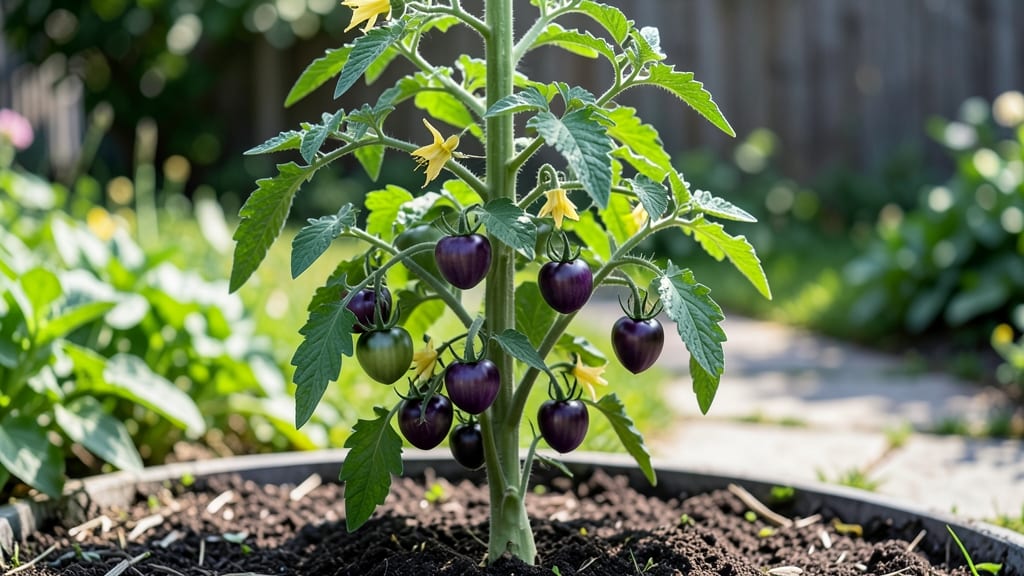
The Purple Russian tomato plant produces fruits that look like they belong in a fantasy novel—deep purple, beefsteak-sized, and weighing up to 10 pounds each. 🌿 I grew mine last summer, and the sheer size of those tomatoes made my neighbors ask if I’d secretly been growing pumpkins.
This isn’t just a pretty plant; it’s a cold-hardy, disease-resistant workhorse that thrives where other varieties fail.
Start with rich, well-draining soil mixed with compost—this plant loves to stretch, so give it 6-8 feet of space between plants. Purple Russians need full sun (6-8 hours daily) and consistent watering, but they hate soggy roots, so mulch heavily to keep moisture even.
The key to those massive fruits? Pruning aggressively to focus energy on fewer, larger tomatoes instead of a bush full of tiny ones.
By mid-summer, you’ll be harvesting deep purple, meaty tomatoes with a flavor that’s sweet, smoky, and slightly tangy—like a cross between a beefsteak and a sun-ripened heirloom. They’re perfect for slicing, grilling, or turning into sauces that taste like summer in a jar.
The plant’s cold tolerance means you can often keep it going later into the season than other varieties.
Watch for blossom end rot (prevent it with calcium-rich soil) and cracking (water consistently, but not excessively). If you’ve ever dreamed of growing tomatoes big enough to feed a family picnic, this is the variety to try.
Just be prepared for stunned reactions when you pull one out of the garden—10 pounds isn’t a typo.
📚 In This Guide
- What you need
- Instructions
- Tips and common mistakes
- Wrapping up and next steps
What you need
- ● Purple Russian tomato seeds – 2–4 seeds (or a young transplant if starting late). Pro tip: 💡 Choose heirloom seeds for the best flavor and size!
- ● Large containers or raised beds – At least 5-gallon pots (or bigger!) with drainage holes, or a 4’x8’ raised bed (12" deep). Why? These tomatoes need plenty of root space!
- ● High-quality potting mix – A sterile, well-draining blend (e.g., 60% compost, 30% coconut coir, 10% perlite). Avoid garden soil—it compacts too easily!
- ● Tomato cages or sturdy trellis – 6–8 ft tall (these vines grow tall!). Use galvanized wire cages or a wooden A-frame trellis for support.
- ○ Balanced fertilizer (10-10-10 or 5-5-5) – 1 tbsp per plant at planting, then every 2–3 weeks during fruiting. Optional boost: 🌡️ Add kelp meal for extra nutrients!
- ● Mulch (straw or black plastic) – 2–3 inches thick to retain moisture and suppress weeds.
- ● Pruning shears – Sharp, clean scissors (sterilize with rubbing alcohol between cuts).
- ● Drip irrigation or soaker hose – Consistent moisture is key for these heavy fruits!
- ● Garden twine or soft ties – For securing vines to supports as they grow.
- ● Sunlight access – Full sun (6–8+ hours daily). No shade allowed!
- ● Mycorrhizal fungi – Mix into soil at planting to boost root growth.
- ● Fish emulsion or compost tea – For a nutrient-rich foliar spray during flowering.
- ● Row covers (early season) – Protects from frost and pests until plants are established.
- ● Calcium supplement (e.g., crushed eggshells or lime) – Prevents blossom end rot.
- ● Garden journal – Track growth, watering, and fertilizing schedules for success!
Step-by-Step instructions for growing Purple Russian tomatoes
Here's how to cultivate these massive, flavor-packed giants with minimal fuss—my foolproof method for 10-pound fruits.
🌱 Step 1: Start Seeds Indoors 8-10 Weeks Before Last Frost
Purple Russians need a long growing season, so begin seeds indoors under grow lights or in a sunny window. I use 2-3 inch deep biodegradable pots filled with seed-starting mix—these tomatoes hate root disturbance, so individual containers prevent transplant shock. Press one seed ¼ inch deep in each pot and firm the soil gently around it.
Keep the soil consistently moist (not soggy) at 70-75°F using a seedling heat mat if needed. Germination takes 7-14 days—watch for the first true leaves (the second set after the initial cotyledons) before hardening off. I always label my trays because these seedlings grow fast and look identical to other varieties at first.
☀️ Step 2: Harden Off and Transplant After All Frost Risk Passes
Two weeks before your last frost date, move seedlings outdoors to a shaded, sheltered spot for 2-3 hours daily. Gradually increase exposure over 7-10 days until they can handle full sun. Purple Russians need 8+ hours of direct sunlight daily—any less and the fruits won't reach their massive potential.
Transplant on an overcast day or late afternoon to reduce stress. Bury the stem 1/3 deeper than the pot—this encourages strong root growth. Stake each plant immediately with 6-8 foot tall supports since these indeterminate vines will climb aggressively. I use heavy-duty tomato cages or bamboo stakes for stability.
💧 Step 3: Water Deeply at Soil Level and Fertilize Weekly
Water 1-2 inches per week at the base (never overhead) to prevent disease. Purple Russians are drought-sensitive—let the top 2 inches of soil dry between waterings. I use a drip irrigation system to keep foliage dry, which prevents the fungal issues these plants are prone to.
Feed with a balanced organic fertilizer (10-10-10) every 2-3 weeks once flowers appear. I switch to a low-nitrogen, high-phosphorus formula when fruits set to encourage larger size. Prune suckers (the shoots in the leaf axils) weekly to direct energy into fruit production rather than foliage.
✂️ Step 4: Prune and Support for Maximum Fruit Size
Remove all suckers below the first flower cluster to focus the plant's energy. Leave only 2-3 main stems for the strongest growth. I also prune lower leaves to improve airflow—this prevents the humidity-related diseases these massive fruits attract.
As fruits reach golf-ball size, I tie them to the support structure to prevent breakage. Purple Russians develop thick, leathery skins, but their weight can snap stems if unchecked. Harvest when fully colored and slightly soft to the touch—these tomatoes don't ripen further off the vine.
🌿 Step 5: Extend Season and Prevent Common Issues
Use row covers or a cold frame in fall to protect plants from early frosts. Purple Russians continue producing until temperatures drop below 50°F. I also monitor for hornworms—these caterpillars love the foliage. Handpick them daily and drop in soapy water.
If blossom end rot appears (dark spots on fruit), increase calcium by adding crushed eggshells to the soil and maintaining even moisture. These tomatoes need consistent care, but the payoff—10-pound fruits with complex, smoky-sweet flavor—makes it worth every effort.
Tips & tricks for growing Purple Russian tomatoes
These game-changing insights will help you coax those legendary 10-pound fruits from your Purple Russian plants—without the common pitfalls that sabotage most gardeners.
Seedling Heat Secret: Those 70-75°F soil temperatures in Step 1 are non-negotiable for germination. I've found that a simple seedling heat mat makes all the difference—especially in cooler climates. The key is maintaining consistent warmth without overheating, which can scorch delicate seedlings. Place a small fan nearby to create gentle airflow, which helps prevent damping-off disease that can wipe out your entire tray.
Transplant Timing Hack: When hardening off in Step 2, start with just 2-3 hours of outdoor exposure, but watch the weather forecast. If a cold snap is predicted, delay transplanting by a few days. Purple Russians are sensitive to temperature fluctuations, and even brief exposure to chilly nights can stunt their growth. I always move my seedlings to a sheltered spot under a patio cover during the day if temperatures are expected to dip below 60°F.
Fertilizer Transition Strategy: The switch from balanced 10-10-10 to high-phosphorus fertilizer in Step 3 requires careful timing. I make the change when the first flowers appear, but I gradually mix the two fertilizers together over 2-3 weeks rather than switching abruptly. This gradual transition helps prevent blossom drop, which is particularly problematic with these heavy-fruiting varieties. Think of it as a fertilizer "sunset clause" for your plants.
Pest Prevention Proactive Move: For hornworms in Step 5, I've had success with a simple but effective early intervention: release a few ladybugs or lacewings around your plants once they're established. These natural predators will keep hornworm populations in check before they become a problem. I also sprinkle a thin layer of diatomaceous earth around the base of plants—it's non-toxic but deadly to soft-bodied pests like hornworms while being harmless to your tomatoes.
Pro Tips for Purple Russian Tomato Plant
- These game-changing insights will help you coax those legendary 10-pound fruits from your Purple Russian plants—without the common pitfalls that sabotage most gardeners.
- Seedling Heat Secret: Those 70-75°F soil temperatures in Step 1 are non-negotiable for germination.
- Transplant Timing Hack: When hardening off in Step 2, start with just 2-3 hours of outdoor exposure, but watch the weather forecast.
Frequently asked questions
Got questions about growing the mighty Purple Russian tomato? You’re not alone!
This heirloom beauty is a showstopper, but its unique traits can spark curiosity. Below, we tackle the most common queries—from planting to harvest—so you can grow like a pro.
How long does it take for Purple Russian tomato plants to produce fruit?
The wait is worth it! With proper care, these indeterminate plants typically start flowering 60–70 days after transplanting (or 80–90 days from seed). First fruits may appear around 85–100 days, but full production peaks in late summer. Patience pays off—those 10-pound beauties are on their way!
Do Purple Russian tomatoes need special care in hot or cold climates?
These tomatoes thrive in warm but not scorching weather (ideal temp: 70–85°F). In hot climates, provide afternoon shade and mulch to retain moisture. For cooler areas, use black plastic mulch or row covers to extend the season. Avoid planting until soil temps hit 55°F+—they’re frost-sensitive!
Can I grow Purple Russian tomatoes in containers? What size pot do I need?
These vining giants need at least a 5-gallon container (bigger is better—think 10+ gallons for full productivity). Use a lightweight potting mix with added compost, and prune aggressively to encourage upward growth. A trellis or cage is a must—these plants can sprawl 6–10 feet tall!
Why are my Purple Russian tomato leaves turning yellow or curling?
Yellowing leaves often signal overwatering, nutrient deficiency (like nitrogen), or early blight. Check soil moisture (keep it consistently damp but not soggy) and fertilize with a balanced tomato feed (10-10-10 or 5-10-10). For curling, inspect for pests (like spider mites) or fungal issues—remove affected leaves and improve airflow.
Are Purple Russian tomatoes good for sauces, or do they need to be eaten fresh?
Surprise! These deep-purple gems shine in both fresh and cooked dishes. Their rich, smoky-sweet flavor makes them perfect for sauces, salsas, and even roasted. However, their thick skin and large size mean they’re best sliced for sandwiches or salads—though you can peel and chop them for sauces if you’re patient!
What’s a good alternative if I can’t grow Purple Russian tomatoes?
If space or climate is a hurdle, try these large, flavorful alternatives:
- Brandywine: Classic beefsteak with sweet, meaty slices.
- Cherokee Purple: Another heirloom with deep purple-red fruits.
- Black Krim: Disease-resistant and prolific.
- Sungold: Smaller but ultra-sweet and prolific (great for containers!).
Wrapping up and next steps
Growing a Purple Russian tomato plant is a rewarding adventure that brings bold flavors and stunning visuals to your garden! With its indeterminate nature and potential for 10-pound fruits, this variety is perfect for ambitious gardeners willing to invest time in proper care.
Whether you’re a seasoned grower or a beginner eager to try something new, the key is patience, consistency, and a little creativity—like trellising and pruning—to help these giants thrive.
Ready to take the next step? Start small—plant a few seeds or seedlings this season and watch your garden transform! Share your progress with fellow gardeners, experiment with recipes using your harvest, and enjoy the satisfaction of growing something truly extraordinary. 🌱✨