
Vegetables
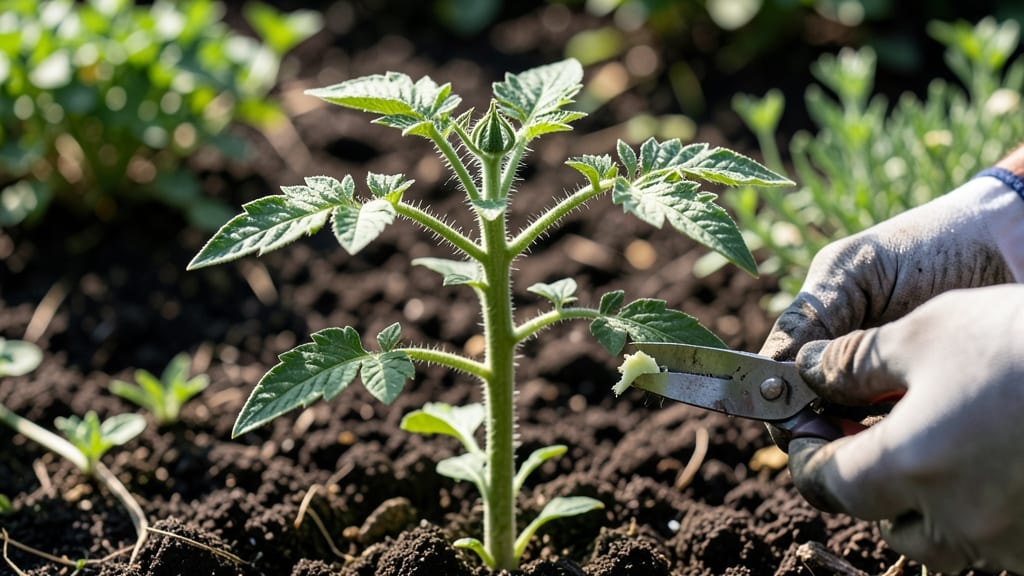
Pinching tomato seedlings transforms weak, leggy plants into sturdy, productive bushes. ✂️ I used to skip this step—until my first tomato cage collapsed under floppy stems that barely held a single fruit. That changed everything.
The best time to pinch is when seedlings have 4-6 true leaves and are 6-8 inches tall. Using clean fingers or small pruning shears, remove the top set of leaves just above a leaf node where new growth will emerge.
This redirects energy from climbing to thickening the stem and producing more flowers. Within 7-10 days, you'll see new side shoots forming, and those become your future fruit-bearing branches. My pinched plants now support 3-5 times more tomatoes than unpinched ones, with thicker stems that stay upright all season.
Works for all tomato varieties—determinate, indeterminate, or heirlooms. Just avoid over-pruning (never remove more than 1/3 of the plant at once) and never pinch in cold weather when growth slows.
📚 In This Guide
- What you need
- Instructions
- Tips and common mistakes
- Wrapping up and next steps
What you need
- ● Tomato seedlings: Healthy 4–6 week-old seedlings (1–2 feet tall) with at least 3–4 sets of true leaves.
- ● Clean, sharp scissors or pruning shears: Small, sterilized tools (e.g., Felco F-2 or Gingher pruners) to avoid crushing stems.
- ○ Gloves (optional but recommended): Nitrile or gardening gloves to protect hands from thorns or sap.
- ● Growing medium: Potting mix or soil in containers (5–7" pots for seedlings).
- ● Water: Room-temperature water (avoid cold or chlorinated water).
- ● Hydrogen peroxide (3%) or rubbing alcohol: To sterilize tools between cuts (1:10 dilution with water).
- ● Garden twine or stakes: For supporting pinched seedlings if needed (12–18" tall).
- ○ Plant hormone rooting gel: (e.g., Clonex) to encourage faster regrowth of pinched stems (optional for cuttings).
- ● Grow lights or sunny windowsill: 6+ hours of light daily post-pinching.
Step-by-step guide to pinching tomato seedlings
Here's how to encourage bushier growth and prevent floppy stems for a more productive tomato plant.
🌱 Step 1: Identify the Right Time to Pinch
Pinch tomato seedlings when they develop their first true set of leaves—those are the small, rounded leaves that appear after the initial seed leaves (cotyledons). This usually happens when seedlings are 4-6 inches tall and have 4-5 leaves total. Wait too long, and you'll stunt growth; do it too early, and you risk damaging the plant's energy reserves.
I always check the stem between leaves for a small bump or node—this is where new branches will form. The pinch should happen just above this node, where the leaf meets the stem. This is the plant's natural branching point, and pinching here encourages lateral growth instead of a single, weak, vertical stem.
✂️ Step 2: Use Clean Tools and the Right Technique
Use sharp, clean scissors or your fingers to pinch off the top set of leaves and stem. Never tear the plant—this can leave jagged edges that invite disease. I like to use my fingers because it gives me better control over where I pinch, but if you're working with multiple plants, clean scissors are faster and reduce the risk of spreading pathogens.
Pinch just above the node where the third or fourth leaf meets the stem. This ensures you're removing the top growth but leaving the energy-producing leaves intact. The goal is to redirect the plant's energy from vertical growth to developing stronger side shoots, which will eventually bear more fruit. Avoid pinching too low—this can weaken the plant's ability to support future growth.
🌿 Step 3: Monitor Growth After Pinching
After pinching, keep seedlings in a warm, sunny spot with 6-8 hours of direct sunlight daily. You'll notice new growth emerging from the nodes below the pinch within 7-10 days. These side shoots are critical—they'll develop into stronger branches that support more fruit. If you see leggy growth or pale leaves, the plant isn't getting enough light, and you may need to supplement with a grow light.
Water the base of the plant deeply but avoid wetting the leaves to prevent fungal issues. Overwatering after pinching can cause the plant to focus on recovery rather than branching. Instead, water when the top inch of soil feels dry to the touch. This encourages root growth and stability, which is especially important as the plant adjusts to its new growth pattern.
🌱 Step 4: Repeat Pinching for Bushier Plants
Once the side shoots grow to 4-6 inches tall, pinch them again just above their second set of true leaves. This step encourages even more branching and ensures the plant develops a sturdy, bushy structure. Repeat this process for any new growth that exceeds 6 inches—the goal is to create a compact, multi-branched plant that can support heavy fruit loads without toppling over.
Here's the thing—don't overdo it. If you pinch too aggressively or too often, the plant will struggle to recover and may produce fewer flowers and fruit. Focus on pinching only the topmost growth and let the side shoots develop naturally. You'll know you're doing it right when the plant starts looking fuller and more robust, with multiple stems emerging from the base.
Tips & tricks for pinching tomato seedlings
Here's what nobody tells you about transforming those spindly seedlings into sturdy, fruit-bearing powerhouses.
Timing Secret: The 4-6 inch height guideline is your sweet spot, but don't rely solely on measurements. Look for the plant's natural growth rhythm—when the first true leaves are fully unfurled and the stem between them shows that telltale bump (the node), that's your cue. I've seen plants that hit 5 inches with only 3 leaves, while others need 6 inches to develop their first true set. Trust the plant's visual cues over the ruler.
Tool Technique: Your fingers might feel more natural, but for precision with multiple plants, invest in a small pair of clean, sharp pruning shears. The key is making a clean cut just above the node without crushing the stem. I keep a bottle of rubbing alcohol handy to wipe down my tools between plants—this prevents cross-contamination that could lead to fungal issues. For the pinch method, use your thumb and forefinger to gently squeeze and pull upward rather than snapping, which can leave uneven breaks.
Light Strategy: After pinching, those 6-8 hours of sunlight become even more critical. I've noticed that plants in northern exposures or under artificial lights often need supplemental grow lights to maintain the energy needed for new growth. If your seedlings start looking pale or stretching toward the light source, it's time to bring out the grow lights. Position them about 6 inches above the plants and leave them on for 12-14 hours daily—this mimics long summer days and helps the plants recover from the stress of pinching.
Recovery Watch: Those 7-10 days until new growth appears can feel like an eternity, but patience pays off. During this window, resist the urge to overwater. Instead of sticking to a schedule, check the soil moisture by pushing your finger about an inch deep—if it feels dry, that's when you water. Overwatering at this stage can actually delay the branching process as the plant focuses its energy on recovering from water stress rather than developing new shoots. Think of it as giving your plant a chance to "breathe" and redirect its energy where you want it to go.
Pro Tips for Pinching Tomato Seedlings
- Here's what nobody tells you about transforming those spindly seedlings into sturdy, fruit-bearing powerhouses.
- Timing Secret: The 4-6 inch height guideline is your sweet spot, but don't rely solely on measurements.
- Tool Technique: Your fingers might feel more natural, but for precision with multiple plants, invest in a small pair of clean, sharp pruning shears.
Frequently asked questions
Got questions about pinching tomato seedlings? You’re not alone! Here are answers to the most common concerns—so you can confidently grow stronger plants and bigger harvests.
When is the best time to pinch tomato seedlings?
Pinch your seedlings when they’re 6–8 inches tall and have 3–4 sets of true leaves (not the first seed leaves). This usually happens 3–4 weeks after germination. Wait too long, and you’ll miss the window for optimal growth. Timing is key!
How do I know if I’ve pinched too much or too little?
Too much? If you remove more than the top set of leaves or pinch below the first true leaves, the plant may struggle to recover. Too little? If you wait until the plant is over 12 inches tall, it’ll have already wasted energy growing tall instead of bushy. Aim for that 6–8 inch sweet spot!
Can I use scissors or should I pinch with my fingers?
Both work, but clean fingers are best—they’re faster and reduce the risk of spreading disease. If using scissors, sterilize them with rubbing alcohol first. Avoid tearing leaves; a sharp, precise pinch encourages faster healing and stronger growth.
What if my seedlings look weak after pinching?
Don’t panic! Weakness is normal at first. Keep them in bright, indirect light and water at soil level (not overhead) to avoid stress. In 5–7 days, you’ll see new growth sprout from the sides. If yellowing persists, check for overwatering or pests.
Are there alternatives to pinching for bushier tomatoes?
Yes! Try pruning suckers (the small shoots in the leaf axils) regularly instead of just pinching the top. You can also transplant deeper to encourage root growth or use growth regulators (like seaweed extract) to promote bushiness. Pinching is still the most effective, but these methods help too!
Wrapping up and next steps
Pinching tomato seedlings is a simple yet powerful technique to boost plant strength, encourage bushier growth, and unlock bigger, healthier harvests. With just a pair of clean scissors and a little patience, you’re empowering your plants to thrive—no fancy tools or green thumbs required! 🌱
Ready to take your garden to the next level? Start by monitoring your seedlings’ progress, and don’t hesitate to pinch again if needed. Your future juicy tomatoes will thank you! Happy gardening!