
Watering
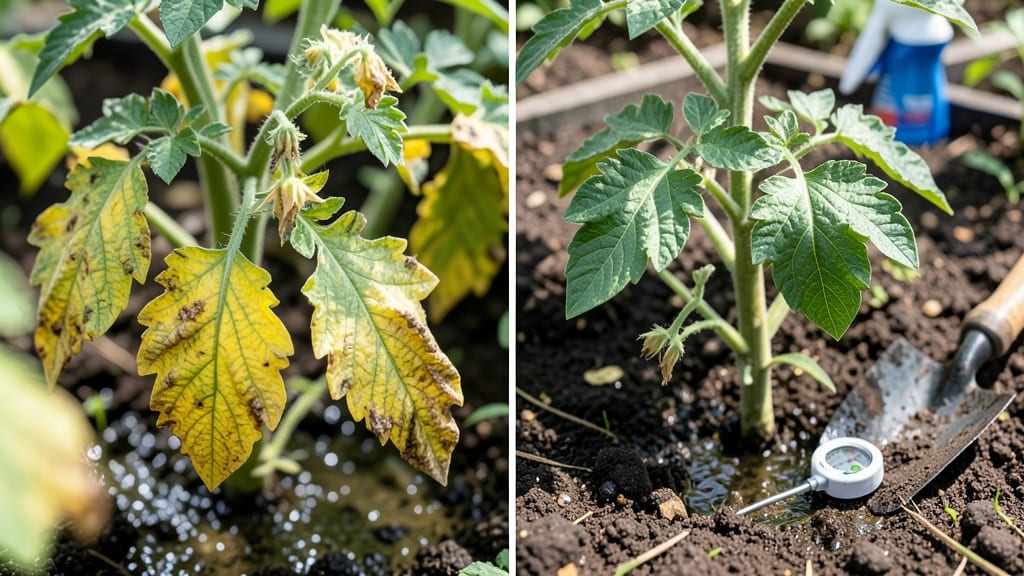
Overwatered tomato leaves turn your lush plants into sad, droopy messes—🌱 but I’ve saved dozens of tomato bushes with these three fixes after my own plants turned into a wilted disaster last summer.
The key isn’t just cutting back water; it’s fixing the root causes (literally) that make tomatoes drown in their own pots.
Yellowing leaves, blackened stems, and that musty soil smell? Those are your warning signs. Tomatoes hate soggy roots—within 24 hours of overwatering, they start suffocating.
The good news? Most plants bounce back in 5-7 days if you act fast, and I’ll show you how to revive them without losing your harvest.
You’ll adjust your watering schedule, improve drainage, and add a few simple tricks to keep roots happy. Think firm soil (not mud), air pockets (not waterlogged), and healthy green (not sad yellow). By the time your tomatoes start fruiting again, you’ll wonder why you ever overwatered in the first place.
Works for container-grown tomatoes, raised beds, or in-ground plants—no matter your setup, these fixes stop the cycle of overwatering for good. Let’s turn those wilted leaves into vibrant growth before your next harvest.
Root Causes Of Leaf Stress
When your tomato plants sport droopy, yellowing, or mushy leaves, overwatering is often the sneaky villain behind the scenes. But how does too much water actually trigger these symptoms? Let’s break down the science—because understanding the why helps you fix it fast.
Tomatoes thrive in well-draining soil, but if your pots or garden beds lack proper drainage, water pools around the roots instead of flowing away. Here’s what happens:
- Oxygen Starvation: Roots need oxygen to respire (yes, they "breathe"!). Soggy soil displaces air, suffocating roots and forcing them to slow down or shut down entirely. Without oxygen, roots can’t absorb nutrients or water efficiently, leading to wilting.
- Fungal Foes: Stagnant water creates the perfect breeding ground for Phytophthora and Pythium—fungi that rot roots and block water uptake. Infected roots turn brown, mushy, and unable to support the plant.
- Salt Buildup: Over time, dissolved minerals in water accumulate in the soil. High salt levels draw water out of root cells via osmosis, dehydrating the plant even when the soil is wet.
Actionable Fix: Test your soil’s drainage by digging a hole, filling it with water, and timing how long it takes to drain. If it’s slower than 30 minutes, amend with perlite, sand, or compost to loosen the soil.
Many gardeners water tomatoes based on a rigid schedule—like every morning at 8 AM—rather than checking soil moisture. This leads to:
- Chronic Saturation: Tomato roots are shallow and spread widely. If the top 1–2 inches of soil stay damp for days, the entire root zone suffocates. Even "dry" soil below the surface can hide the problem.
- Temperature Shocks: Cold water (straight from the hose) on hot days stresses plants. Combined with overwatering, this disrupts nutrient uptake and triggers leaf drop.
- Root Rot Snowball Effect: Weakened roots from overwatering make plants more susceptible to pests (like aphids) and diseases (like early blight), which further drain the plant’s energy.
Actionable Fix: Use the finger test: Stick your index finger 1–2 inches into the soil. If it’s damp, wait. If it’s dry at that depth, water deeply until it runs out the drainage holes.
Tomatoes hate humidity + overwatering combos. Here’s the science:
- Fungal Spore Explosion: High humidity (above 70%) + wet foliage = ideal conditions for Alternaria or Septoria leaf spots. These fungi clog stomata (leaf pores), preventing gas exchange and causing wilting.
- Heat Stress Feedback Loop: Overwatered plants in hot weather transpire (sweat) more to cool down, but their roots can’t keep up. This leads to physiological drought—even with wet soil.
- Cold Soil Shock: In cooler climates, overwatering can lower soil temperature below 50°F (10°C), slowing root activity and nutrient absorption.
Actionable Fix: Water in the early morning so leaves dry by afternoon. Use a hygrometer to monitor humidity—aim for 40–60% in the growing zone. Mulch with straw to regulate soil temp.
Potted tomatoes are especially vulnerable because:
- Limited Soil Volume: Small pots dry out fast, but they also drain poorly if overwatered. Roots circle the pot, creating a compacted, waterlogged core.
- Material Matters: Terracotta pots dry faster but can crack if soil shrinks unevenly. Plastic pots retain moisture longer, worsening root rot.
- No Room to Escape: Unlike in-ground plants, container tomatoes can’t spread roots to drier soil. Their entire root zone stays soggy.
Actionable Fix: Upgrade to pots with multiple drainage holes and use a soil mix designed for containers (e.g., 60% potting soil, 20% perlite, 20% compost). Water only when the top 1 inch is dry.
Fix Overwatered Tomato Plants Now
Overwatered tomato leaves can feel like a death sentence for your garden, but don’t panic—your plants can bounce back with the right care. The key is identifying the root cause (literally and figuratively) and taking action fast.
Below, we’ll break down practical fixes for common watering mistakes, from soggy soil to fungal threats, plus prevention tips to keep your tomatoes thriving.
Signs: Yellowing leaves, mushy stems, or soil that stays damp for days.
How to Fix It:
- Stop watering immediately—no more H₂O until the soil dries out.
- Loosen compacted soil with a fork or trowel to help roots breathe. Aim for 6–12 inches deep (🔥 Pro tip: Gently wiggle the tool to avoid damaging roots*).
- Improve drainage by mixing in compost or perlite (1 part organic matter to 3 parts soil).
- Move potted tomatoes to a shaded spot until the soil dries. If in-ground, mulch with straw to regulate moisture.
Prevention:
- Water deeply but infrequently—aim for 1–1.5 inches per week (adjust for rain).
- Check soil moisture with your finger: Water only if the top 1–2 inches are dry.
- Use drip irrigation to deliver water directly to roots, reducing runoff.
Signs: Dark spots, moldy growth, or leaves that look like they’ve been dusted with gray powder.
How to Fix It:
- Prune infected leaves with sterilized scissors (wipe with rubbing alcohol between cuts).
- Apply a fungicide—use neem oil (1 tsp per quart of water) or baking soda spray (1 tbsp baking soda + 1 quart water + a drop of dish soap).
- Space plants wider to improve airflow (tomatoes need 18–24 inches apart).
- Water at the base (never overhead) and avoid evening watering (fungi love damp nights).
Prevention:
- Water early in the day so leaves dry quickly.
- Rotate crops—don’t plant tomatoes in the same spot yearly (fungi linger in soil).
- Use raised beds if your garden has poor drainage.
Signs: Black, slimy roots; wilting despite dry soil; plants that topple easily.
How to Fix It:
- Remove the plant from the pot or soil and trim away mushy roots with clean shears.
- Repot in fresh, sterile soil (mix 50% potting mix + 50% perlite/pumice for drainage).
- Skip watering for 3–5 days to let roots recover. Then, water lightly and monitor.
- Add a root booster like mycorrhizal fungi or hydroponic nutrients to help roots regrow.
Prevention:
- Use containers with drainage holes—no exceptions!
- Avoid saucers under pots unless they’re emptied daily.
- Plant tomatoes in well-amended soil (add compost + coarse sand for structure).
Signs: Leaves curl upward, edges crisp, or plants look "heat-hazed."
How to Fix It:
- Shade cloth (30–50%) can save your tomatoes from midday sun while they recover.
- Mulch heavily with straw or wood chips to keep roots cool and moisture even.
- Water in the early morning (6–8 AM) to reduce evaporation.
- Fertilize lightly with fish emulsion or seaweed extract to boost stress resistance.
Prevention:
- Stake or cage tomatoes to improve airflow around leaves.
- Choose heat-tolerant varieties like ‘Solar Fire’ or ‘Heatmaster’ for hot climates.
- Avoid wetting leaves—use a soaker hose to keep foliage dry.
💡 Final Pro Tip: If your tomatoes are severely overwatered, don’t rush to revive them—let the soil dry completely before resuming care. Patience is key! Once your plants perk up, they’ll reward you with juicy, flavorful tomatoes all season. 🍅✨
Frequently asked questions
How can I tell if my tomato leaves are overwatered vs. underwatered?
Check the soil first—overwatered leaves feel soggy and yellow (especially lower leaves), while underwatered leaves curl and feel dry/crispy. Another clue: overwatered plants wilt despite wet soil, while thirsty plants wilt when soil is bone-dry. Tap the stem—if it feels mushy, you've overwatered.
Can I save my tomato plant if the leaves are completely black and mushy?
It depends! If only the leaves are affected but roots are firm, trim the blackened leaves and improve drainage immediately. If roots are slimy/black, the plant may be beyond saving—but try repotting healthy stems in fresh soil with perlite. Prevention is key: never let soil stay wet for more than 2 days.
What's the best way to adjust my watering schedule after overwatering?
Start with the finger test: water only when the top 1–2 inches of soil are dry. For containers, check every 2–3 days; for in-ground plants, 3–4 days. Water deeply (until it runs out drainage holes) but less frequently. Early morning is ideal—avoid evening watering to prevent fungal growth.
Will overwatered tomato plants still produce fruit?
Possibly, but quality suffers. Overwatering stresses plants, reducing flower/fruit production. If you've caught it early, healthy new growth should form within 5–7 days with proper care. For existing fruit, focus on balanced watering and nutrients—don't over-fertilize, which worsens stress.
Can I use coffee grounds to fix overwatered tomato soil?
Yes, but sparingly! Coffee grounds improve drainage when mixed into soil (use 1 part grounds to 4 parts soil). However, they're acidic—test your soil first (aim for pH 6.0–6.8). Better options: perlite, compost, or coarse sand. Never add fresh grounds directly to wet soil.