
Planting
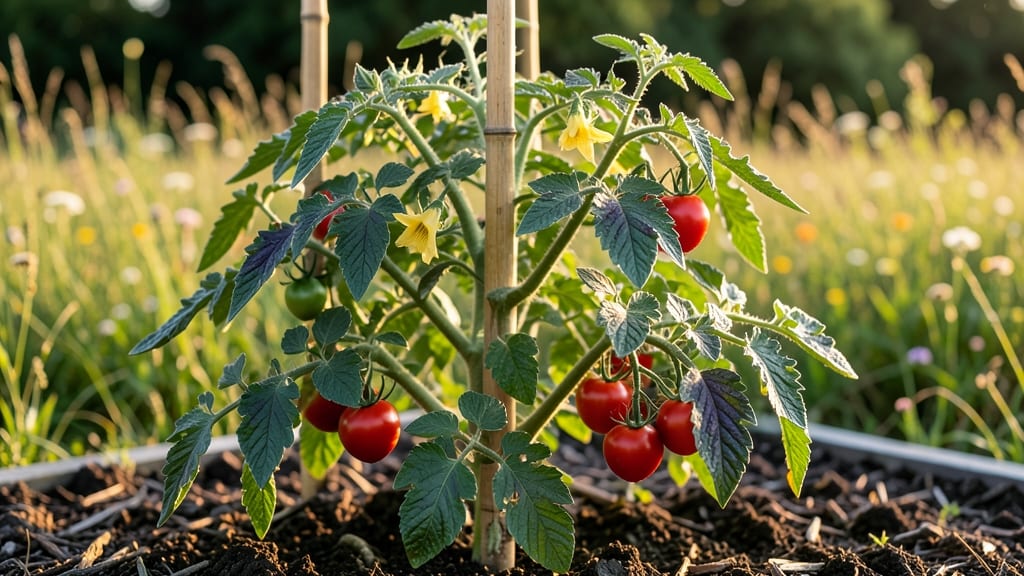
The Indigo Rose tomato plant delivers deep purple fruit with a sweet, smoky flavor that changes everything about your summer harvest. 🌱 I grew mine last season, and the way those rich, almost black tomatoes ripened on the vine—without needing constant pruning—made it my favorite variety.
Determinate growth means bushy plants that produce all at once, perfect for canning or fresh eating. You’ll need full sun (6-8 hours daily), well-draining soil with 2-3 inches of compost mixed in, and 18-24 inches of spacing between plants.
Water consistently at the base (1-2 inches per week) but avoid wetting leaves to prevent disease. The plants stay compact, so they’re ideal for containers or small gardens—no sprawling vines to manage. Expect 60-70 days to harvest, with clusters of 1-2 pound tomatoes that ripen in waves.
The flavor is richer than red tomatoes, with a hint of smokiness that pairs perfectly with basil or mozzarella. Prune suckers lightly to focus energy on fruit production, and stake early to support heavy clusters.
This variety thrives in zones 4-10, handles heat well, and resists cracking better than many heirlooms. Try planting near basil or onions to boost flavor and deter pests. Once you taste that first Indigo Rose, you’ll never go back to ordinary tomatoes.
📚 In This Guide
- What you need
- Instructions
- Tips and common mistakes
- Wrapping up and next steps
What you need
- ● Indigo Rose tomato seeds or seedlings – Choose heirloom seeds or certified disease-resistant seedlings (1-3 plants per container or garden bed).
- ● Well-draining potting mix – 5-10 gallons of organic, lightweight mix (e.g., 60% potting soil, 30% compost, 10% perlite or vermiculite).
- ● Containers or garden bed – Containers: 5-gallon fabric pots or plastic pots (12"+ diameter) with drainage holes.
- ● Garden bed: Full sun (6-8+ hours daily) and loose, fertile soil (amend with compost if needed).
- ● Tomato cages or stakes – 4-6 ft tall (determinate varieties like Indigo Rose stay compact but need support).
- ● Balanced fertilizer – 10-10-10 or organic options (e.g., fish emulsion or worm castings).
- ● Mulch – Straw or shredded leaves (2-3 inches) to retain moisture and deter weeds.
- ● Hand trowel or transplanting spade – For planting seeds/seedlings.
- ● Watering can or hose with gentle nozzle – Avoid overwatering (keep soil consistently moist, not soggy).
- ○ Pruning shears – For removing suckers (optional but recommended for airflow).
- ● pH test kit – Ideal soil pH: 6.0–6.8 (adjust with lime or sulfur if needed).
- ○ Optional (but helpful!): Drip irrigation system or soaker hose for efficiency.
- ● Row cover or shade cloth (if growing in hot climates).
- ● Compost tea or mycorrhizal fungi for a nutrient boost.
Step-by-step guide to growing a thriving Indigo Rose tomato plant
Here’s how to coax the rich, deep flavor from your Indigo Rose tomatoes—compact, productive, and perfect for containers or small gardens.
🌱 Step 1: Choose the Right Spot for Determinate Growth
Indigo Rose is a determinate variety, meaning it grows in a compact bush shape and ripens all its fruit at once. Place it in a location with full sun—at least 6-8 hours daily—and well-draining soil. If growing in containers, pick a 5-gallon pot or larger to support its root system and prevent toppling as the plant matures.
Work in 2-3 inches of compost into the planting area to improve soil fertility and drainage. Avoid heavy clay or waterlogged spots—Indigo Rose tomatoes hate soggy roots. If your soil is poor, mix in a balanced organic fertilizer (like 5-5-5) at planting time to give it a nutrient boost.
☀️ Step 2: Plant at the Correct Depth and Spacing
Dig a hole twice as wide as the root ball but no deeper—burying too deeply can suffocate the stem. Gently remove the plant from its container and loosen any circling roots. Place it in the hole so the top of the root ball sits just below soil level—this prevents rot while encouraging strong root growth.
Space plants 24-36 inches apart in the garden or 18-24 inches apart in containers to allow airflow and reduce disease risk. If growing in a container, pair it with a sturdy cage or trellis (Indigo Rose stays compact but benefits from support). Water deeply after planting to settle the soil around the roots.
💧 Step 3: Water Consistently Without Overdoing It
Determinate tomatoes like Indigo Rose produce all their fruit at once, so consistent moisture is key. Water deeply 1-2 times per week, aiming for 1-1.5 inches of water total. Let the top inch of soil dry out between waterings—this prevents blossom-end rot and cracking fruit. Morning watering is best to reduce fungal diseases.
Watch for signs of stress: wilting leaves mean it’s thirsty, while yellowing lower leaves could signal overwatering. Mulch with 2-3 inches of straw or shredded leaves to retain moisture and keep roots cool. Avoid wetting the foliage when watering to minimize disease risk.
✂️ Step 4: Prune for Airflow and Fruit Production
Indigo Rose is low-maintenance, but a little pruning boosts yield and health. Remove suckers (the small shoots that form in the leaf axils) to redirect energy to fruit production. Pinch off any flowers that appear before the plant is well-established—this encourages stronger growth before the main harvest.
Once the plant is flowering, avoid heavy pruning—determinate varieties rely on all their leaves for photosynthesis. Instead, focus on removing diseased or yellowing leaves and trimming back any overcrowded branches to improve airflow. A light hand here prevents fungal issues and keeps the plant focused on ripening fruit.
🍅 Step 5: Harvest at Peak Ripeness for Best Flavor
Indigo Rose tomatoes turn a stunning deep purple-black when fully ripe, but they’re also delicious when partially ripe (a mix of green and purple). Harvest by twisting gently or using pruners to avoid damaging the stem. Pick fruit that’s firm but yielding—overripe tomatoes lose flavor and attract pests.
Expect your first harvest 60-70 days after transplanting, with the main crop ripening over 2-3 weeks. Store harvested tomatoes at room temperature (not in the fridge) to preserve their rich, smoky-sweet flavor. Use them fresh in salads, sauces, or roasted dishes—this variety shines when cooked!
Tips & tricks for growing Indigo Rose tomatoes
Real talk: Determinate tomatoes like Indigo Rose reward patience with a bountiful harvest—but only if you nail a few key details. Here's what nobody tells you about growing these compact powerhouses.
Sunlight Strategy: That "6-8 hours of full sun" isn't just a suggestion—it's non-negotiable for Indigo Rose. I've seen plants struggle in partial shade, producing smaller fruit with less intense color. If your garden gets less than 6 hours, consider growing in containers where you can move them to follow the sun throughout the day. Morning sun is especially important for preventing fungal diseases that thrive in damp evening air.
Container Hack: When planting in pots, I always add a handful of perlite or vermiculite to the soil mix. This helps prevent compaction in containers, which can suffocate roots and lead to blossom-end rot. The 5-gallon minimum is real—anything smaller and you'll struggle to keep the plant stable as it matures. For extra stability, place your container on a saucer filled with pebbles to improve drainage.
Watering Wisdom: The "1-1.5 inches of water per week" guideline assumes average conditions. In hotter climates or during fruit development, you might need to water more frequently—just check that top inch of soil daily. I use a rain gauge or tuna can to measure water accurately. The key is consistency: Indigo Rose tomatoes hate moisture fluctuations, which can cause fruit to split or develop blossom-end rot.
Pruning Precision: Those suckers might look harmless, but removing them early (when they're pencil-sized) makes a huge difference in fruit production. I always prune with clean, sharp scissors to prevent disease transmission. And here's a pro move: If you notice any yellowing leaves at the bottom, don't just pull them—snip them off at the stem. This prevents fungal spores from spreading to healthier foliage.
Pro Tips for Indigo Rose Tomato Plant
- Real talk: Determinate tomatoes like Indigo Rose reward patience with a bountiful harvest—but only if you nail a few key details.
- Sunlight Strategy: That "6-8 hours of full sun" isn't just a suggestion—it's non-negotiable for Indigo Rose.
- Container Hack: When planting in pots, I always add a handful of perlite or vermiculite to the soil mix.
Frequently asked questions
Got questions about growing Indigo Rose tomatoes?
You’re not alone! Here are some of the most common queries—plus quick answers to help you cultivate a thriving, compact harvest.
How big does an Indigo Rose tomato plant get?
The Indigo Rose is a determinate variety, meaning it grows in a bushy, compact shape (typically 3–4 feet tall) and produces fruit in clusters. Unlike indeterminate types, it stops growing once it flowers, making it perfect for containers or small gardens. Plan for 18–24 inches of space between plants to ensure airflow and sunlight reach all sides.
When should I plant Indigo Rose tomatoes?
Start seeds 6–8 weeks before your last frost date indoors (or transplant seedlings after soil temps hit 55°F+). For direct sowing, wait until all danger of frost has passed—usually late spring or early summer. In warm climates (zones 8–10), you can plant as early as February! Use black plastic mulch to speed up soil warming.
How do I tell if my Indigo Rose tomatoes are ripe?
These beauties start as green but turn a deep purple-black when fully ripe—almost like a ripe plum! The skin should be smooth and slightly shiny, and the fruit will yield gently when pressed. Don’t wait too long: Indigo Roses soften quickly once ripe, so harvest them before birds or pests get them first!
What pests or diseases should I watch for?
Indigo Roses are resistant to some common issues (like fusarium wilt and verticillium wilt), but keep an eye out for:
- Hornworms: Look for chewed leaves—handpick them or use BT spray.
- Blossom end rot: Caused by calcium deficiency or uneven watering. Add crushed eggshells to soil and mulch to retain moisture.
- Whiteflies: Shake plants over a soapy water bucket or use yellow sticky traps.
Prune lower leaves to improve airflow and reduce humidity around the plant.
Can I grow Indigo Rose tomatoes in containers?
This variety thrives in 5-gallon pots or larger with well-draining soil and support (like a tomato cage or trellis). Use a lightweight potting mix with compost, and place containers in full sun (6+ hours/day). Pro tip: Add a time-release fertilizer at planting to avoid overfeeding in small spaces.
Wrapping up and next steps
Growing the Indigo Rose tomato plant is a rewarding journey that combines beauty with delicious harvests! With its determinate growth habit, you’ll enjoy compact plants that thrive in containers or small gardens, perfect for urban gardeners or those with limited space.
Whether you’re a beginner or a seasoned grower, these tips will help you cultivate vibrant, flavorful tomatoes—ready to elevate your salads, sauces, and snacks!
Ready to get started? Grab your seeds, pick a sunny spot, and begin your planting adventure today! 🌱✨