
Container Gardens
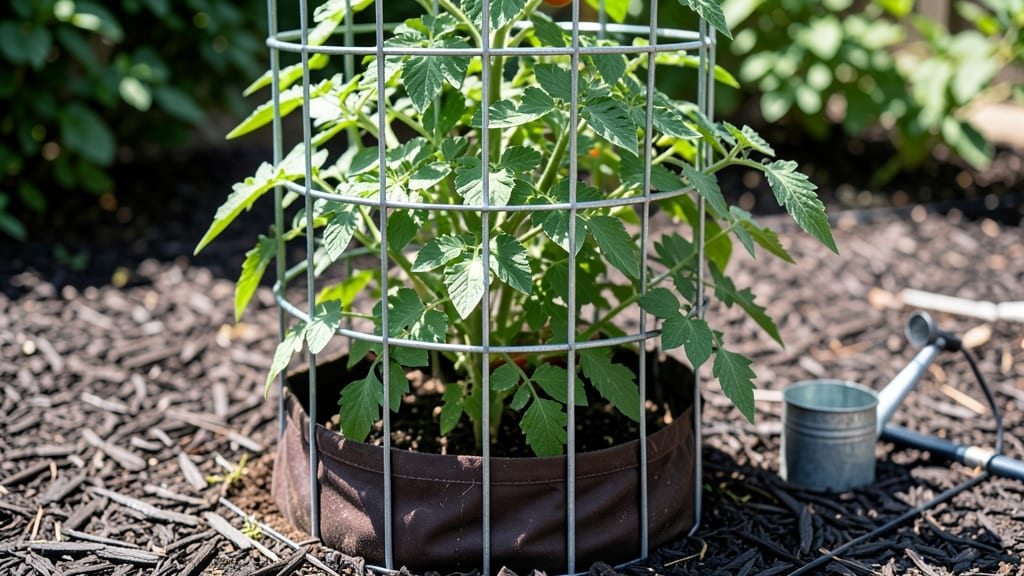
How to use a tomato cage in a container will keep your vines standing tall—no more flopping like a tipsy gardener at harvest time. 🌱 Using a tomato cage in containers is the secret to growing heirloom-sized vines without needing a trellis or sacrificing stability, something I learned after watching my first plant collapse under a 2-pound tomato. The right cage turns a 5-gallon pot into a vertical powerhouse, and I'll show you exactly how to do it without wrestling with flimsy supports.
Start with a 5-7 foot cage (taller for indeterminate varieties like 'Sungold') and a minimum 5-gallon container—anything smaller struggles with root space and wind resistance. Place the cage centered before planting, then gently weave the main stem through the holes as it grows.
Secure the base with stakes or weights if your balcony gets breezy, because nothing ruins a harvest faster than a toppling plant mid-summer.
By mid-season, you'll have tomatoes hanging at eye level instead of sprawling on the ground, and the cage will stay upright even when loaded with fruit. The key is weekly gentle ties (use soft plant tape, not wire) to guide vines upward—this prevents breakage and keeps the plant from leaning.
Your neighbors will be green with envy when you're harvesting pounds of tomatoes from a pot while they're still waiting for store-bought plants to produce.
This works for peppers, cucumbers, and even pole beans too—just adjust the cage size to match your plant's growth habit. The only real mistake is skipping the early support; once vines get heavy, it's too late to play catch-up.
Trust me, your future self will thank you when you're not fishing tomatoes out of the mulch.
📚 In This Guide
- What you need
- Instructions
- Tips and common mistakes
- Wrapping up and next steps
What you need
- ● Tomato cage: 1 sturdy, 5-6 foot tall cage (galvanized steel or heavy-duty plastic). Pro tip: Look for cages with 16+ support wires for better vine stability!
- ● Container: 1 large pot (minimum 5-gallon capacity, 18"+ deep, and 12"+ diameter). Options: Fabric grow bags, plastic buckets, or ceramic pots with drainage holes.
- ● Potting mix: 1 bag of high-quality, well-draining container mix (avoid garden soil—it compacts!). Bonus: Mix in compost or worm castings for extra nutrients.
- ● Tomato plant: 1 healthy determinate or indeterminate tomato variety (e.g., 'Cherry Tom,' 'Roma,' or 'Better Boy'). Check tags!
- ● Drainage: 2-4 inches of gravel or perlite (for pots without pre-drilled holes).
- ● Support ties: 3-5 soft plant ties or old T-shirts (to secure vines without damaging stems).
- ● Watering can or hose: With a gentle spray nozzle (tomatoes hate soggy feet!).
- ● Mulch: Straw or shredded leaves to retain moisture and suppress weeds.
- ● Fertilizer: Balanced liquid fertilizer (10-10-10) or tomato-specific slow-release pellets.
- ● Pruning shears: Small, sharp pair for trimming suckers and dead leaves.
- ● Saucer tray: To catch runoff and prevent water stains on decks/patios.
- ● Sunhat or shade cloth: For hot climates (tomatoes need 6-8 hours of sun but can scorch in extreme heat).
Step-by-step guide to Using tomato cages in containers
Here's how I keep my container tomatoes sturdy and productive all season long.
🪴 Step 1: Select the Right Container and Cage Size
Start with a 5-gallon container or larger—tomatoes need room for roots to spread and water to drain. I use 5-foot cages for determinate varieties (like Roma) and 6-foot cages for indeterminate types (like Beefsteak). The cage should be 1-2 inches taller than your plant's mature height to prevent sagging.
Check for sturdy metal or plastic construction—cheap cages bend under heavy fruit. Place the cage in the container before planting so it sits centered. If your pot is shallow, tuck the cage's base into the soil slightly to stabilize it. This prevents leaning when vines get top-heavy.
🌱 Step 2: Plant and Secure the Tomato Early
Set your tomato plant in the container next to the cage, not inside it. The cage will support the plant as it grows, so position it 2-3 inches from the stem to avoid crowding. Gently push the cage into the soil 1-2 inches deep around the plant's base—this anchors it without damaging roots.
Use soft plant ties (not wire) to loosely secure the main stem to the cage's lowest vertical support. I tie the stem in a figure-eight pattern to prevent cutting into the plant as it thickens. Leave 1-2 inches of slack—tight ties strangle stems as they grow. This early attachment prevents wind from snapping young plants.
☀️ Step 3: Train Vines Weekly to Prevent Sagging
Every 7-10 days, gently weave new growth around the cage's next horizontal support. I start at the bottom and spiral upward, tucking each 6-8 inch section of vine into the cage's openings. This distributes weight evenly and prevents the plant from toppling.
Watch for suction cups forming where vines grip the cage—these are natural and help support the plant. If a vine grows too long between supports (over 12 inches), pinch it back to encourage bushier growth. Stronger lateral branches mean more stable plants and better fruit distribution.
💧 Step 4: Water Deeply and Stake When Fruit Forms
Water deeply at the base every 2-3 days—container tomatoes dry out faster than in-ground plants. Let the top 2 inches of soil dry before watering again. Heavy watering from above can dislodge the cage or break weak stems.
When first flowers appear, add a secondary support stake inside the cage. Tie it to the cage's top with a soft tie and weave the main stem around it. This creates a double support system—critical when 6-8 ounce tomatoes start weighing down the vines. Mulch with 2 inches of straw to retain moisture and prevent soil from splashing onto leaves.
✂️ Step 5: Prune and Reinforce as Fruits Ripen
Remove suckers (the small shoots in the leaf axils) to redirect energy to fruit. I prune these weekly once the plant hits the cage's top. Keep 3-4 main stems on indeterminate varieties to balance growth and support.
When tomatoes near ripeness, reduce watering slightly to concentrate flavors. Check the cage daily—if vines sag between supports, add a temporary wooden stake inside the cage and retie the main stem. Harvest fruit every 2-3 days to prevent weight overload and disease spread.
Tips & tricks for perfect container tomato cage support
These simple strategies will help you avoid common pitfalls and keep your container tomatoes thriving all season.
Container Stability Matters: For shallow pots, bury the cage's base 2-3 inches deep in soil to prevent leaning. I've seen cages topple when planted too shallow—especially with wind or heavy fruit. If your container is wide but not deep, consider adding a second cage for extra support on indeterminate varieties.
Tie Technique is Everything: The figure-eight pattern isn't just for looks—it prevents the tie from cutting into the stem as it thickens. I use soft plant ties (not wire) and check them weekly. If you notice dark marks where the tie touches, loosen it immediately. Pro tip: Store your ties in a small container of water between uses to keep them flexible.
Weekly Vine Training Secret: Those 7-10 day intervals between training sessions are perfect because that's how long it takes new growth to reach the next support level. I spiral upward rather than just weaving randomly—this creates a natural corkscrew shape that distributes weight perfectly. Watch for vines growing over 12 inches between supports; these need immediate attention to prevent sagging.
Double Support System: The secondary stake I add at flowering is my secret weapon for preventing breakage. I tie it to the cage's top first, then weave the main stem around it. This creates a "Y" shape that handles 6-8 ounce tomatoes without stressing the plant. For extra security, I add a third stake when the first tomatoes appear—it's worth the few minutes of effort to avoid losing fruit.
Pro Tips for Use A Tomato Cage In A Container
- These simple strategies will help you avoid common pitfalls and keep your container tomatoes thriving all season.
- Container Stability Matters: For shallow pots, bury the cage's base 2-3 inches deep in soil to prevent leaning.
- Tie Technique is Everything: The figure-eight pattern isn't just for looks—it prevents the tie from cutting into the stem as it thickens.
Frequently asked questions
What’s the best time to install a tomato cage in a container?
Install your tomato cage before planting seedlings—ideally when you place the tomato in its container. This prevents root disturbance later. If your plant is already growing, gently tuck the cage around the stem (avoid damaging roots) and secure it loosely to avoid stress. Early support = happier, sturdier vines!
Can I reuse a tomato cage from last year?
Clean and disinfect cages with a 10% bleach solution (1 part bleach to 9 parts water) to kill pests/diseases. Rinse well and dry before reuse. Pro tip: Store them in a dry place to extend their lifespan—no need to buy new every season!
What if my tomato plant outgrows the cage? Can I add more support?
Yes! If your plant towers over the cage, tie it to a sturdy outdoor trellis, fence, or bamboo stakes alongside the cage for extra support. Use soft plant ties or old T-shirts to avoid stem damage. For heavy varieties (like beefsteaks), consider a larger cage or a tomato tower next season!
Why is my tomato plant leaning or falling over even with a cage?
Leaning usually means the cage isn’t secure or the plant needs more training. Check these fixes:
- Tighten ties every 6–12 inches up the stem.
- Ensure the cage is buried 6+ inches into the soil for stability.
- Prune lower leaves to reduce weight on the stem.
- Water consistently—wilting can weaken vines.
Are there alternatives to tomato cages for containers?
If cages aren’t your style, try these space-saving supports:
- Bamboo stakes or wooden dowels: Tie vines to 3–4 stakes arranged in a square.
- Trellis or wire mesh: Lean against the container for a vertical grow.
- Fabric plant ties or Velcro strips: Gentle on stems and reusable.
- DIY wire cages: Bend coat hangers or chicken wire into a custom shape!
Wrapping up and next steps
Using a tomato cage in containers is a game-changer for small-space gardeners! With the right setup—sturdy cages, balanced soil, and consistent care—you’ll enjoy vibrant, productive vines that thrive without sagging.
The key is patience and attention to detail, but the reward? Bursting tomatoes you can pick fresh from your balcony or patio!
Ready to take the next step? Start with one plant, experiment with your setup, and watch your confidence (and harvest!) grow. Happy gardening! 🌱🍅